
US and Iranian officials will meet again in Pakistan after earlier talks failed to resolve disputes over nuclear policy and regional tensions
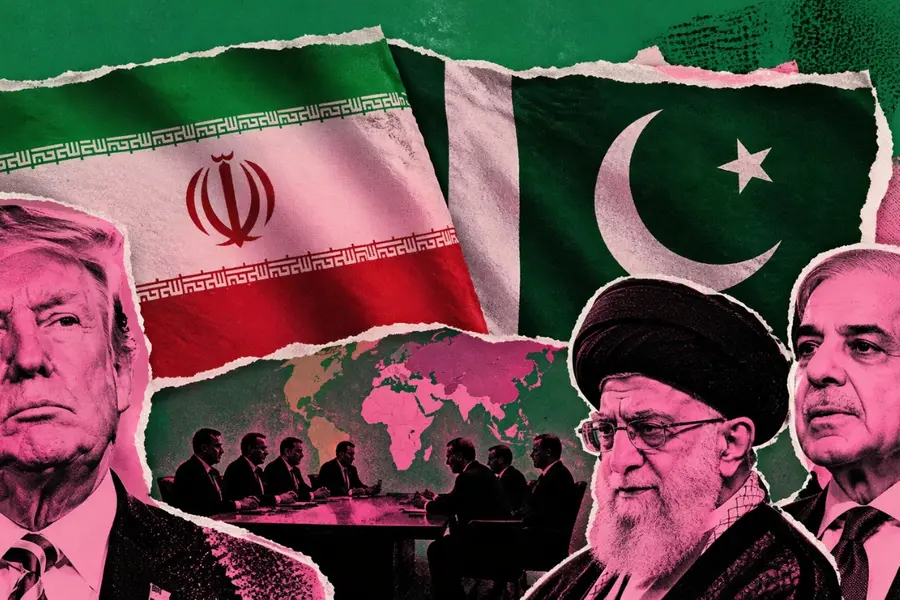
New Delhi: With a fragile ceasefire holding in parts of the Middle East, Iran and the United States are set to engage in a second round of discussions in Pakistan on Saturday.
US President Donald Trump has deputed envoys Steve Witkoff and Jared Kushner for the talks. According to Iran’s state-run IRNA news agency, the country will be represented by Foreign Minister Abbas Araghchi for what have been described as “bilateral consultations”.
The discussions are taking place a day after the Iran-Hezbollah ceasefire was extended by three weeks. Despite this, the conflict that began on February 28, when the US and Israel exchanged attacks with Iran, shows no immediate signs of resolution.
Uncertainty over nature of negotiations
The White House indicated that the meeting would involve direct, in-person interaction between the two sides. However, Iranian state media maintained that formal direct negotiations are not expected to take place.
White House press secretary Karoline Leavitt told Fox News Channel that the American envoys would hold discussions with Araghchi. “We’re hopeful that it will be a productive conversation and hopefully move the ball forward to a deal,” she said. She also noted that Vice President JD Vance would not attend the talks in person but remains closely involved.
An Iranian spokesperson added that Araghchi is scheduled to travel to Oman and Russia after the Pakistan visit to continue consultations aimed at ending the conflict.
First round ended without agreement
This marks the second set of talks in Islamabad following an earlier round held on April 11 and 12, which did not yield any agreement. The previous discussions stalled over three major issues, including Iran’s highly enriched uranium programme and its nuclear ambitions, the reopening of the Strait of Hormuz, and Israel’s ongoing war in Lebanon.
Iran has maintained that it has the right to enrich uranium, although it has indicated that the level of enrichment could be subject to negotiation.
US raises concerns over nuclear commitments
Vice President JD Vance earlier stated that no meaningful progress had been achieved during 21 hours of negotiations. “Their nuclear programme and the enrichment facilities they had before have been destroyed. But we do not see a commitment to not develop more nuclear weapons,” he said.
Pakistan’s growing role as mediator
Pakistan has increasingly positioned itself as a key intermediary in efforts to reduce tensions between the US, Israel and Iran. Army chief Asim Munir, along with Prime Minister Shehbaz Sharif, has been involved in mediation initiatives.
Islamabad has relied on its relationships with Gulf countries, including Saudi Arabia, as well as Iran, the US and China, to facilitate communication between the opposing sides.
High-level engagement since 1979 revolution
The ongoing dialogue represents one of the most significant diplomatic engagements between the US and Iran since the Islamic Revolution in 1979. The last major direct interaction at a comparable level occurred in September 2013, when US President Barack Obama held a phone conversation with then Iranian President Hassan Rouhani regarding Tehran’s nuclear programme.
Tensions persist over sanctions and blockades
Efforts to resume sustained dialogue have faced obstacles, with Iran unwilling to engage fully while a US naval blockade on its ports remains in place. At the same time, Iran has effectively imposed its own restrictions on the Strait of Hormuz, allowing only limited maritime traffic through the crucial waterway, a development that has unsettled global energy markets.
Meanwhile, the United States has continued to strengthen its military presence in the region, including the deployment of a third aircraft carrier, the USS George HW Bush. Washington has also announced economic sanctions targeting a major China-based oil refinery, along with around 40 shipping companies and tankers involved in transporting Iranian oil.
With agency inputs
Published: 25 Apr 2026, 02:29 pm IST
Related Topics
Disclaimer: Kindly avoid objectionable, derogatory, unlawful and lewd comments, while responding to reports. Such comments are punishable under cyber laws. Please keep away from personal attacks. The opinions expressed here are the personal opinions of readers and not that of Mathrubhumi.
