
Donald Trump confirmed he signed a US-Iran peace memorandum at Versailles, with reports suggesting Iranian President Masoud Pezeshkian has also signed
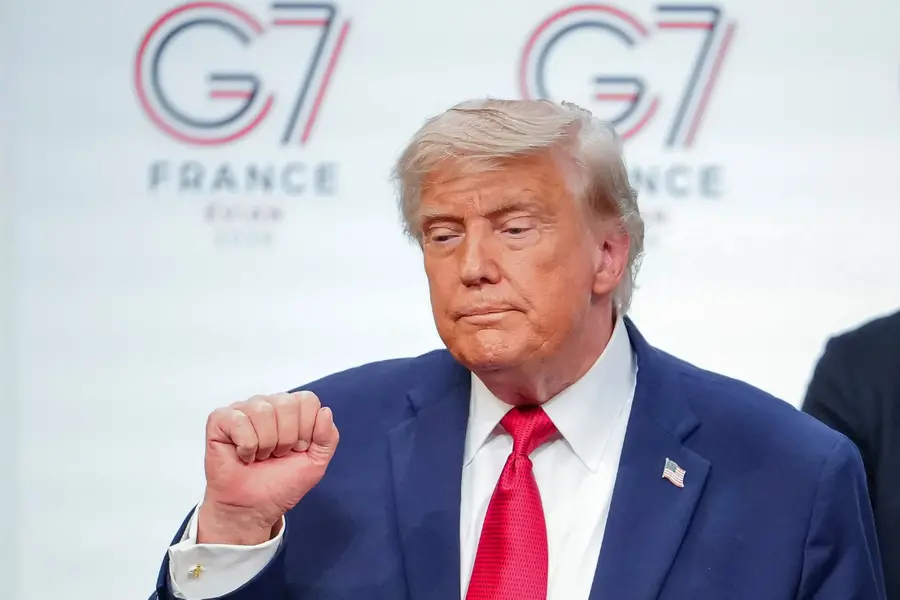
Evian-Les-Bains: US President Donald Trump on Thursday has confirmed that he has signed the memorandum of understanding intended to bring an end to the war between the United States and Iran.
Speaking to reporters while leaving Versailles, Trump said the agreement had now been formally signed.
"It's signed," the US President said, adding that he had put his signature on the document while at the Palace of Versailles.
The White House later confirmed that Trump signed the memorandum aimed at ending the conflict with Iran during his visit to Versailles. Officials noted that the signing took place away from cameras.
Iranian president also reportedly signed the document
A US official familiar with the matter said both the American and Iranian presidents have now signed the agreement.
According to the official, Iranian President Masoud Pezeshkian also signed the memorandum on Wednesday. However, there was no immediate confirmation from Tehran regarding the reported signing.
The development comes after officials previously indicated that Trump and Vice President JD Vance had already signed the agreement digitally on Sunday and that a ceremonial signing ceremony was expected to take place later in Switzerland.
The latest signing at Versailles has therefore raised fresh questions about the sequence of events and whether the agreement has now entered a new phase.
Questions remain over negotiation timeline
It remains unclear whether Wednesday's signing formally triggers the proposed 60-day negotiation period intended to transform the memorandum into a broader and more permanent agreement.
There is also uncertainty over how Trump's handwritten signature at Versailles differs from the digital approval that US officials said had already taken place earlier in the week.
Neither the White House nor Iranian officials have yet clarified whether the negotiating timetable has officially begun.
What is the Memorandum of Understanding?
The memorandum is widely seen as a framework agreement rather than a final peace treaty.
According to officials, the document is designed to halt hostilities and create a structured process for further negotiations over several unresolved issues, including Iran's nuclear programme, sanctions relief, regional security arrangements and maritime access through the Strait of Hormuz.
Reports indicate that the understanding calls for a 60-day period of talks during which both sides will attempt to reach a more comprehensive settlement.
Strait of Hormuz and sanctions relief among key issues
One of the most significant aspects of the agreement involves the Strait of Hormuz, one of the world's most important energy shipping routes.
US officials have previously said the memorandum provides for the reopening of the strategic waterway and the gradual lifting of the American blockade on Iranian ports.
Draft details reported by several international media organisations suggest that sanctions relief, oil exports and access to frozen Iranian assets could also form part of future negotiations, although implementation would be tied to Iranian compliance with the agreement.
The deal is also expected to serve as a platform for discussions on Iran's stockpile of enriched uranium and broader nuclear commitments.
Agreement emerges after more than three months of war
The memorandum represents the most significant diplomatic breakthrough since the conflict began more than three months ago.
The war disrupted shipping routes, unsettled global energy markets and heightened tensions across the Middle East. The closure of the Strait of Hormuz in particular raised concerns about oil supplies and international trade.
Officials on both sides have described the memorandum as a starting point rather than a final settlement, with many of the most contentious issues still to be negotiated.
The choice of Versailles for the signing has drawn attention because of the palace's long association with major diplomatic agreements.
Over the centuries, several important treaties ending wars and resolving territorial disputes have been signed there.
The most famous remains the 1919 Treaty of Versailles, which formally brought the First World War to an end. Many historians have argued that the treaty's harsh terms on Germany contributed to the conditions that later led to the Second World War.
By signing the Iran memorandum at the historic French venue, Trump has linked the latest diplomatic effort to one of the world's most recognisable locations for international peace agreements.
Agency inputs
Published: 18 Jun 2026, 06:31 am IST
Disclaimer: Kindly avoid objectionable, derogatory, unlawful and lewd comments, while responding to reports. Such comments are punishable under cyber laws. Please keep away from personal attacks. The opinions expressed here are the personal opinions of readers and not that of Mathrubhumi.
