
As winter approaches, Ukrainians brace for renewed hardship as Russia intensifies its strikes on the country’s power grid.
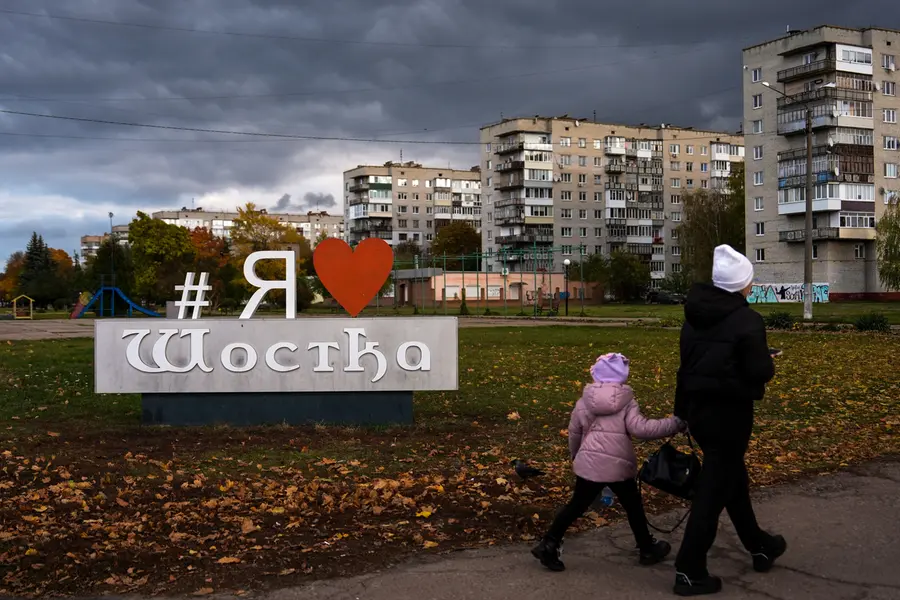
Shostka (Ukraine): As winter approaches, millions of Ukrainians are preparing for a season marked by uncertainty and darkness, with Russia intensifying strikes on the country’s energy infrastructure. The attacks, more targeted and region-specific than before, have left communities across eastern and northern Ukraine struggling to adapt to long blackouts, power rationing, and the constant hum of generators.
Life on the edge of blackouts
In the northern town of Shostka, near the front line in Sumy region, 40-year-old Zinaida Kot worries less about the cold and more about her next dialysis session. Dependent on an electric machine for her kidney treatment, she is among thousands whose survival hinges on an unstable power grid.
“As the lights went out in her hometown,” she could think only about whether the machine that keeps her alive would run again. Kot has been undergoing dialysis for seven years, and for her, a power cut is not just an inconvenience, it is a life-threatening disruption.
Shostka struggles to stay powered
Earlier this month, a Russian missile strike plunged Shostka, a town of nearly 72,000 people, into darkness, cutting off electricity, gas, and water. Gas supplies were later restored, but electricity now returns for just a few hours each day.
“The situation is challenging,” said Mykola Noha, the mayor of Shostka. “And it really worries the residents as we can't predict power cuts. We fix something, and it gets destroyed again. This is our situation.”
Across town, generators hum on rain-soaked streets blanketed with yellow leaves, powering shops, cafés, homes, and hospitals. Designated “invincibility points” provide residents with a place to charge phones, warm up, and even rest on cots.
At the local hospital, staff had built a wood-burning stove during the early days of Russia’s invasion in 2022, and it now feeds nearly 180 patients daily, said Svitlana Zakotei, a nurse overseeing meals.
The hospital has relied on generators for three weeks, consuming half a tonne of fuel a day, about 250,000 hryvnias (USD 5,973) weekly, almost matching its usual monthly electricity bill, according to hospital chief Oleh Shtohryn.
Inside the dialysis ward, power is rationed so machines can run even as the lights remain dim. One of the eight dialysis units was destroyed during a blackout, a costly setback for a facility already stretched thin. Still, 23 patients arrive daily for life-sustaining treatment.
Russia’s changing strategy
Ukraine’s energy crisis has worsened under what analysts describe as Russia’s new region-by-region assault. Instead of blanket attacks on the national grid, Moscow now focuses its firepower on specific regions, especially those near the front lines.
Recent strikes have intensified in Chernihiv, Sumy, and Poltava, while Kharkiv, Odesa, Mykolaiv, and Dnipro face sporadic but persistent attacks. The shift has made it harder for crews to repair lines and stations before new strikes hit.
Front-line regions within roughly 120 kilometres of combat zones are particularly exposed. For energy workers, it’s a constant cycle of repair and destruction.
“But it's our job. Who else would do it? Nobody else would,” said Bohdan Bilous, an electrical technician. “I want to be optimistic and prepared for any situation, but the reality is extremely cruel right now.”
According to Svitlana Kalysh, spokeswoman for the regional energy company in Sumy, each repair mission carries new risks. “They're getting better at knowing how to attack,” she said, referring to the Russians’ growing precision.
A war against power
In Chernihiv region, signs of war blend into everyday life. A woman tending her cabbage patch barely flinches at the sound of distant explosions. Nearby, a local switchyard bears the scars of repeated attacks, craters from 2022 alongside new holes left by Shahed drones in early October.
Sandbags line the transformer building, but they could not stop a direct strike that left the facility cold and half-functional. Thousands of homes remain without steady power.
Military analysts say Russia has dramatically increased its drone capacity since last year. Previously, the smaller-scale attacks were largely ineffective. Now, Moscow launches 500 to 600 drones at once, overwhelming Ukraine’s air defences.
Even with multiple defence points surrounding a target, six drones are sent to suppress each one — while another 10 head directly for the infrastructure itself. (AP)
Published: 21 Oct 2025, 02:43 pm IST
Related Topics
Disclaimer: Kindly avoid objectionable, derogatory, unlawful and lewd comments, while responding to reports. Such comments are punishable under cyber laws. Please keep away from personal attacks. The opinions expressed here are the personal opinions of readers and not that of Mathrubhumi.
