
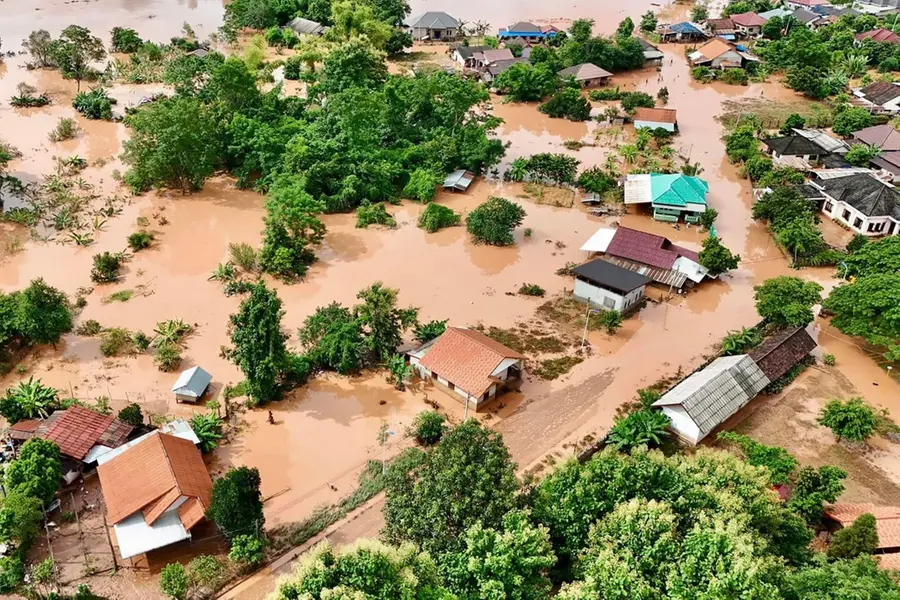
Hanoi: Vietnam is reeling from the effects of Typhoon Yagi, which has caused widespread destruction across the country. According to state media reports on Thursday, nearly 200 people have lost their lives, and over 125 are missing due to severe flash floods and landslides.
The VNExpress newspaper reported 197 fatalities and 128 people still unaccounted for, with more than 800 individuals injured. In the capital city of Hanoi, floodwaters from the Red River have receded somewhat, but many areas remain submerged.
Also Read

In Hanoi’s Tay Ho district, residents navigated through muddy water that reached above their knees. Some were seen wearing bicycle and motorcycle helmets after abandoning their vehicles, while others used small boats to traverse the streets, surrounded by debris such as empty water bottles and styrofoam coolers. Pedestrians tried to keep dry by pulling up their shorts as delivery trucks splashed through the water.
Typhoon Yagi, the most powerful typhoon to hit Vietnam in decades, struck on Saturday with winds reaching up to 149 kph (92 mph). Although the storm weakened on Sunday, heavy rains continued, keeping river levels dangerously high. The flooding in Hanoi has been described as the worst in twenty years, leading to extensive evacuations.
Earlier this week, a flash flood devastated the village of Lang Nu in northern Vietnam’s Lao Cai province. Rescue teams worked tirelessly to find survivors, but as of Thursday morning, 53 villagers were still missing, and seven more bodies were discovered, raising the death toll in that area to 42.
The majority of deaths have occurred in the northwestern Lao Cai province, which borders China and includes the popular trekking destination of Sapa. On Monday, a steel bridge in Phu Tho province collapsed into the swollen Red River, taking 10 cars and trucks and two motorbikes with it. Additionally, a bus carrying 20 people was swept away by flooding in Cao Bang province due to a landslide.
Experts suggest that storms like Typhoon Yagi are becoming more intense due to climate change, as warmer ocean waters contribute to stronger winds and heavier rainfall.
Agency
Published: 12 Sept 2024, 12:49 pm IST
Related Topics
Disclaimer: Kindly avoid objectionable, derogatory, unlawful and lewd comments, while responding to reports. Such comments are punishable under cyber laws. Please keep away from personal attacks. The opinions expressed here are the personal opinions of readers and not that of Mathrubhumi.