
Trump’s remarks represent a rare instance of pushback against Israeli policy, as he has otherwise maintained a strong pro-Israel stance.
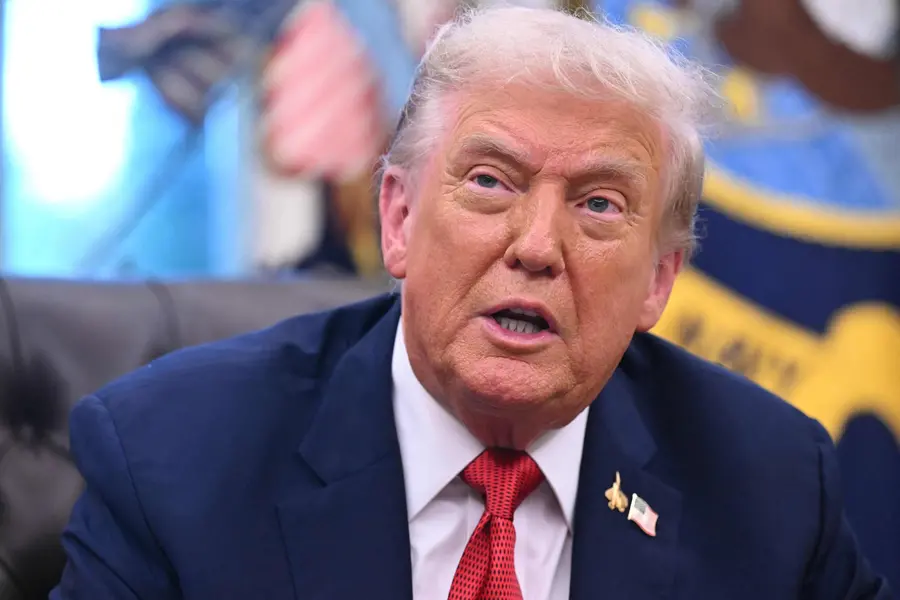
Washington: President Donald Trump has pledged to prevent Israel from annexing parts of the occupied West Bank, offering firm assurances that he will block any such move, despite strong opposition from Arab leaders in the region.
In a rare moment of direct opposition to Israeli officials, Trump was clear when asked about reports suggesting that Israel could annex parts of the West Bank. Speaking to reporters in the Oval Office on Thursday while signing unrelated executive orders, Trump declared, "I will not allow Israel to annex the West Bank. I will not allow it. It's not going to happen."
Also Read

The idea of annexation has gained traction within Israel in response to growing international recognition of a Palestinian state, with some key US allies, including the United Kingdom and Canada, backing the Palestinian cause. Trump, who has long touted his close relationship with Israeli Prime Minister Benjamin Netanyahu, stated that he had discussed the matter with Netanyahu but made it clear he would not allow the annexation to proceed, adding, "It's been enough. It's time to stop now."
Trump’s remarks represent a rare instance of pushback against Israeli policy, as he has otherwise maintained a strong pro-Israel stance, especially regarding the ongoing conflict with Hamas in Gaza. The timing of his comments is significant, as Israel is engaged in an intense military operation in Gaza, which has already caused widespread suffering in the besieged region. At the same time, Israel continues to expand settlements in the West Bank, a highly controversial issue.
Netanyahu is due to visit the White House on Monday for his fourth visit to Washington since Trump began his second term, further complicating the diplomatic context. Unlike Gaza, which is under Hamas control, the West Bank is administered by the Palestinian Authority, adding another layer of complexity to the region's geopolitics.
The Israeli government's stance on Palestinian statehood remains firm, with the Netanyahu administration staunchly opposed to the creation of a Palestinian state and supportive of annexing large portions of the West Bank. This policy has been met with resistance from the Arab world, with the United Arab Emirates warning that any Israeli annexation would be a "red line."
Annexation could end hopes of two-state solution
Israel captured the West Bank, East Jerusalem, and Gaza during the 1967 Middle East war. The Palestinians have long sought these territories for the establishment of a future state, while much of the international community, including the United Nations, views annexation as a step towards dismantling the prospects of a two-state solution. This two-state solution is widely regarded as the only viable path to ending the decades-long Arab-Israeli conflict.
Despite his close ties with Netanyahu, Trump faces growing pressure from Arab leaders who have voiced their opposition to any moves toward annexation. The United Arab Emirates has been particularly vocal, warning that any such action would cross a "red line."
Critics question whether Trump will be able to exert sufficient influence on Netanyahu, especially given the US president's previous criticism of Israel's attack on Hamas officials in Qatar. However, Trump has stopped short of imposing any major consequences for Israel’s actions.
Netanyahu heads Israel’s most nationalist government in history, and his coalition partners have pushed him to expand Israel's control over the occupied West Bank. Some of these allies hope that Trump's unwavering support for Israeli policy could help pave the way for further territorial expansion.
The decision not to pursue annexation could present challenges for Netanyahu at home, potentially destabilising his coalition. However, his willingness to refrain from such a move may also serve as a bargaining chip, potentially securing favours from the Trump administration.
Currently, over half a million Jewish settlers live in the West Bank, spread across more than 130 settlements. The international community largely regards these settlements as illegal and a significant barrier to peace.
While Western nations have been outraged by Israel's ongoing military offensive in Gaza, several have recognised Palestinian statehood in an effort to reinvigorate the peace process. Countries such as Britain, France, and Australia have all taken this step this week, despite vehement opposition from the US and Israel.
Germany, traditionally one of Israel’s closest allies, has refrained from supporting calls for a ceasefire or Palestinian statehood, though it has suspended some military exports to Israel.
While these moves have been welcomed by Palestinians in Gaza and the West Bank, many remain sceptical that they will lead to any substantial improvement in their dire circumstances, as Israel's offensive continues to wreak havoc in the region.
AP
Published: 26 Sept 2025, 08:16 am IST
Disclaimer: Kindly avoid objectionable, derogatory, unlawful and lewd comments, while responding to reports. Such comments are punishable under cyber laws. Please keep away from personal attacks. The opinions expressed here are the personal opinions of readers and not that of Mathrubhumi.