
Donald Trump’s dramatic military action in Venezuela has sent shockwaves far beyond Caracas, triggering sharp reactions from China, Russia, Iran and Cuba, and signalling a more confrontational phase in global power politics.
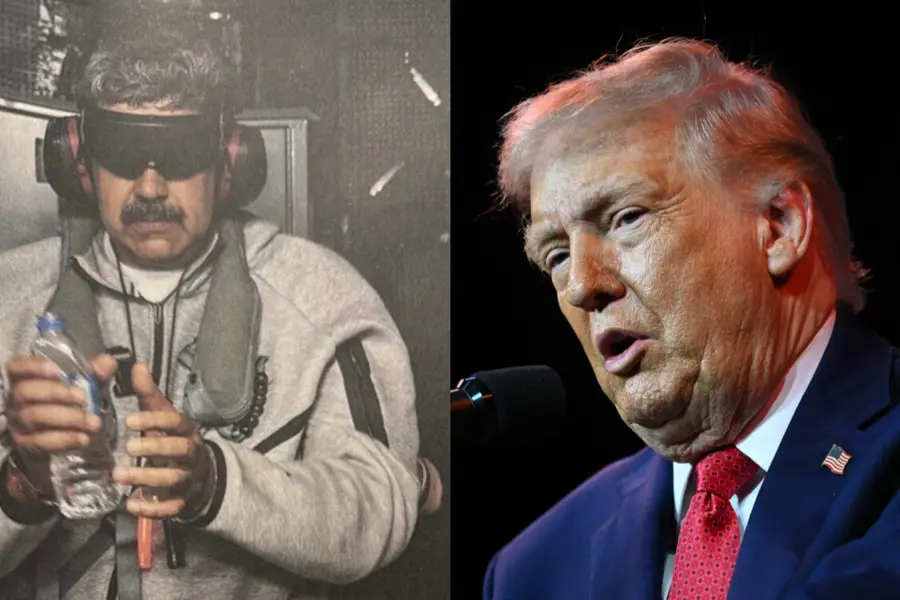
Washington: The United States’ decision to launch strikes in Venezuela and capture former president Nicolás Maduro has drawn swift condemnation from Washington’s major strategic rivals, with China, Russia, Iran and Cuba accusing the US of violating Venezuelan sovereignty and international law. While the immediate economic fallout may be limited, analysts say the political and strategic implications could be far-reaching.
China, Venezuela’s largest oil buyer, described the operation as a breach of international norms. Beijing has long relied on Venezuelan crude to service outstanding loans, with roughly 80 per cent of Venezuela’s oil exports flowing to China in recent years. Although this oil accounts for only a small fraction of China’s total imports, any disruption could weaken Beijing’s energy security and complicate debt repayments. Analysts say China is unlikely to intervene militarily, but is expected to lead diplomatic efforts at the United Nations to rally opposition against the US move, framing it as a dangerous precedent.
Also Read

Beyond energy, the operation has raised concerns about wider geopolitical messaging. Experts warn that Trump’s willingness to act unilaterally could be cited by China to justify more aggressive actions elsewhere, particularly regarding Taiwan, a self-governed island Beijing claims as its own and has long threatened to reunify by force if necessary.
Russia, already locked in a prolonged war in Ukraine, condemned the US action as illegal and destabilising, while simultaneously acknowledging that Washington was acting in pursuit of its national interests. Analysts note that Moscow views the world through a lens of great power spheres of influence, a logic similar to that underpinning its own interventions in Ukraine and elsewhere. Historically, Russia has used high-profile diplomatic engagements in Latin America to signal strength to the US during moments of heightened tension in Europe.
Iran, meanwhile, is grappling with widespread domestic protests and renewed warnings from Trump, who has said the US is prepared to act if Iranian authorities violently suppress demonstrators. The Venezuela operation has emboldened some Iranian protesters, who see it as a sign that Washington may be willing to apply direct pressure against authoritarian regimes. While experts caution that regime change in Iran remains unlikely in the near term, they suggest the action could make Tehran more cautious in its internal crackdown.
Cuba appears the most immediately vulnerable. The island nation has long depended on subsidised Venezuelan oil to sustain its struggling economy. Trump has openly predicted that Havana’s government could collapse if this support dries up. Cuban authorities confirmed that 32 of their nationals were killed during the US operation in Venezuela, fuelling anger in Havana and prompting calls for international condemnation. Analysts warn that while economic conditions in Cuba could deteriorate further, decades of entrenched anti-American sentiment make a swift political realignment improbable.
Taken together, the Venezuela operation marks a sharp escalation in US foreign policy, underscoring a shift towards more assertive, high-risk actions against adversaries and their allies. As global powers reassess their positions, the episode highlights how a single regional intervention can reverberate across energy markets, diplomatic alliances and domestic political movements worldwide.
Published: 06 Jan 2026, 11:06 pm IST
Related Topics
Disclaimer: Kindly avoid objectionable, derogatory, unlawful and lewd comments, while responding to reports. Such comments are punishable under cyber laws. Please keep away from personal attacks. The opinions expressed here are the personal opinions of readers and not that of Mathrubhumi.