
The alarming shift from non-state to state terrorism, its impact on international law, and the new era of global governance driven by fear
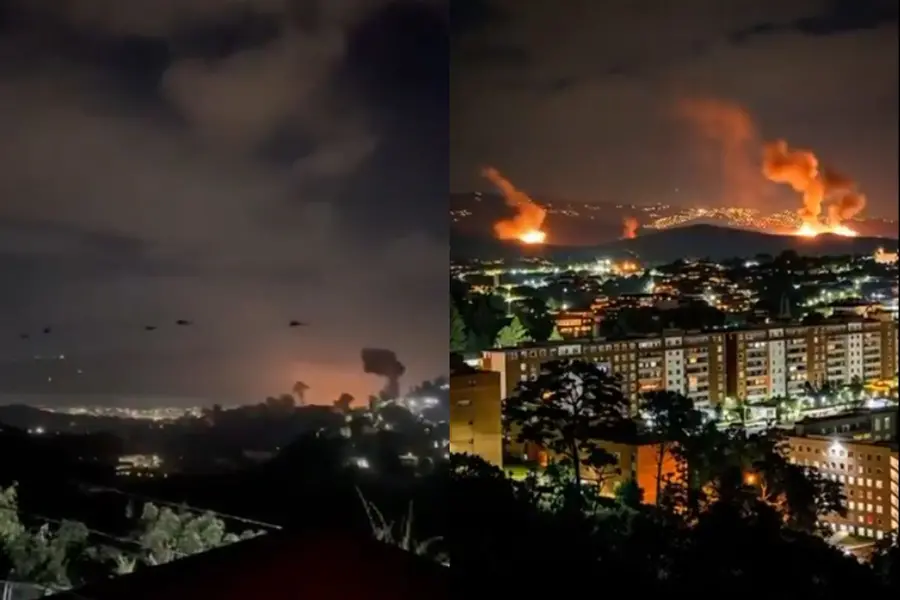
What we are witnessing today marks a decisive and terrifying transformation in the history of political violence. Terrorism, long understood as the weapon of marginal, stateless or insurgent groups, has undergone a structural mutation. It has migrated upward away from clandestine cells and non-state actors – into the very heart of powerful nation – states. When a state deploys overwhelming force beyond its borders, suspends international law, abducts or eliminates political leaders or nationally elected sovereigns and justifies these acts through the language of ‘narco-terrorism’, we are no longer in the realm of counter – terrorism. We are confronting state terrorism in its most naked form.
This transformation is far more alarming than conventional terrorism. Non – State terrorism however brutal, remains limited by scale, resources, and legitimacy. State terrorism, by contrast, commands armies, and diplomatic immunity. When such a state acts without fettering forces – without legal restraint, moral inhibition, or collective accountability - it does not merely violate international norms. It redefines the world itself as a potential crime scene, a space permanently open to intervention, invasion, coercion and punishment.
This transformation is not a theoretical abstraction, it has assumed a concrete and brutal form in the American military intervention in Venezuela and the abduction of its elected sovereign under the rubric of “narco-terrorism”. The capture and extra territorial transfer of a sitting head of state – without the authorization of United Nations or any other international agencies, without multi lateral judicial process, and without conclusive evidence tested in any neutral international forum – marks a decisive rapture in the norms governing sovereignty and international law. What was presented as a law-enforcement operation was, in substance, a military act of terror, intended not merely to punish a national leader but to intimidate the entire world and warn those of the costs of defiance
The charges invoked – narco terrorism, drug – trafficking, transnational criminality – are themselves revealing. They function not as judicial conclusions but as pre-emptive moral verdicts, issued unilaterally by a powerful state and enforced through armed force rather than due process. This strategy has a disturbing precedent. The Venezuelan episode recalls with uncanny clarity the fabricated claims of weapons of mass destruction in Iraq, claims later exposed as false but nevertheless used to justify invasion, regime change and the eventual capture and execution of Saddam Hussein. In both cases, allegations were elevated into ‘truths’ through repetition, media circulation, and institutional authority, while the absence of proof was treated as irrelevant once power had decided.
The parallel is not incidental, it reveals a pattern. Criminalization replaces political conflict and legal language masks geopolitical violence. A sovereign leader is transformed into a global criminal, his country into a crime scene and military aggression into police action. The world is asked not to debate evidence, legality or proportionality, but to accept the spectacle of punishment as proof of guilt. In this version. force precedes law and legality follows conquest.
What distinguishes the Veneznelan case is not merely the repetition of this pattern, but its escalation. The Iraq war at least involved an elaborate – if fraudulent – multi lateral performance at the United Nations. Venezuela witnesses the collapse even of that pretence. A single state now claims the authority to indict, arrest and transfer a foreign Sovereign directly, converting the entire planet into an extension of its domestic jurisdiction. This is no longer regime change disguised as war, it is state terrorism legitimized as global policing.
It is at this point where sovereignty is abducted, law is suspended, and fear is universalized – that the concept of state terrorism becomes indispensable not as rhetoric but as analytic necessity.
Defining State Terrorism
The concept of State Terrorism is not new, but it has been systematically marginalized in mainstream political discourse. Scholars such as Noam Chomsky, Edward Herman and Richard Falk have long argued that terrorism should be identified not by the identity of the actor but by the nature of the act: the deliberate use of violence or threat of violence against civilians or political communities to instill fear and achieve political objectives. Under this definition, state terrorism is not an anomaly but a recurring feature of modern power. As Chomsky observes in Pirates and Emperors, Old and New, states routinely exempt themselves from the moral and legal standards they impose on others, thereby normalizing terror when it serves imperial interests. What distinguishes the present moment is not the existence of state terrorism, but its globalization and juridicial rationalization.
State terrorism today no longer appear as a regrettable excess. It is framed as law enforcement, humanitarian intervention, counter terrorism or defence of democracy. Violence is no longer denied; it is proceduralised, bureaucratized, militarized, and narrated as necessity.
From the state of Exception to the planetary state of Exception
Carl Schmitt defined the ‘Sovereign’ as “he who decides on the exception”. The state of exception, for schnult, involved the suspension of law in moments of existential threat. Crucially, however, Schmitt’s sovereign remained territorially bounded. The exception was declared within a state, over a people, inside a judicial space that could be suspended only because it already existed.
What we confront today is something qualitatively different. The exception is no longer territorial, it is planetary.
When a powerful state claims the right to:
- Suspend international law,
- Violate foreign sovereignty,
- Override multilateral institutions, and
- enforce its domestic legal claims across the globe, the exception cases to be exceptional. It becomes the default mode of global governance.
What we now see is the globalization of the exception, where the entire world is treated as a potential emergency zone. Geography no longer restraints sovereignty; borders no longer protect political communities. The planet itself becomes a legal vacuum selectively filled by the will of the powerful.
This is not merely totalitarianism. It is existential insecurity imposed as order.
Terror as Governance
Terrorism is fundamentally about producing fear beyond the immediate victim. State terrorism operates similarly, but on a civilizational scale. The message is not directed only at the targeted state or leader. It is addressed to all states, especially weaker ones:
No sovereignty is secure, no legal immunity is guaranteed, no international institution will protect you if you fall out of alignment. This is terror as governance, deterance through fear.
Hannah Arendt, in the Origins of Tolalitarianism noted that terror becomes total when it no longer responds to specific acts but establishes a condition of permanent vulnerability. When applied globally, this logic produces a world in which states exist not as equal members of an international community, but as conditional entities tolerated or punished depending on compliance. Such an order resembles not a system of law but a system of managed fear.
The collapse of International law
International law was built on the assumption that sovereignty, however imperfect, provide a minimum guarantee against arbitrary force. The UN Character’s prohibition on the use of force, except in self-defence or with security council authorization, was designed to prevent powerful states from unilaterally imposing their will.
State terrorism erodes this architecture entirely. When a powerful nation can reinterpret aggression as policing, invasion as extraction, abduction as prosecution, law becomes a unilateral instrument, not a shared constraint. As Martti Koskennieme has shown, international law becomes indeterminate under conditions of power asymmetry; it bends toward the interests of the strong while retaining a moral vocabulary that disguises this bending. The result is not lawlessness, but selective legality – law for the weak, discretion for the strong.
Empire without colonies
This new form of state terrorism produces a paradoxical world order. The world no longer formally consists of colonies, yet it increasingly functions as a field of potential annexation not necessarily territorial but juridical, economic and political.
States are not colonized in the classical sense, they are rendered permeable. Their leaders can be removed, their economies sanctioned into collapse, their populations disciplined through deprivation, all without formal occupation. This is empire without maps, domination without administration. It is therefore not incidental but structurally revealing that Donald Trump publicly declared that the United States would hence forth rule – ‘take charge of’ – Venezuela – an utterance indicative of not classical colonialism but a far more dangerous claim: the right to override sovereignty, to command without responsibility, to dominate without naming domination. Venezuela is thus reduced to a suspended polity, neither sovereign nor formally occupied, existing only at the discretion of imperial decision.
As Hardt and Negri argue in Empire, Sovereignty has become deterritorialised. But what they describe as a diffuse global order increasingly reveals a core of concentrated power capable of deciding life, death, legitimacy, and illegitimacy on a planetary scale.
Why this is more dangerous than non-state Terrorism
Non-state Terrorism shocks: state terrorism restructures.
A terrorist attack kills innocents: State terrorism, reorganizes the conditions under which innocence itself loses protection. It normalizes the idea that violence need not be justified universally – only successfully. It teaches the world that power, not principle, is the ultimate source of legality.
Moreover, non-state terrorism provokes condemnation, investigation, and counter measures. State terrorism, by contrast, often encounters, silence, euphemism, diplomatic hedging, or outright endorsement.
Conclusion
What we face, then, is not merely a crisis of international relations, but a civilizational rupture. The transformation of terrorism from the weapon of the weak into the prerogative of the strong signals the exhaustion of the post – war world order. When a powerful state can make its will appear as the will of the world, and its national interest as the global interest, the very idea of a shared humanity factures.
The planetary state of exception is a horrible state – not because it is chaotic, but because it is systematic. It is terror embedded in procedure, violence wrapped in legality, domination spoken in the language of order. If unchecked, it will not merely distabilise international relations, it will render the world a space where justice survives only as rhetoric and fear becomes the true global currency.
Published: 06 Jan 2026, 10:09 am IST
Related Topics
Disclaimer: Kindly avoid objectionable, derogatory, unlawful and lewd comments, while responding to reports. Such comments are punishable under cyber laws. Please keep away from personal attacks. The opinions expressed here are the personal opinions of readers and not that of Mathrubhumi.