
U.S. officials said the negotiations collapsed over what they described as Iran’s refusal to commit to abandoning a path to a nuclear weapon
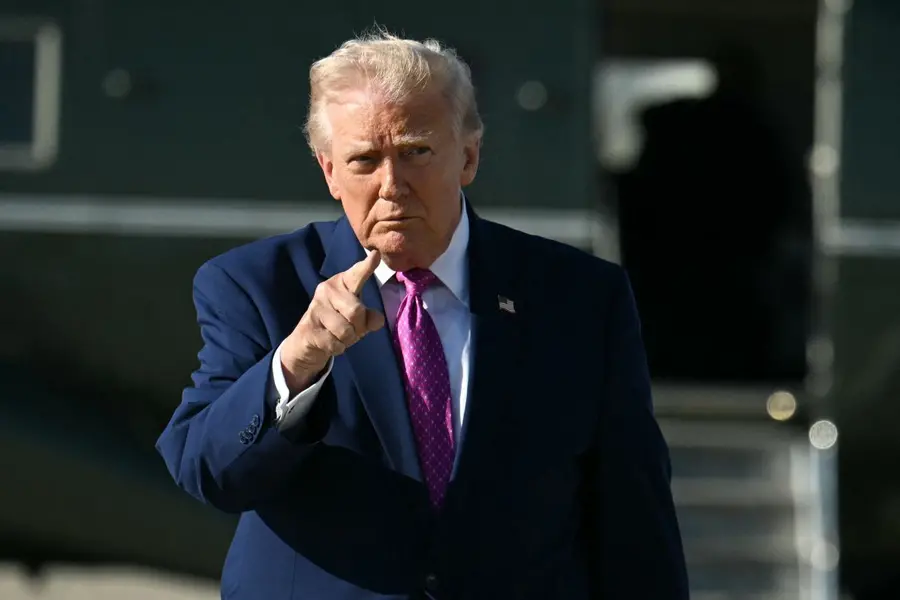
Islamabad: President Donald Trump posted Sunday on social media that the U.S. Navy would “immediately” begin a blockade to stop ships from entering or leaving the Strait of Hormuz.
After U.S. officials ended peace talks with Iran in Pakistan, Trump sought to exert more strategic control over the waterway responsible for the transportation of 20% of global oil supplies — hoping to takeaway Iran’s key source of economic leverage in the war.
“Effective immediately, the United States Navy, the Finest in the World, will begin the process of BLOCKADING any and all Ships trying to enter, or leave, the Strait of Hormuz,” Trump posted.
The president added that he has “also instructed our Navy to seek and interdict every vessel in International Waters that has paid a toll to Iran. No one who pays an illegal toll will have safe passage on the high seas.”
The president stressed that Iran’s nuclear ambitions were at the core of the failure to end the war and that the U.S. was prepared to end the war.
“(A)t an appropriate moment, we are fully ‘LOCKED AND LOADED,’ and our Military will finish up the little that is left of Iran!” Trump posted.
The United States and Iran ended face-to-face talks on Sunday without an agreement, leaving a fragile two-week ceasefire in doubt.
U.S. officials said the negotiations collapsed over what they described as Iran’s refusal to commit to abandoning a path to a nuclear weapon, while Iranian officials blamed the U.S. for the breakdown of the talks without specifying the sticking points.
Neither side indicated what will happen after the 14-day ceasefire expires on April 22. Pakistani mediators urged all parties to maintain it. Both said their positions were clear and put the onus on the other side, underscoring how little the gap had narrowed throughout the talks.
“We need to see an affirmative commitment that they will not seek a nuclear weapon, and they will not seek the tools that would enable them to quickly achieve a nuclear weapon,” Vice President JD Vance said after the 21-hour-long talks.
Iran’s parliament speaker Mohammad Bagher Qalibaf, who led Iran in the negotiations, said it was time for the United States “to decide whether it can gain our trust or not.”
He did not mention the core disputes in a series of social media posts, though Iranian officials earlier said the talks fell apart over two or three key issues, blaming what they called U.S. overreach.
Published: 12 Apr 2026, 06:46 pm IST
Related Topics
Disclaimer: Kindly avoid objectionable, derogatory, unlawful and lewd comments, while responding to reports. Such comments are punishable under cyber laws. Please keep away from personal attacks. The opinions expressed here are the personal opinions of readers and not that of Mathrubhumi.
