
Al-Maliki's political comeback path has emerged after the caretaker PM stepped aside, but his previous premiership was marked by sectarian strife and the rise of ISIS.
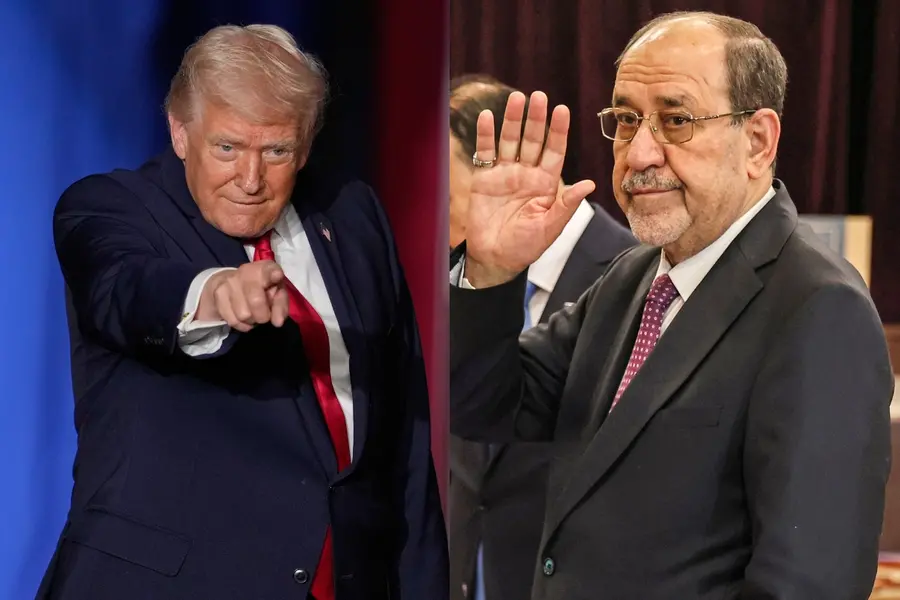
Washington: US President Donald Trump issued a sharp ultimatum to Baghdad on Tuesday, vowing to terminate all support for Iraq if former Prime Minister Nouri al-Maliki is reinstated to the country’s top executive office.
The warning followed an announcement on Saturday by the Coordination Framework, Iraq’s dominant Shiite political alliance, endorsing al-Maliki as its nominee for premier. The White House and State Department view al-Maliki as a staunch ally of Tehran whose return would compromise Iraqi sovereignty.
“Last time Maliki was in power, the Country descended into poverty and total chaos. That should not be allowed to happen again,” Trump said in a social media post. “Because of his insane policies and ideologies, if elected, the United States of America will no longer help Iraq and, if we are not there to help, Iraq has ZERO chance of Success, Prosperity, or Freedom.”
A Regional Power Struggle
Trump’s open interference in Iraqi internal affairs comes as he considers military strikes against neighbouring Iran. The Islamic Republic is currently reeling from a deadly internal crackdown on mass anti-government protests that began in late December.
While Trump has threatened kinetic action against Tehran, he suggested earlier this week that strikes were being deferred after claiming Iran halted some executions of detainees, a claim Iranian officials have denied. The US military presence in the region remains volatile; while the aircraft carrier USS Gerald Ford was diverted to South America in November to assist in the capture of former Venezuelan leader Nicolás Maduro, the USS Abraham Lincoln and its strike group arrived in Middle Eastern waters on Monday.
The Path to a Third Term
The political path for al-Maliki opened after caretaker Prime Minister Mohammed Shia al-Sudani stepped aside earlier this month. Despite al-Sudani’s bloc winning the largest share of seats in November’s parliamentary elections, he was unable to secure enough support to form a government, leaving the field to al-Maliki.
Al-Maliki’s previous tenure (2006–2014) was defined by the 2006 al-Askari shrine bombing and the subsequent rise of the Islamic State. While initially supported by the George W. Bush administration, U.S. officials eventually grew to distrust him, accusing his government of sectarian favouritism that alienated Sunnis and Kurds and fueled national instability.
Diplomatic Pressure
The Trump administration has intensified its messaging in recent days. Secretary of State Marco Rubio spoke with al-Sudani on Sunday to convey Washington’s opposition to any government perceived as a puppet of Tehran.
“The Secretary emphasised that a government controlled by Iran cannot successfully put Iraq’s own interests first, keep Iraq out of regional conflicts, or advance the mutually beneficial partnership between the United States and Iraq,” said State Department spokesperson Tommy Pigott.
Despite the US pressure, some analysts suggest al-Maliki remains a formidable survivor. "But this is Iraq, so never say never," said Hussain Abdul-Hussain of the Foundation for Defence of Democracies. "And this was a guy whose political life was supposed to have expired many, many years ago, and yet Maliki is still here."
The Iraqi Parliament was scheduled to elect a president on Tuesday, a prerequisite for formally naming a prime minister, but the session was delayed as Kurdish parties sought more time to finalise their own candidates.
With inputs from AP
Published: 28 Jan 2026, 09:39 am IST
Related Topics
Disclaimer: Kindly avoid objectionable, derogatory, unlawful and lewd comments, while responding to reports. Such comments are punishable under cyber laws. Please keep away from personal attacks. The opinions expressed here are the personal opinions of readers and not that of Mathrubhumi.
