
Former US President Donald Trump has reignited diplomatic tensions with Colombia after branding President Gustavo Petro an “illegal drug dealer”
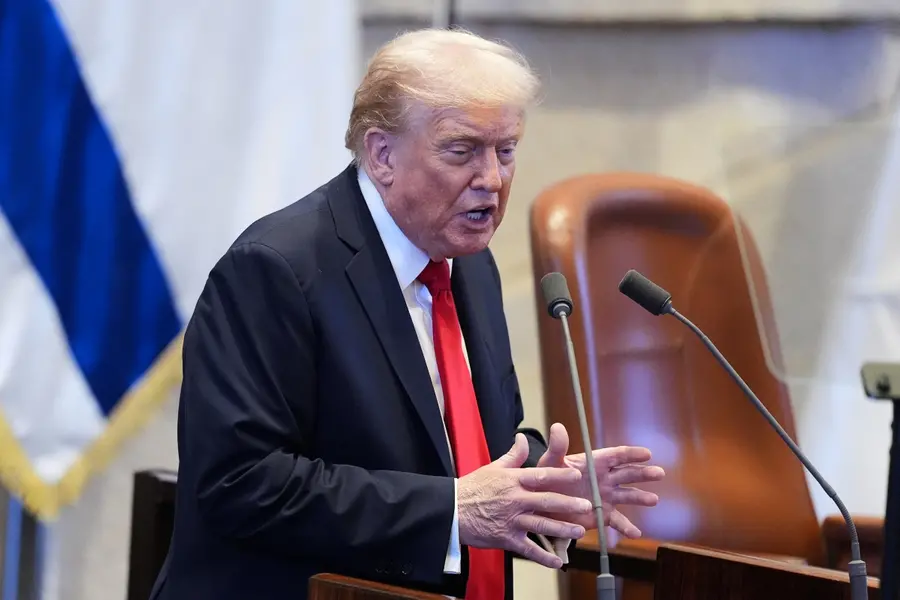
Washington DC: In a sharp escalation of rhetoric, Donald Trump declared on Sunday that the United States would cut off all funding to Colombia, accusing President Gustavo Petro of failing to curb drug production and even encouraging it.
Writing on his Truth Social platform from his Mar-a-Lago resort in Florida, Trump alleged that Petro was “strongly encouraging the massive production of drugs” across Colombia and doing “nothing to stop it”, despite receiving what he called “large-scale payments and subsidies” from Washington. He went as far as calling Petro “an illegal drug dealer” who is “low rated and very unpopular.”
Also Read

“AS OF TODAY, THESE PAYMENTS, OR ANY OTHER FORM OF PAYMENT, OR SUBSIDIES, WILL NO LONGER BE MADE TO COLOMBIA,” Trump declared. He also criticised Petro for having “a fresh mouth toward America.”
The announcement coincided with heightened military activity in the region. US Defence Secretary Pete Hegseth confirmed a strike in South American waters targeting a vessel allegedly linked to the Colombian rebel group National Liberation Army (ELN). The attack reportedly killed three men aboard a boat carrying narcotics, though US intelligence details were not disclosed.
The Colombian president, however, responded angrily, accusing the US of “assassination” following a separate strike days earlier in Caribbean waters that killed at least one Colombian citizen. Petro alleged that the US “invaded our national territory” and “murdered” a fisherman, Alejandro Carranza, whose boat was reportedly adrift with a distress signal.
He further claimed the attacks violated Colombia’s sovereignty and urged his attorney general’s office to initiate international legal proceedings. “The United States has fired a missile to kill a humble fisherman and destroyed his family. This is Bolívar’s homeland, and they are murdering his children with bombs,” Petro wrote on X.
The US, meanwhile, maintains that its strikes target drug traffickers and vessels tied to terrorist-designated groups. Since early September, at least 32 people have been killed in six such operations, according to official statements.
The growing dispute adds strain to a relationship already under pressure. In September, Washington accused Colombia of not cooperating in anti-narcotics efforts, though sanctions were waived at that time. Colombia remains the world’s top cocaine exporter, with coca cultivation hitting record levels, according to the United Nations.
Tensions further escalated after the US reportedly revoked Petro’s visa during his visit to the United Nations General Assembly in New York, following his participation in a protest where he urged American soldiers to “disobey the orders of Trump.”
Colombian Interior Minister Armando Benedetti said that an injured man from a recent US strike would face prosecution upon return, describing him as having been aboard a vessel “full of cocaine.” Ecuador’s Interior Ministry confirmed that another injured national, Andrés Fernando Tufiño Chila, was repatriated and found to be in good health.
The developments mark one of the most serious diplomatic clashes between Washington and Bogotá in recent years, underscoring how the drug war and foreign policy are once again central to Trump’s combative international stance.
Trump’s statement represents a significant shift in tone from traditional US-Colombia relations, historically anchored in joint counter-narcotics cooperation. Colombia has long been a key US ally in Latin America, receiving billions in aid under initiatives such as Plan Colombia.
Trump’s accusations that Petro promotes drug cultivation echo previous disputes between the two leaders. Petro, Colombia’s first leftist president, has advocated a new approach to drug policy, focusing on regulation and social reform rather than militarised enforcement — a stance often at odds with Washington.
The Defence Department’s confirmation of a lethal strike against an ELN-linked vessel came shortly after Petro’s accusations of unlawful US military action. Although the ELN has been designated a terrorist organisation by the US since 1997, Bogotá insists that American forces violated international law by operating in or near Colombian territorial waters.
Petro’s government continues to demand an explanation from Washington, while the Biden administration has not yet issued a formal response to the latest comments from Trump.
Both countries now face a growing diplomatic storm — one that blends populist politics, drug policy, and regional power struggles in a volatile mix.
(With inputs AP)
Published: 19 Oct 2025, 10:03 pm IST
Related Topics
Disclaimer: Kindly avoid objectionable, derogatory, unlawful and lewd comments, while responding to reports. Such comments are punishable under cyber laws. Please keep away from personal attacks. The opinions expressed here are the personal opinions of readers and not that of Mathrubhumi.