
Donald Trump has cited India’s voter ID rules while pushing the SAVE America Act. Here is what India’s election system actually requires, how postal voting works and where the US-India comparison falls short.
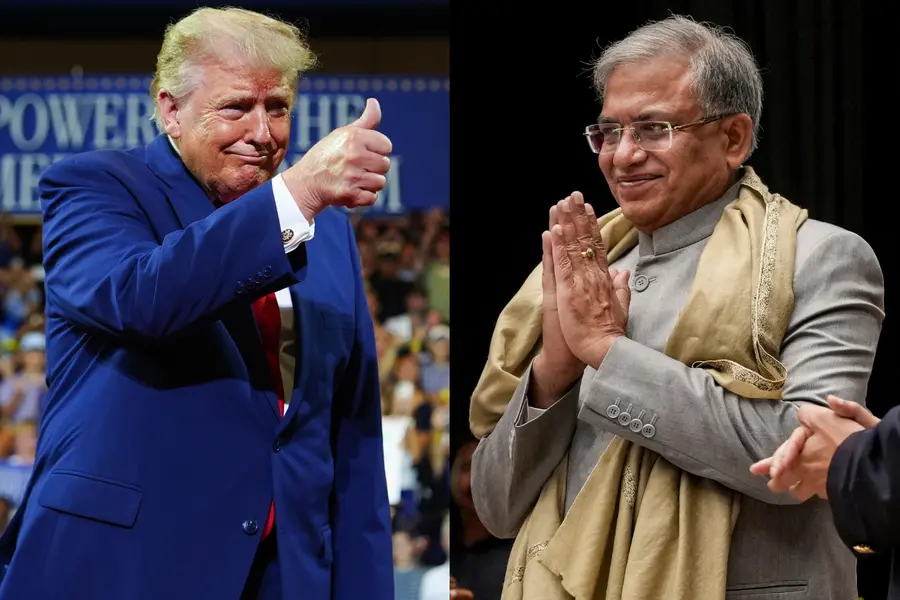
US President Donald Trump has once again invoked India’s election system while demanding passage of the SAVE America Act, pointing to India’s use of photo identification at polling stations.
But while India does have a nationwide voter-identification system, Trump’s comparison leaves out important differences in how the two countries register voters, verify eligibility and conduct elections.
Trump invokes India while pushing US voter ID law
Trump said India’s Chief Election Commissioner Gyanesh Kumar had asked the US administration how American elections could be conducted without valid photo identification.
In a Truth Social post, Trump cited India’s 2024 Lok Sabha election and said it involved 646 million voters, with less than 1% voting by mail, while claiming that every voter had a valid photo identity document. He then renewed his call for the SAVE America Act.
The central argument is straightforward: Trump is presenting India as an example of a large democracy where voters are required to establish their identity before voting.
There is a factual basis for the comparison on voter identification, but several details require clarification.
How big was India’s 2024 election?
India’s 2024 Lok Sabha election had 97.98 crore registered electors, or about 979.8 million people. Of these, 64.64 crore votes were polled, according to Election Commission of India data.
The ECI's official figures show:
- 97.98 crore registered electors
- 64.64 crore total votes polled
- 64.21 crore votes through EVMs
- 42.82 lakh postal ballots
- 543 parliamentary constituencies
- More than 10.52 lakh polling stations
So Trump's figure of roughly 646 million voters refers to the number of votes actually polled, rather than the entire electorate.
The postal-ballot comparison also needs context. India's 2024 Lok Sabha election recorded about 4.28 million postal ballots, which was roughly 0.66% of the 646.4 million total votes polled.
That means Trump's "less than 1%" figure is broadly consistent with the ECI's published numbers, although India's postal voting system is structured very differently from America's widespread absentee and mail-voting systems.
Does every Indian voter have to show a voter ID?
A photo ID is required for identification at an Indian polling station, but it does not have to be the voter ID card itself.
The ECI says voters can use EPIC, commonly known as the voter ID card, or one of several alternative photo identification documents. These include a passport, driving licence, PAN card, Aadhaar, certain government employee cards, pension documents and other specified IDs.
The ECI's current guidance therefore makes an important distinction:
Being on the electoral roll is the primary requirement to vote. Photo identification establishes that the person appearing at the polling station is the elector listed on the roll.
The ECI explicitly states that a person whose name is not on the electoral roll cannot simply produce an Aadhaar card or voter ID and vote.
This is one of the most important points missing from the simple "India has voter ID, therefore America should" comparison.
Is Aadhaar India's voter ID?
No.
Aadhaar is accepted as one of the permitted identity documents at polling stations, but Aadhaar itself is not proof of Indian citizenship.
The ECI has explicitly distinguished identity from citizenship. In a recent legal context, the Commission and Supreme Court have noted that Aadhaar does not establish citizenship or domicile, although it can be used for identification under the election law framework.
That distinction matters because the SAVE America Act is not simply a voter-ID proposal.
It combines photo identification with documentary proof of US citizenship at voter registration.
What exactly would the SAVE America Act do?
The proposed Safeguard American Voter Eligibility Act, or SAVE America Act, would impose substantially broader federal requirements on US elections.
The 2026 House version would require people registering to vote in federal elections to provide documentary proof of US citizenship. It would also require voters in federal elections to present an eligible photo ID. For absentee voters, the proposal would require a copy of eligible identification with both the ballot request and ballot submission.
The proposed citizenship documents include specified government-issued documents, such as qualifying REAL ID documents, passports and certain other combinations of identification and citizenship evidence.
The bill would also require states to establish processes to identify and remove non-citizens from federal voter rolls.
So Trump's comparison with India concerns two separate issues:
- India: identity verification at the polling station plus eligibility rules for inclusion on electoral rolls.
- SAVE America Act: documentary citizenship verification for registration and federal photo-ID requirements for voting.
Does India require proof of citizenship to become a voter?
Indian law already restricts voter registration to citizens.
The ECI states that only an Indian citizen aged 18 or above who meets the relevant eligibility and residence requirements can be registered as a general elector. A non-citizen is not eligible for registration.
However, this does not mean that the document shown at the polling booth is necessarily a citizenship certificate.
For example, Aadhaar can establish identity but is not citizenship proof. The electoral-registration process separately involves eligibility and residence requirements.
That makes India's system more complicated than the shorthand "everyone has a voter card" suggests.
What actually makes India's system difficult to impersonate?
India uses several layers of safeguards rather than relying on a single ID card.
At the polling station, officials first check the voter's name against the electoral roll and verify identification. The voter's finger is then marked with indelible ink, and the voter signs the relevant register.
The ECI also has mechanisms dealing with duplicate or attempted impersonation. It states that voting in another person's name is an offence and that a voter who discovers that someone has already voted in their name can still cast a tendered ballot under the prescribed procedure.
There are also electoral-roll revision, objection and deletion procedures. The ECI's voter-services system allows citizens to search the roll, update details and request deletion of names.
India's system therefore combines:
electoral-roll eligibility + voter identification + polling-station verification + indelible ink + polling records + EVM/VVPAT procedures + post-poll safeguards.
Is India's election system actually "better"?
That depends on what is being measured.
If the question is whether India has a robust voter-identification system, the answer is yes. Voters must be on the electoral roll and must establish their identity at the polling station using an accepted photo ID.
But if the claim is that India's system has therefore eliminated all election-related problems, that would go beyond the available evidence.
India continues to face disputes over electoral-roll accuracy, duplicate entries, deletions, access to voter lists, verification procedures and the administration of elections. The existence of photo ID does not by itself resolve those issues.
The ECI's own data also show that the system involves continuous roll revision and correction.
In other words, photo ID is one layer of election security, not proof that an entire electoral system is flawless.
India and US elections are fundamentally different
The biggest weakness in a direct India-US comparison is that the countries have different constitutional and administrative structures.
India has a central constitutional election authority, the Election Commission of India, which administers elections to Parliament, state legislatures and the offices of the President and Vice-President.
The US election system is far more decentralised, with states and local jurisdictions playing major roles in registration and election administration.
That difference is central to the American debate.
The SAVE America Act seeks to establish federal requirements concerning citizenship documentation and photo identification for federal elections, potentially imposing a common national baseline across jurisdictions.
The mail-voting difference is also important
Trump's comparison highlights India's low use of postal ballots.
But India's postal-ballot system is not equivalent to America's broader absentee/mail-voting system.
India primarily uses postal ballots for specified categories of voters, including service voters and certain other eligible groups. The ECI also operates an electronically transmitted postal-ballot system for eligible service electors.
The US, by contrast, has states where absentee or mail voting is available much more broadly.
That is why the two countries' percentages cannot simply be interpreted as evidence that one system is inherently more secure than the other.
Why Trump is making the India comparison now
The timing is significant.
Trump has made election rules a major political issue ahead of the 2026 US midterm elections. His administration has also faced legal challenges over efforts to restrict mail voting. A federal judge in Boston recently blocked implementation of an executive order seeking to restrict mail voting, ruling that the administration lacked the necessary authority.
The SAVE America Act therefore sits within a wider US political battle over:
- proof of citizenship;
- voter ID;
- mail and absentee voting;
- federal versus state control of elections;
- alleged non-citizen voting;
- and access to the ballot.
Trump's reference to India gives his argument an international comparison that is particularly striking because India conducts elections on a vastly larger scale while using mandatory identification at polling stations.
But is there evidence of widespread non-citizen voting in the US?
This is where the debate becomes more contentious.
Supporters of the SAVE Act argue that citizenship verification is necessary to protect election integrity and prevent non-citizens from being registered or voting.
Opponents argue that non-citizens are already prohibited from voting in federal elections and that documented instances of non-citizens voting are extremely rare. They also argue that additional documentation requirements could make registration harder for eligible citizens who do not have the required documents.
That disagreement is at the heart of the legislation's political fight. The debate is therefore not simply "ID versus no ID". It is also about whether the additional federal requirements would prevent meaningful election fraud or instead create barriers for eligible voters.
The key fact behind Trump's comparison
Trump is right that India uses photo identification extensively at polling stations.
He is also broadly right that postal ballots constituted less than 1% of votes cast in India's 2024 Lok Sabha election. The ECI records 42.82 lakh postal ballots out of 64.64 crore total votes.
But saying that India's model is simply "every voter has a valid photo ID" leaves out crucial details.
India does not require the voter to possess only one particular voter ID card. Multiple photo IDs are accepted. More importantly, possession of an ID does not itself give someone the right to vote: the person's name must be on the electoral roll.
And Aadhaar, despite being widely used as an identity document, is not proof of citizenship.
Analysis: What Trump's India example gets right — and what it misses
India offers Trump a useful example of how a very large democracy can conduct predominantly in-person elections with strong identity verification at polling stations.
However, India's experience does not establish that introducing the same requirements in the US would automatically produce the same electoral outcomes. The two systems differ in voter registration, election administration, postal voting, federal structures and the documents used to establish eligibility.
The more accurate takeaway is this:
India demonstrates that large-scale elections can operate with mandatory polling-station identification. It does not, by itself, prove that photo ID or citizenship-document requirements are sufficient to eliminate election fraud, nor that adopting India's approach would have identical effects in the United States.
That distinction is important as Trump uses India's 2024 election to strengthen his political case for the SAVE America Act.
Published: 18 Aug 2026, 06:33 am IST
ABOUT THE AUTHOR

Disclaimer: Kindly avoid objectionable, derogatory, unlawful and lewd comments, while responding to reports. Such comments are punishable under cyber laws. Please keep away from personal attacks. The opinions expressed here are the personal opinions of readers and not that of Mathrubhumi.