
The Supreme Court has raised serious concerns over the Election Commissioner appointment process, questioning whether the current law gives excessive control to the executive.
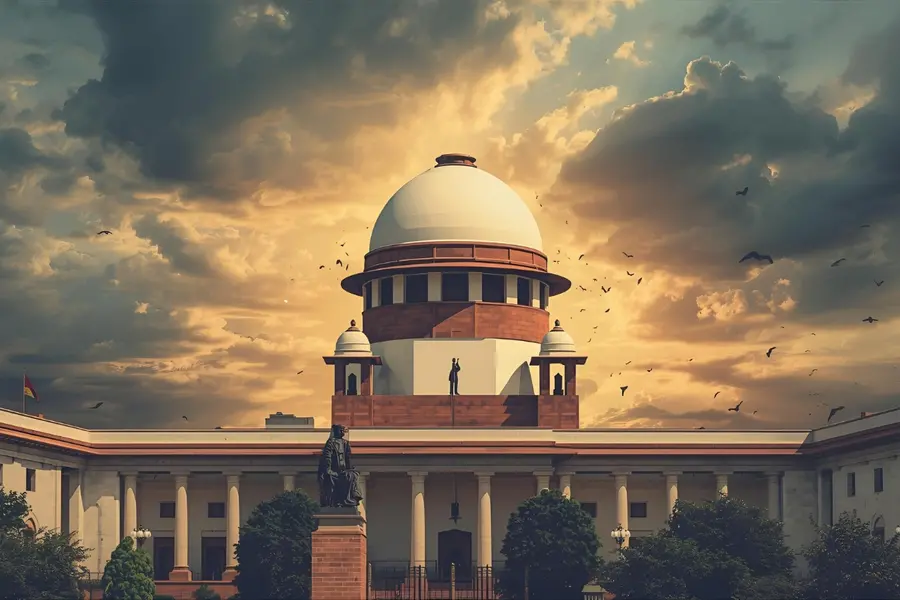
New Delhi: The Supreme Court on Thursday expressed strong reservations over the process used to appoint the Chief Election Commissioner (CEC) and Election Commissioners, questioning whether the current system compromises the independence of the Election Commission of India (ECI).
Hearing a batch of petitions challenging the Chief Election Commissioner and Other Election Commissioners (Appointment, Conditions of Service and Term of Office) Act, 2023, the court repeatedly referred to what it described as an “executive veto” in the selection process.
Also Read

The bench observed that the present structure effectively gives the executive control over appointments through a 2:1 majority in the selection committee.
Bench questions ‘show of independence’
A bench comprising Justices Dipankar Datta and Satish Chandra Sharma questioned the composition of the current selection panel, which includes the Prime Minister, the Leader of Opposition in the Lok Sabha, and a Union Cabinet minister nominated by the Prime Minister.
The judges remarked that the inclusion of the Leader of Opposition creates only a “show of independence” because the executive still retains numerical control through two members.
The court questioned why an independent or neutral figure was not included in the panel, especially when institutions such as the Central Bureau of Investigation (CBI) include the Chief Justice of India (CJI) in the appointment process for the CBI Director.
The bench specifically referred to the appointment process of the CBI Director, where the selection committee includes the Prime Minister, the Leader of Opposition, and the Chief Justice of India.
Justice Dipankar Datta questioned why the Election Commission, which oversees free and fair elections central to democracy, did not have similar safeguards ensuring neutrality.
The court observed that maintaining democracy through fair elections was equally important, if not more significant, than maintaining law and order.
Centre defends 2023 law
Attorney General R Venkataramani, appearing for the Centre, defended the 2023 law and argued that Parliament was fully empowered to frame legislation governing the appointment process.
He submitted that the Supreme Court’s March 2023 judgment in the Anoop Baranwal case was only intended to temporarily fill a constitutional vacuum until Parliament enacted a law.
The Centre also argued that the inclusion of a judicial member in the selection panel was a legislative choice rather than a constitutional necessity.
According to the government, the Election Commission’s independence is protected through constitutional safeguards, fixed tenure, statutory protections, and removal procedures, not solely through the appointment process.
Court says neutrality must also be visible
The Supreme Court, however, stressed that constitutional credibility requires not only actual independence but also visible neutrality.
The bench observed that the Election Commission “should not only be neutral but should also appear neutral in its functioning.” The judges said that public confidence in democratic institutions depends heavily on the perception of impartiality.
The court repeatedly questioned whether a Cabinet minister nominated by the Prime Minister could realistically act independently in the event of disagreement within the panel.
Petitioners including Congress leader Jaya Thakur and the Association for Democratic Reforms argued that the 2023 law undermines the independence of the Election Commission and violates constitutional principles guaranteeing free and fair elections.
Senior advocates appearing for the petitioners argued that concentrating appointment powers within the executive raises concerns over institutional autonomy and democratic accountability.
The petitioners also alleged that the law was passed without adequate parliamentary debate and claimed that the appointments of current election commissioners were carried out with unusual speed.
Court considers larger constitutional bench
The Supreme Court noted that the issue raises substantial constitutional questions involving interpretation of democratic safeguards and institutional independence.
The bench indicated that the matter may need to be referred to a Constitution Bench of at least five judges under Article 145(3) of the Constitution.
However, lawyers representing the petitioners opposed such a referral, arguing that previous judgments had already clarified the principles governing independence of constitutional bodies.
The matter has now been posted for further hearing on May 19, when additional submissions from the Centre and other parties are expected.
The case is being closely watched as it could have major implications for the future structure and independence of the Election Commission appointment process in India.
Published: 15 May 2026, 07:47 am IST
Disclaimer: Kindly avoid objectionable, derogatory, unlawful and lewd comments, while responding to reports. Such comments are punishable under cyber laws. Please keep away from personal attacks. The opinions expressed here are the personal opinions of readers and not that of Mathrubhumi.