
Trump’s legal team gave the BBC until Friday to fully retract the documentary that contained the disputed edit, issue a public apology, and “appropriately compensate” the president “for the harm caused.”
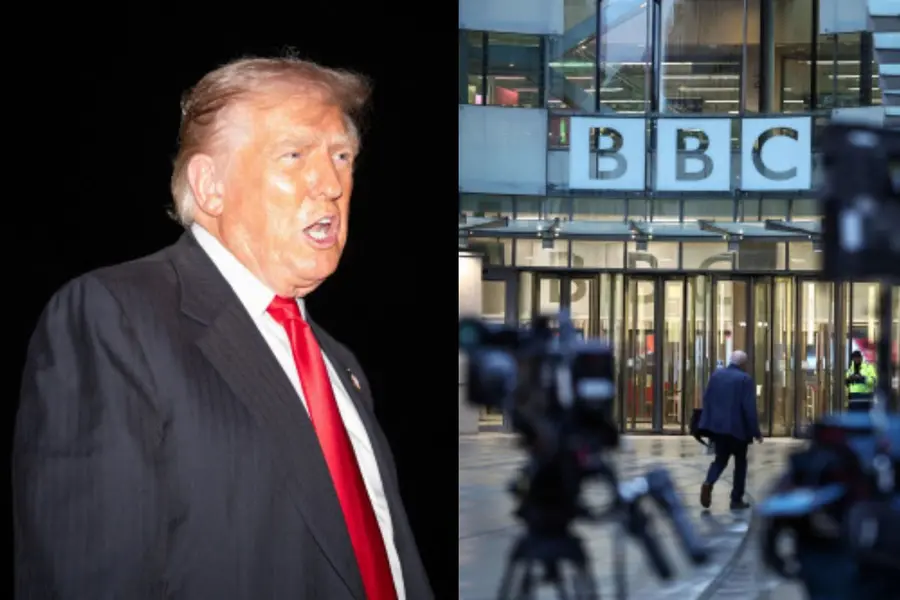
London: US President Donald Trump has threatened to sue the BBC for $1 billion after the broadcaster admitted to editing a speech in a way that appeared to show him urging “violent action” ahead of the January 6, 2021 attack on the US Capitol.
In a letter seen by AFP, Trump’s legal team gave the BBC until Friday to fully retract the documentary that contained the disputed edit, issue a public apology, and “appropriately compensate” the former president “for the harm caused.”
Also Read

Failing this, the letter warned, “President Trump will be left with no alternative but to enforce his legal and equitable rights... including by filing legal action for no less than $1,000,000,000 (One Billion Dollars) in damages.” It concluded with the line: “The BBC is on notice. PLEASE GOVERN YOURSELF ACCORDINGLY.”
The controversy has already led to the resignation of BBC Director-General Tim Davie and BBC News CEO Deborah Turness, who stepped down on Sunday amid accusations that the broadcaster’s Panorama programme edited Trump’s 2021 speech in a misleading manner.
A BBC spokesperson said the organisation would “review” Trump’s legal letter and has publicly apologised for the error.
‘Financial and reputational harm’
Trump’s legal team alleged that the BBC’s edit created a “false, defamatory, malicious, disparaging, and inflammatory” impression of his words, implying he had incited the Capitol riot.
According to the letter, the edited clip gave the impression that Trump had told supporters to “fight like hell” without including his subsequent call to “cheer on our brave senators and congressmen and women.”
“Due to their salacious nature, the fabricated statements that were aired by the BBC have been widely disseminated throughout various digital mediums, which have reached tens of millions of people worldwide,” the letter stated, adding that the broadcast had caused “overwhelming financial and reputational harm” to Trump.
A spokesperson for Trump’s legal team confirmed the letter had been sent, saying, “President Trump will continue to hold accountable those who traffic in lies, deception, and fake news.”
The former president has previously pursued lawsuits against major US outlets including ABC, CBS, and The New York Times, often accusing them of spreading “fake news.”
BBC pledges reforms amid backlash
The row has reignited a long-running debate over the BBC’s impartiality. In a letter to MPs, BBC chairman Samir Shah admitted that the edit “did give the impression of a direct call for violent action.”
“The BBC would like to apologise for that error of judgement,” Shah wrote, adding that the broadcaster would implement stronger editorial oversight to prevent similar incidents.
Trump quickly celebrated the resignations, accusing BBC journalists of being “corrupt” and “dishonest.” His press secretary described the corporation as “100 percent fake news.”
In response, Prime Minister Keir Starmer’s spokesperson said the BBC “has a vital role in an age of disinformation,” but stressed the importance of “swiftly correcting mistakes to maintain public trust.”
The government is currently reviewing the BBC’s royal charter, which defines its governance and funding structure and is due to expire in 2027. The publicly funded broadcaster, financed through a household licence fee, has already cut hundreds of jobs amid growing financial strain.
The crisis deepened after The Daily Telegraph reported that warnings from a former external standards adviser about “serious and widespread failings” in impartiality had been ignored.
Earlier this year, the BBC apologised for “serious flaws” in a documentary about the Gaza war that the UK’s media regulator found to be “materially misleading.” It also came under fire for broadcasting a Glastonbury Festival performance that included anti-Israel remarks.
Published: 11 Nov 2025, 02:42 pm IST
Related Topics
Disclaimer: Kindly avoid objectionable, derogatory, unlawful and lewd comments, while responding to reports. Such comments are punishable under cyber laws. Please keep away from personal attacks. The opinions expressed here are the personal opinions of readers and not that of Mathrubhumi.