
Families were forced to abandon their ancestral land due to chronic water scarcity, migrating to seek a new beginning
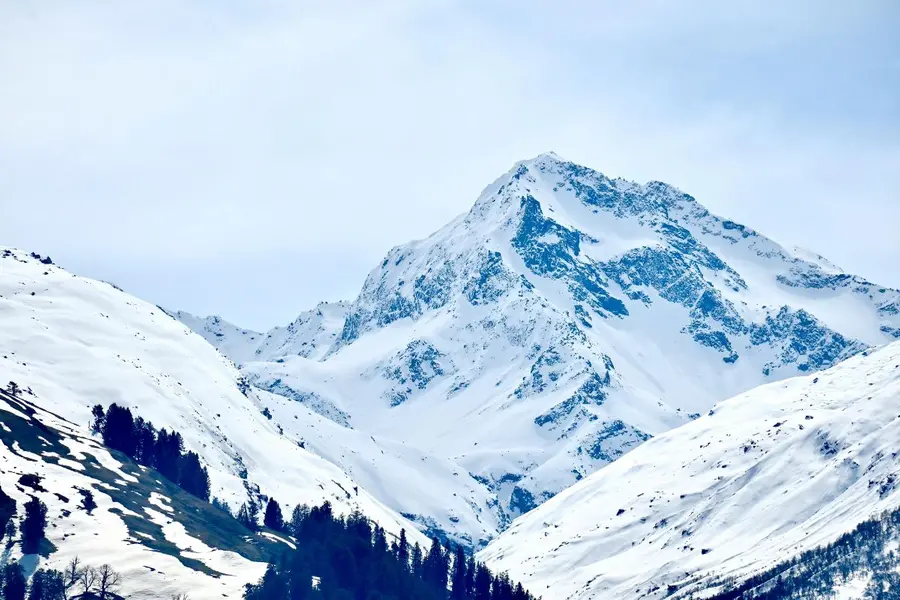
Samjung: The Himalayan village of Samjung, once a vibrant Buddhist community in Nepal's Upper Mustang, stands as a stark testament to the escalating climate crisis. Perched over 13,000 feet above sea level, Samjung thrived on yak and sheep herding and barley cultivation amidst ancient "sky caves." However, in a tragic transformation accelerated over the past two decades, its lifeline—water—dried up.
Years of declining snowfall turned snow-capped peaks barren, vanishing springs and canals. When the rain did come, it arrived as sudden, destructive floods, eroding fields and fragile mud homes. Families were forced to abandon their ancestral land due to chronic water scarcity, migrating to seek a new beginning.
This abandonment is not an isolated incident. The Hindu Kush and Himalayan regions, often called the "Third Pole," are warming faster than global averages. Their glaciers, vital water sources for 240 million mountain inhabitants and 1.65 billion downstream, are retreating at an alarming rate. According to the International Centre for Integrated Mountain Development (ICIMOD), up to 80 per cent of these glaciers could vanish this century if greenhouse gas emissions are not drastically cut.
The changes in weather patterns, including the lack of snow in Upper Mustang for nearly three years, disrupt traditional farming cycles and livestock health, making life untenable. Samjung's villagers eventually found new land provided by the king of Mustang, nearly 15 kilometres away, by the Kali Gandaki River. Young residents like Toshi Lama Gurung, 22, miss their old home but appreciate the readily available water in New Samjung, where some now work in tourism.
In New Samjung, while some residents continue the traditional practices of herding sheep and yak, life has evolved. The village's new location near Lo Manthang, a historic walled city that remained secluded until 1992, has opened up new avenues. This proximity allows villagers to engage with the growing tourism industry, providing alternative livelihoods alongside their ancestral practices.
With inputs from AP
Published: 01 Jul 2025, 08:27 am IST
Disclaimer: Kindly avoid objectionable, derogatory, unlawful and lewd comments, while responding to reports. Such comments are punishable under cyber laws. Please keep away from personal attacks. The opinions expressed here are the personal opinions of readers and not that of Mathrubhumi.
