
Supporters argue the legislation is necessary to strengthen election security, while opponents say the new documentation requirements could prevent millions of eligible Americans without easy access to passports or birth certificates from registering to vote.
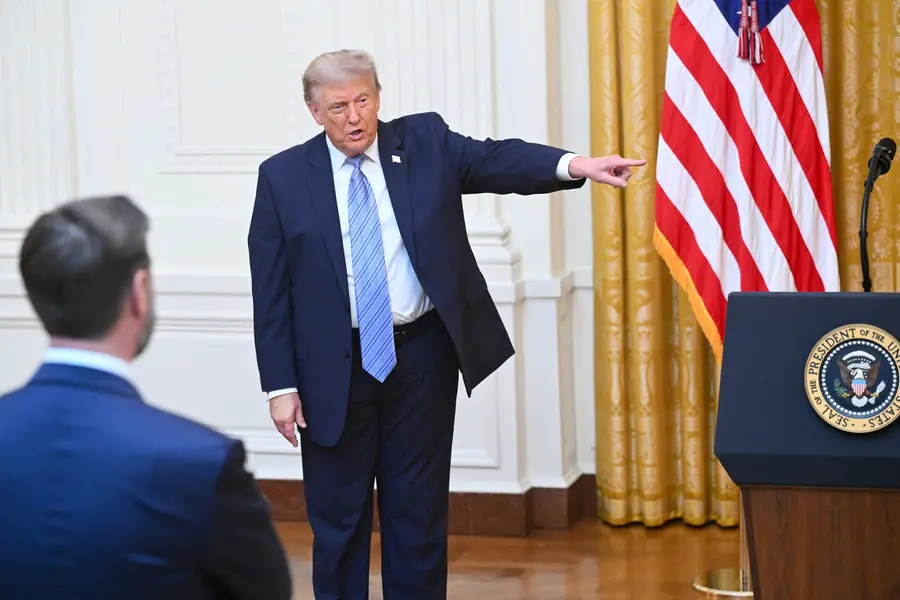
Washington: US President Donald Trump's push to overhaul federal election rules through the SAVE America Act has become one of the biggest flashpoints in Congress, even as the legislation faces steep hurdles in the Senate.
Republican leaders are now exploring ways to include parts of the bill in a budget reconciliation package, a process that would allow some provisions to pass with a simple majority and bypass the Senate's 60-vote filibuster.
The bill, which expands on last year's Safeguard American Voter Eligibility (SAVE) Act, seeks to tighten federal election rules by requiring proof of US citizenship to register to vote, photo identification at polling stations, and directing states to establish systems to identify and remove noncitizens from voter rolls.
Voting by noncitizens in federal elections is already illegal under US law. Existing federal rules also require voter registration applicants to certify, under penalty of perjury, that they are US citizens and eligible to vote.
What the bill proposes
The SAVE America Act contains three major provisions:
- Requires documentary proof of US citizenship to register for federal elections.
- Requires voters to present photo identification when casting ballots in federal elections.
- Directs states to establish programmes to identify and remove noncitizens from voter rolls using federal databases, while allowing citizens to sue election officials who fail to enforce the proof-of-citizenship requirements.
Supporters argue the legislation is necessary to strengthen election security, while opponents say the new documentation requirements could prevent millions of eligible Americans without easy access to passports or birth certificates from registering to vote.
Republicans seek alternate path
The legislation does not currently have enough support in the Senate to overcome the 60-vote filibuster threshold.
To salvage key provisions, House Republicans have proposed including elements of the bill in a $95 billion budget reconciliation package, which only requires a simple majority in the Senate. However, reconciliation rules limit the package to measures directly related to federal spending and revenue, meaning not every provision of the election bill is expected to qualify.
House Speaker Mike Johnson said Republicans intend to include as much of the legislation as possible in the reconciliation process.
"We're going to pass the Save America Act into law, as much of that as possible," Johnson said after meeting Vice President JD Vance and House Republicans.
Senate Majority Leader John Thune acknowledged that only parts of the bill may survive reconciliation.
"There are some things you could do, but are they going to be sufficient to scratch the itch of the people who want the full SAVE Act?" Thune said, suggesting grants to states could potentially qualify.
Trump's claims and the bill
Trump has repeatedly claimed the legislation would sharply restrict mail-in voting and include provisions on transgender issues.
However, the current text of the SAVE America Act does not ban mail-in voting. It does require applicants registering by mail to present documentary proof of citizenship in person before becoming eligible.
The legislation also contains no provisions related to transgender healthcare or participation in women's sports, despite claims made by Trump on social media and during public speeches.
Published: 17 Jul 2026, 07:20 am IST
Related Topics
Disclaimer: Kindly avoid objectionable, derogatory, unlawful and lewd comments, while responding to reports. Such comments are punishable under cyber laws. Please keep away from personal attacks. The opinions expressed here are the personal opinions of readers and not that of Mathrubhumi.
