
Is the Strait of Hormuz really closed? Iran says it has shut down the vital oil shipping route and warned vessels they could be targeted, but the US insists commercial ships are continuing to pass through.
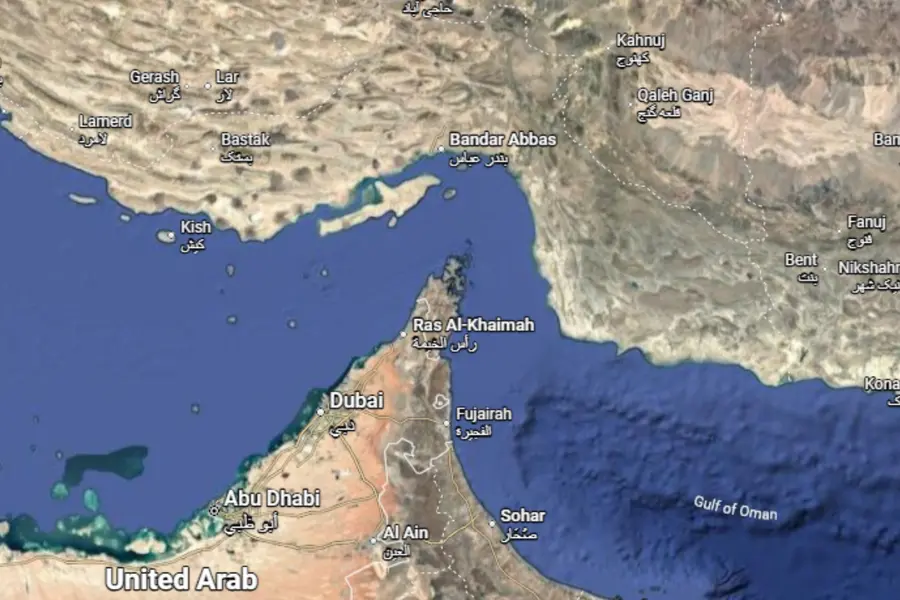
Hours after Iran declared that the Strait of Hormuz had been shut to all maritime traffic following fresh US strikes, Washington pushed back with a blunt rebuttal: commercial vessels are still sailing through the strategic waterway.
The conflicting claims have fuelled global uncertainty, with energy markets, shipping companies and governments scrambling to determine whether one of the world's busiest trade routes has actually been blocked.
Iran's Islamic Revolutionary Guard Corps (IRGC) announced that the Strait of Hormuz was "closed to all vessels" with immediate effect, warning that any oil tanker or commercial ship attempting to pass through the narrow passage would be considered a target.
"Effective immediately, due to insecurity in the region, the Strait of Hormuz is declared closed to all vessels, including oil tankers and commercial ships," the IRGC said in a statement carried by its official Telegram channel.
The force further warned that "any vessel attempting to transit the strait will be targeted," escalating fears of a major disruption to global oil supplies.
But the United States swiftly rejected the claim.
US Central Command (CENTCOM), which oversees American military operations in the Middle East, said maritime traffic through the waterway had not stopped.
"TRUTH: Commercial ships are continuing to transit in and out of the Strait of Hormuz tonight," CENTCOM said in a post on X, directly countering Tehran's assertion. They also added that no American warships had been hit and that commercial shipping activity was continuing despite Iran's announcement.
Iranian media outlets, reported heavy exchanges of fire between US forces and naval units of the IRGC near the Strait of Hormuz. The reports said American strikes had targeted at least seven coastal locations, including areas around Bandar Abbas, Sirik, Qeshm Island and Hengam Island.
Iran's Revolutionary Guards also claimed that two vessels attempting what they described as an "illegal" transit through the strait had been struck.
Meanwhile, Iranian media reported fresh explosions in Bandar Abbas and other southern locations, including Minab, Sirik and Qeshm Island. Press TV said two residents of Kargan in Minab County were injured by shrapnel following one of the reported strikes.
CENTCOM, however, said its forces had launched additional "self-defence strikes" against multiple targets inside Iran at the direction of the US president.
"U.S. Central Command forces began launching additional self-defence strikes today at 5:15 p.m. ET against multiple targets in Iran at the Commander in Chief's direction," the command said, adding that the operations were a response to Iran's "unwarranted and continued aggression."
The Strait of Hormuz, situated between Iran and Oman, carries a significant share of the world's seaborne oil trade. Any disruption to traffic through the narrow waterway has immediate implications for global energy prices and international shipping.
With AFP inputs
Published: 11 Jun 2026, 06:56 am IST
Related Topics
Disclaimer: Kindly avoid objectionable, derogatory, unlawful and lewd comments, while responding to reports. Such comments are punishable under cyber laws. Please keep away from personal attacks. The opinions expressed here are the personal opinions of readers and not that of Mathrubhumi.
