
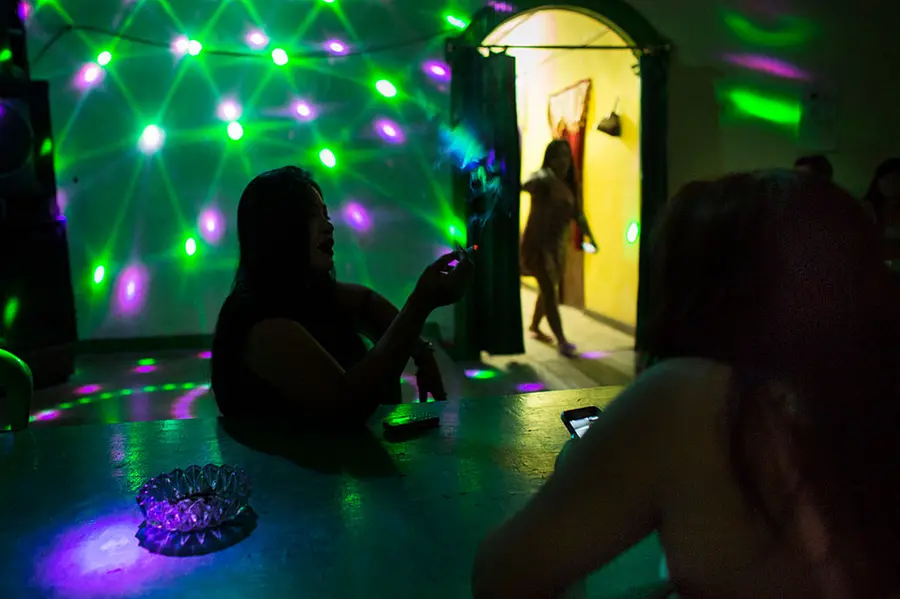
Tokyo: The city's popular Kabukicho area, known for its nightlife and the iconic Godzilla statue, is witnessing a rising trend—street-based sex work attracting foreign tourists. Okubo Park, located in the west of Tokyo, has quietly become a hotspot where young women, many of them sex workers, wait for customers.
With mobile phones in hand, these women often communicate with non-Japanese clients using automatic translators. Ria, one of the women (name changed), said, “Since they can't communicate in Japanese, they write ‘how much is it?’ on their phones.”
Social media’s role in attracting foreign tourists
There is no official data, but anecdotal evidence gathered by AFP shows that foreign men from South Korea, China, Taiwan, North America, and Europe are increasingly visiting the area. Much of this attention has come through social media platforms like TikTok and the Chinese app Bilibili.
These videos, often recorded without the women's consent, are sometimes streamed live and have gone viral, gathering hundreds of thousands of views.
How the system works
According to the women, most of whom say they are self-employed and not under the control of pimps, they take clients to nearby "love hotels".
The usual price for services ranges between 15,000 and 30,000 yen (approximately $105-210), but the rates are being driven down. Ria, 26, said this is due to “the cost of living and the decline in purchasing power,” leading many Japanese clients to bargain for lower prices.
“Foreigners tend not to negotiate the price and will usually give us more,” she added.
Why more women are entering the trade
19-year-old Azu, who was at Rescue Hub—a shelter run by a non-profit group—shared her experience.
“In the best-case scenario, I can charge a client 20,000 yen per hour with contraception, sometimes a little more,” she said.
According to Arata Sakamoto, the head of Rescue Hub, many young women began turning to sex work during the Covid-19 pandemic.
“It wasn’t very common for Japanese women to be sex workers on the street a decade ago,” he said.
“Since the pandemic, young women have started selling sex at low prices,” Sakamoto explained, adding that this affordability may also be why more foreigners are now seeking their services.
Safety and health concerns
At Rescue Hub, around 10 women were recently seen relaxing, having meals, and charging their phones. While they feel safe at the shelter, Sakamoto pointed out serious risks they face.
These include threats to physical and mental health, spread of sexually transmitted diseases, unwanted pregnancies, abortions, and even financial exploitation. “Some women are victims of abuse, or their actions might be filmed without their consent,” he said.
“They may also not be paid for their services or their money may be stolen.”
Police presence and legal gaps
Although Tokyo police have increased patrols in the area since December, this has only dispersed the women throughout the district. Ria said, “It’s become safer to choose foreign customers rather than Japanese ones, because at least we can be sure they’re not plainclothes police officers.”
Japan’s laws prohibit only “penetrative” sexual services, meaning it is the sex workers—not the clients—who risk fines or even prison. Sakamoto believes this should change. “Establishing legal consequences for customers” would help reduce demand, he said.
He also recommended awareness campaigns in multiple languages at airports, hotels, and tourist areas to better inform foreign visitors.
Tourism and its impact
Japan welcomed a record 36.8 million tourists last year, partly due to the weakened yen. However, this surge in tourism has brought unintended consequences, highlighting the need for stronger regulations, public awareness, and protection for vulnerable communities.
AFP
Published: 20 Apr 2025, 08:39 am IST
Related Topics
Disclaimer: Kindly avoid objectionable, derogatory, unlawful and lewd comments, while responding to reports. Such comments are punishable under cyber laws. Please keep away from personal attacks. The opinions expressed here are the personal opinions of readers and not that of Mathrubhumi.
