
As Colombia considers a historic ban on female genital mutilation, stories from Indigenous communities shed light on a practice that has long remained hidden
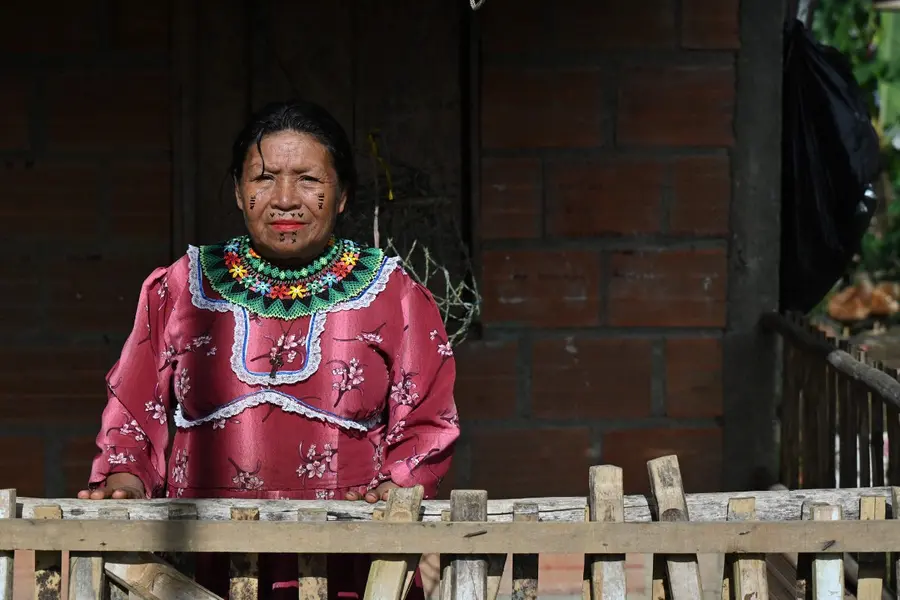
Colombia is the only country in Latin America where female genital mutilation is still known to be practised. As Congress considers a ban, the issue is drawing attention to the realities within Indigenous communities where the custom continues.
For Alejandrina Guasorna, the truth came much later than expected. She only realised in adulthood that she had undergone female genital mutilation on the very day she was born. Her early life in a remote Indigenous community in Colombia’s coffee region offered no clues about what had been done to her.
In the mountainous region of Risaralda, home to the Embera people, the procedure is still carried out on newborn girls. The belief behind it is tied to controlling female sexuality, a tradition that has endured for generations.
Guasorna, now 74 and a farm worker who has assisted in childbirth within her own family, recalls the loss of many infants. “We often saw dead baby girls. We thought it was normal,” she said. Despite helping deliver babies, she never performed genital cutting herself.
A practice rooted in History
Colombia remains the only country in Latin America where this form of female circumcision is still known to occur. It is believed to have been introduced to Indigenous communities by descendants of African slaves. The country, once a significant centre in the South American slave trade, abolished slavery nearly two centuries ago.
Today, a proposed ban on the practice is being discussed in Congress, marking a significant moment in the country’s efforts to address the issue.
How the procedure is carried out
In areas such as the Embera Chami reserve of Pueblo Rico, where Indigenous communities govern themselves, the procedure is carried out by midwives. Local women told that tools such as blades or even red-hot nails are used to remove part or all of a baby girl’s external genitalia.
The practice is widely recognised as a violation of human rights by organisations such as the United Nations and the World Health Organization. Yet within these communities, it remains a taboo subject. Many people avoid discussing it, often reacting with visible discomfort.
Stories that rarely reach beyond the community
Guasorna eventually learned the truth about her own experience through rumours that were later confirmed by her sister.
Francia Giraldo, a leader within the Embera community, spoke about the tragic consequences. She said some babies die from bleeding or infections and are never taken to hospital. Without official documentation, these lives are neither recorded nor acknowledged. “Their mothers bury them,” she explained.
A push for change through awareness
The bill currently under discussion in Congress has been developed in collaboration with lawmakers and Indigenous women leaders. Its goal is to end the practice, though it does not propose punishment for midwives who continue it. Indigenous leaders argue that many of these women are unaware of the risks involved.
Instead, the proposal focuses on education. It calls for government-led awareness campaigns to highlight the harm caused by the procedure and to challenge long-held myths. Among these beliefs are fears that girls who are not subjected to the practice may grow up to be sexually promiscuous, or that their clitoris could develop in unusual ways.
Living with the consequences
For many women, the effects last a lifetime. Etelbina Queragama, a 63-year-old housewife, spoke about her experience through her child, who translated her words from Embera into Spanish. She said she has “never” experienced anything but pain during sexual relations.
Hidden numbers and ongoing concerns
Due to the secrecy surrounding the practice, official data remains limited. However, Colombia’s National Health Institute recorded at least 204 cases between 2020 and 2025.
Sarita Patino, who works at a hospital in Pueblo Rico treating affected patients, believes the actual numbers are far higher. Since the beginning of the year alone, she has treated six cases.
One particularly distressing case involved a six-month-old baby brought in with a fever. “The baby girl had her clitoris mutilated… it looked like a burn,” Patino said.
A global issue with local roots
According to the United Nations, around 230 million women and girls worldwide undergo female genital mutilation each year. In Colombia, the practice is thought to have emerged from the blending of Indigenous and Afro-Colombian communities, who together make up about 10 percent of the population. However, it is now rarely practised outside certain Indigenous groups.
Carolina Giraldo, who helped draft the proposed ban, shared her concerns about how the issue is perceived. She said it is painful “when people call us murderers and ignorant” in reference to the practice.
Her hope is to see more advocates for women’s rights travel to remote regions, working alongside communities to bring awareness and support. The aim is to end what she describes as the silent suffering of Indigenous girls, while respecting the dignity of those involved.
Published: 22 Apr 2026, 10:48 am IST
Related Topics
Disclaimer: Kindly avoid objectionable, derogatory, unlawful and lewd comments, while responding to reports. Such comments are punishable under cyber laws. Please keep away from personal attacks. The opinions expressed here are the personal opinions of readers and not that of Mathrubhumi.
