
The Supreme Court ruled that a minor cannot be forced to continue an unwanted pregnancy, allowing a 15-year-old to terminate her over seven-month pregnancy
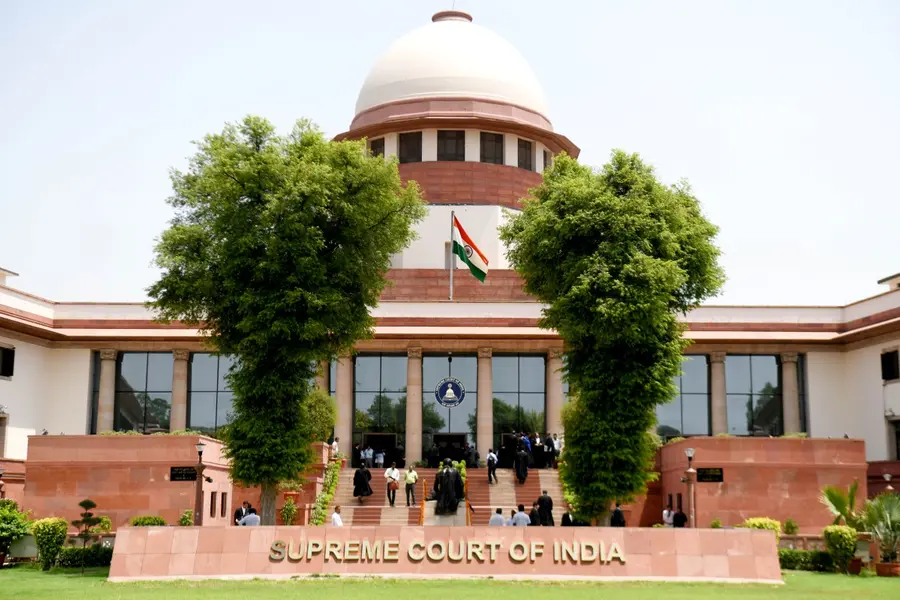
Delhi: In a ruling on Friday, the Supreme Court of India allowed a 15-year-old girl to medically terminate a pregnancy that had crossed seven months, stating that no court can compel a woman, especially a minor, to continue a pregnancy against her will.
Bench underscores reproductive autonomy
A bench comprising BV Nagarathna and Ujjal Bhuyan stated that the decision of the pregnant woman takes precedence over considerations relating to the unborn child. The judges highlighted that forcing continuation of such a pregnancy could have lasting consequences on the minor’s mental health, education, social position and overall development.
The court stressed that a woman’s reproductive autonomy must be given the highest priority. It observed that compelling a woman to continue with an unwanted pregnancy would amount to a violation of her constitutional rights.
Right to bodily autonomy part of Article 21
The bench noted that the right to make decisions about one’s own body, particularly in matters of reproduction, forms an essential component of personal liberty and privacy under Article 21 of the Constitution of India. It added that such rights cannot be undermined through unreasonable restrictions, especially in cases involving minors and unwanted pregnancies like the present one.
“No court ought to compel any woman and more so a minor child to carry a pregnancy to full term against her express will. Such compulsion would not only disregard her decision autonomy but also inflict grave mental emotional and physical trauma in case she is compelled to give birth,” the bench said.
Denial of relief would cause irreversible harm
The court observed that refusing permission in such circumstances would force the minor to face irreversible consequences. It said such an approach would go against established constitutional principles that recognise reproductive choice as a fundamental right.
Reiterating its stance, the bench said the choice of the pregnant woman must prevail over that of the child yet to be born.
Adoption not a valid justification
The judges rejected the argument that a woman unwilling to raise a child could opt for adoption after giving birth. They said such reasoning cannot be applied in cases where the pregnancy itself is unwanted.
“It is easy to say that if the pregnant woman is not interested in raising the child she may give away the child in adoption and, therefore, she must give birth to the child. That cannot be a consideration particularly in cases where the child to be born is unwanted,” the bench stated.
It added that directing a woman to continue a pregnancy against her wishes would undermine her welfare and place it below that of the unborn child.
Courts must consider woman’s perspective
The apex court pointed out that constitutional courts must assess each case based on the circumstances affecting the pregnant woman rather than focusing on the child to be born.
“The constitutional Court ought to weigh all facts and circumstances from the lens of the party who intends to terminate the pregnancy and is willing to undertake the medical risks rather than directing completion of the pregnancy and giving birth to an unwanted child,” the bench said.
Warning against unsafe alternatives
The court cautioned that denying permission in such cases could drive individuals towards unsafe and illegal abortion practices. It noted that if courts insist on continuation of even unwanted pregnancies, affected persons may turn to unregulated centres or seek secret procedures, exposing themselves to significant health risks.
Case involved vulnerable minor
The bench pointed out that the minor in question is 15 years old and the pregnancy was unwanted. It further noted that continuing the pregnancy would not be in her interest, particularly as she had attempted to foreclose her life on two occasions.
Agency inputs
Published: 24 Apr 2026, 01:13 pm IST
Related Topics
Disclaimer: Kindly avoid objectionable, derogatory, unlawful and lewd comments, while responding to reports. Such comments are punishable under cyber laws. Please keep away from personal attacks. The opinions expressed here are the personal opinions of readers and not that of Mathrubhumi.
