
A Pakistani court has granted interim bail to Prime Minister Shehbaz Sharif’s daughter Rabia Imran and her husband in a high-profile corruption and money laundering case, providing relief until early May.
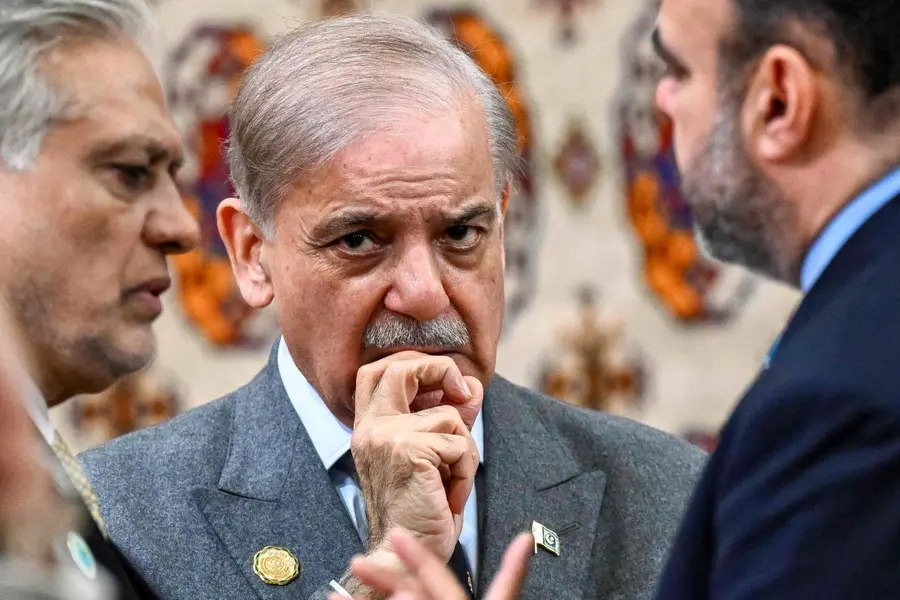
Islamabad: A special court in Lahore has granted interim pre-arrest bail to Pakistan Prime Minister Shehbaz Sharif’s daughter Rabia Imran and her husband Imran Yousaf in a major corruption and money laundering case.
The couple was allowed bail till May 7 after appearing before the court along with their legal counsel.
Also Read

FIA restrained from arresting accused
The court has directed the Federal Investigation Agency (FIA) not to arrest the couple until the next hearing.
The case is linked to allegations of financial misconduct in the Punjab Saaf Pani Company matter, which has been under investigation for several years.
Background of the case and legal developments
According to court proceedings, the couple had earlier travelled to the United Kingdom in 2022 and did not return, following which they were declared proclaimed offenders.
Perpetual arrest warrants were issued against them during the previous government, but these were recently suspended by an accountability court.
Interestingly, the National Accountability Bureau (NAB) reportedly informed the court that it had no objection to the suspension of arrest warrants, leading to the latest bail relief.
PM Shehbaz Sharif himself was also named in the same case but was later acquitted due to lack of evidence.
The case has remained politically sensitive, with opposition parties frequently alleging selective accountability and bias in anti-corruption proceedings.
Political reactions and wider implications
Opposition figures, including members of Pakistan Tehreek-e-Insaf (PTI), have repeatedly criticised acquittals and bail decisions in major corruption cases, alleging institutional bias and questioning judicial independence.
Former Prime Minister Imran Khan, who was ousted in 2022, has been at the centre of ongoing political and legal battles since his removal from office and subsequent arrest in 2023.
The court has listed the matter for further hearing on May 7, until which time the accused remain protected from arrest.
The case continues to be closely watched due to its political significance and its connection to broader accountability debates in Pakistan.
Published: 28 Apr 2026, 06:43 pm IST
Related Topics
Disclaimer: Kindly avoid objectionable, derogatory, unlawful and lewd comments, while responding to reports. Such comments are punishable under cyber laws. Please keep away from personal attacks. The opinions expressed here are the personal opinions of readers and not that of Mathrubhumi.