
World Press Photo suspends Nick Ut`s credit for the iconic `Napalm Girl` photo, sparking debate and investigation into its true author.
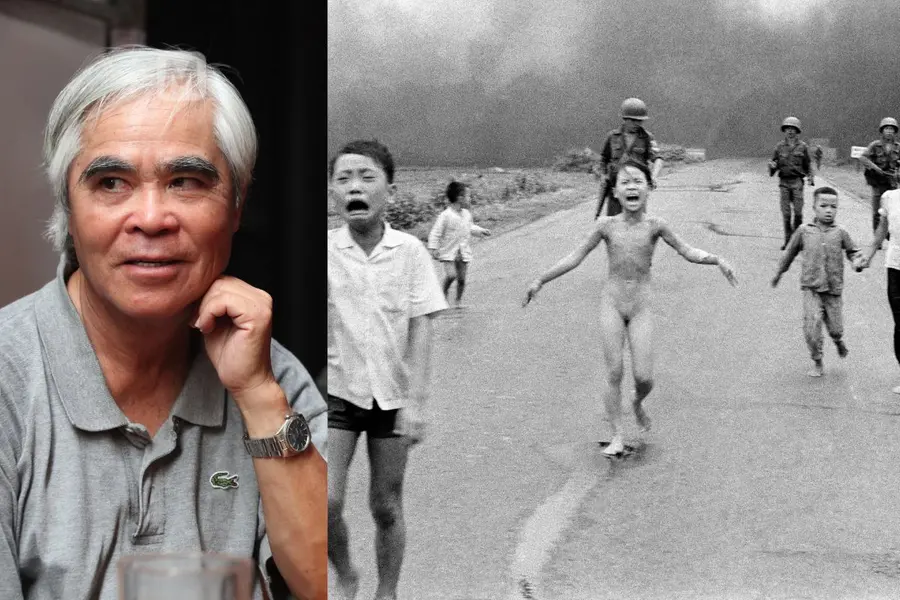
The photo of a terrified, naked Vietnamese girl running from a napalm attack, captured during the Vietnam War and known globally as ‘Napalm Girl,’ has long stood as one of the most powerful visual records of 20th-century conflict. But now, 53 years after its creation, World Press Photo has suspended the authorship credit it gave in 1973 to Associated Press photographer Nick Ut, citing significant doubts raised by a new documentary and its own internal investigation.
The controversial decision has reignited debate within the photojournalism world and cast uncertainty over one of the most iconic press images in history — officially titled ‘The Terror of War.’
World Press Photo questions authorship
On 16 May, World Press Photo — the influential international organisation behind the prestigious annual photo awards — announced that it had suspended the attribution of the 1973 Photo of the Year award to Nick Ut after a four-month internal inquiry.
“We conclude that the level of doubt is too significant to maintain the existing attribution,” said Joumana El Zein Khoury, the group’s executive director. “At the same time, lacking conclusive evidence pointing definitively to another photographer, we cannot reassign authorship, either.”
The investigation came in response to ‘The Stringer,’ a documentary that premiered at the Sundance Film Festival in January 2025. Directed by Bao Nguyen, the film suggests that Vietnamese freelance photographer Nguyen Thanh Nghe — not Nick Ut — captured the image in 1972.
Based on analysis of camera angles, positioning, and surviving evidence, World Press Photo stated that “photographers Nguyễn Thành Nghệ or Huỳnh Công Phúc may have been better positioned to take the photograph than Nick Út.” However, it clarified that the suspension only affects the attribution — not the award itself. “The photograph itself remains undisputed… and the World Press Photo award for this significant photo of a major moment in 20th century history remains a fact.”
A divided verdict: AP stands by Ut
In response to the controversy, the Associated Press conducted two separate investigations — one culminating in a 96-page report — and stood by the long-held attribution. While acknowledging that no definitive proof exists to confirm Ut as the photographer, the AP concluded that “it was possible Ut took the picture” and found “no evidence to prove anyone else did.”
The agency emphasised its high standards, saying: “Our standards require proof and certainty to remove a credit and we have found that it is impossible to prove exactly what happened that day on the road or in the (AP) bureau over 50 years ago.”
The Pulitzer Prize, which was awarded to Ut for the image, is not expected to be revoked. Administrator Marjorie Miller, formerly a senior editor at the AP, stated: “The board does not anticipate future action at this time,” citing the lack of sufficient proof to warrant any change.
The claims behind ‘The Stringer’
‘The Stringer’ puts forward the argument that Nghe, a stringer for NBC who frequently sold photos to news outlets, took the image and was denied credit because he was not a staff photographer. The film’s central claim is based on testimony from Carl Robinson, a former AP photo editor who alleges he was told to misattribute the image to Ut.
Nghe’s supporters claim he sold the photo to the Associated Press for just $20 and a print, a detail cited in ‘The Stringer’ to highlight his alleged exclusion from recognition.
Witnesses interviewed for the documentary include Nghe’s brother, who said he delivered the film to AP’s bureau; Nghe’s daughter, Jannie; and several former colleagues of Robinson. French forensic experts with the NGO Index were also consulted and said it was “highly unlikely” that Ut took the photo, based on analysis of the sequence of images AP credited to him that day.
Gary Knight, a producer of ‘The Stringer’ and a four-time judge for World Press Photo, was also involved in the investigation. Knight appears in the film writing a message asserting that Nghe was the true photographer of the iconic image.
Ut’s lawyer, James Hornstein, criticised the decision by World Press Photo: “It seems they had already made up their mind to punish Nick Ut from the start.” Ut himself told the AP that the situation “has been very difficult for me and has caused great pain.”
The final verdict from World Press Photo is open-ended: “This remains contested history, and it is possible that the author of the photograph will never be fully confirmed. The suspension of the authorship attribution stands unless it is proved otherwise.”
(With inputs from AP)
Published: 17 May 2025, 09:16 pm IST
Related Topics
Disclaimer: Kindly avoid objectionable, derogatory, unlawful and lewd comments, while responding to reports. Such comments are punishable under cyber laws. Please keep away from personal attacks. The opinions expressed here are the personal opinions of readers and not that of Mathrubhumi.
