
Deadly protests erupt in Nepal over `Nepo Kids`, corruption, and inequality, leading to clashes with police and attacks on government buildings.
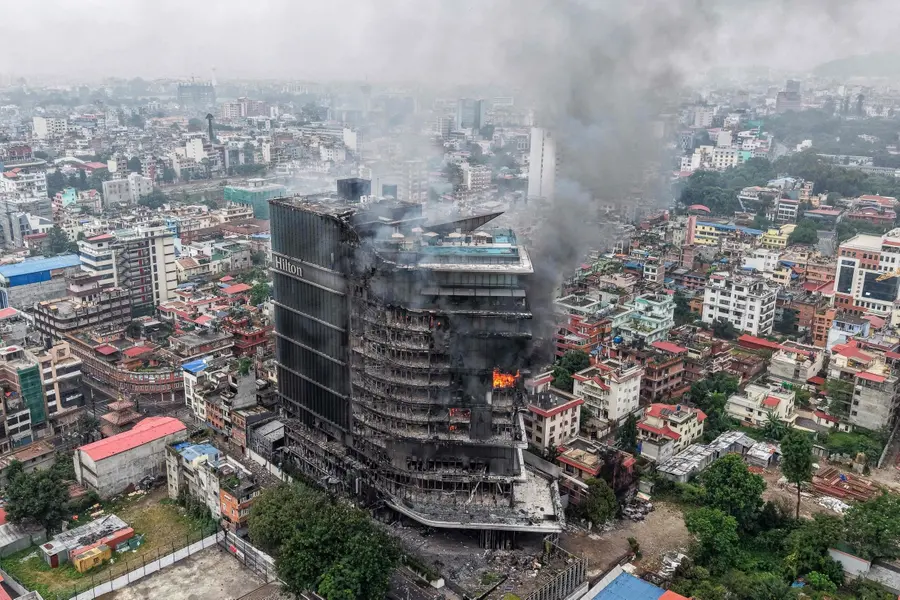
Kathmandu: A wave of protests sweeping across Nepal has taken on a powerful new symbol: the terms #NepoKids and #NepoBaby. Once internet buzzwords, these phrases have now become rallying cries for thousands of angry citizens accusing the country’s political elite of privilege, corruption and deep-rooted inequality.
The terms exploded in popularity on platforms like TikTok and Instagram after videos emerged showing the extravagant lifestyles of politicians’ children, luxury cars, foreign holidays, and designer outfits, in stark contrast to the daily struggles of ordinary Nepalis battling unemployment, poverty, and mass migration.
Protesters say these so-called “Nepo Kids” are living lives of comfort and success without merit, funded by public money, while the nation’s youth are left with shrinking opportunities at home. The slogans have since transformed into a broader symbol of frustration not just against elites, but against a political system widely seen as failing its people.
What is happening in Nepal?
What began as a youth-led outcry online has escalated into some of the most intense civil unrest Nepal has seen in years. Over the past few days, demonstrations in Kathmandu and other major cities have turned deadly.
On Monday, at least 19 protesters were killed during clashes with police. The following day, violence intensified further when demonstrators set fire to Nepal’s parliament building in Kathmandu, filling the capital’s skies with black smoke. Government offices and the homes of several political leaders were also attacked across the country.
By Tuesday evening, the death toll had risen to at least 22, with dozens more injured, including both protesters and police officers. Hospitals are overwhelmed with patients suffering from gunshot wounds and injuries caused by rubber bullets and batons. Medical workers told BBC Nepali they have been operating under immense pressure as more casualties arrive.
Government response: Curfews, force and tightened security
In response to the escalating violence, police have imposed curfews in several high-security zones, particularly around key government buildings. Minister for Communication Prithvi Subba defended the authorities’ actions, saying police were forced to use measures such as water cannons, rubber bullets, and batons to maintain order.
However, critics argue that the heavy-handed police response has only further inflamed tensions, with many seeing it as evidence of a government out of touch with the public’s growing anger.
Published: 10 Sept 2025, 04:08 pm IST
Related Topics
Disclaimer: Kindly avoid objectionable, derogatory, unlawful and lewd comments, while responding to reports. Such comments are punishable under cyber laws. Please keep away from personal attacks. The opinions expressed here are the personal opinions of readers and not that of Mathrubhumi.
