
A Social order is never completely stable. Every society generates tensions, contradictions, and aspirations that exceed its boundaries. These movements away from established structures are what Deleuze and Guattari call lines of flight
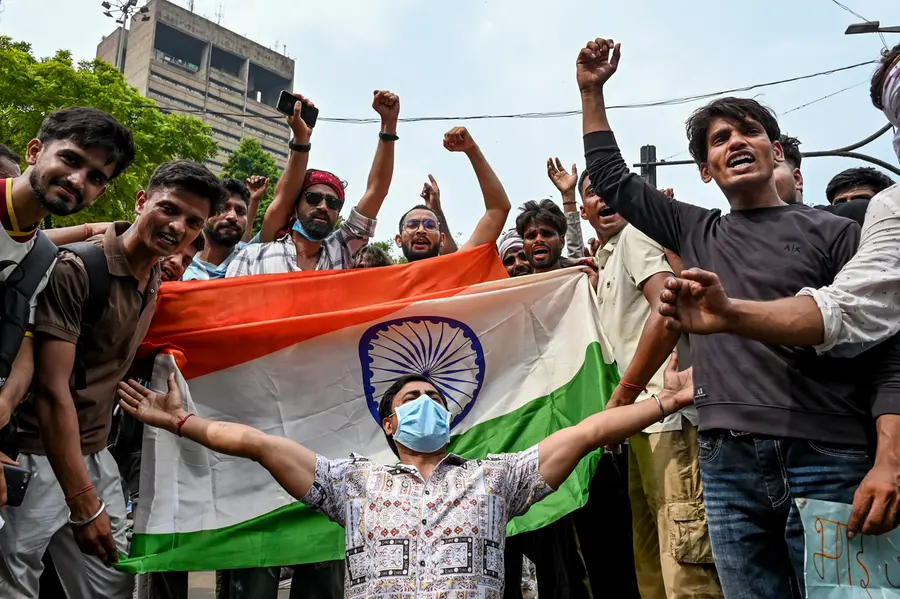
The last decade has witnessed an important transformation in the language of Political opposition in India. Increasingly, corruption, bribery, administrative inefficiency and governmental accountability have emerged as the dominant vocabulary through which political dissent is articulated. Public protests, media campaigns and civic mobilizations frequently invoke moral categories such as honesty, transparency and integrity as the principal standards for evaluating governments. Such concerns are undoubtedly legitimate in any constitutional democracy. Yet the elevation of corruption into the principal contradiction of Indian society raises a more fundamental philosophical question: What happens when moral politics displaces structural politics?
This article argues that the moralization of politics may narrow the political imagination by reducing systemic oppression and domination to questions of individual morality. In a society whose ideological and institutional foundations have historically been organized by caste hierarchy, the exclusive focus on corruption risks observing the deeper structures that govern equality, access to dignity, education, political representations, land, knowledge and citizenship. Corruption or non-corruption are not the constitutive principles of Indian social order. Caste and graded inequality, rather than corruption remains the more fundamental structures through which power is historically organized and reproduced.
From this perspective, contemporary anti-corruption mobilization can be interpreted not merely as democratic protests but also as sites of political reconfiguration. Movements centered primarily on corruption may, under certain conditions, function to redirect political energies away from structural struggles concerning caste oppression, democratic inclusion and equality. The consequences may be a narrowing of the domain of legitimate political opposition.
The distinction between moral politics and structural politics is therefore crucial. Moral politics evaluates governments principally through ethical categories such as honesty, corruption and administrative virtue. Structural politics, by contrast, interrogates the ideological and institutional organization of power itself. It asks who owns land, who controls knowledge, who occupies positions of authority, who and what defines citizenship, and whose voices are systematically excluded from the public sphere. Whereas moral politics seeks better rulers, structural politics asks whether the architecture of rule itself reproduces inequality.
This distinction recalls B.R. Ambedkar’s observation that political democracy cannot survive without social democracy. Constitutional procedures alone cannot dismantle deeply entrenched systems of graded inequality. Unless caste itself is confronted as the organizing principle of social relations, democratic institutions risk reproducing inherited hierarchies under new political forms. For Ambedkar, caste was not merely one injustice among many. It constituted a comprehensive system regulating occupation, marriage, education, ritual status, social interaction and political authority. It created what he famously described as “graded inequality”, a social order in which domination is dispersed across multiple hierarchical levels rather than divided simply between oppressor castes and oppressed castes. Unlike corruption, which concerns deviations from administrative norms, caste organizes the norms themselves.
This insight was anticipated decades earlier by Mahatma Jotirao Phule, who argues that brahminical domination rested not simply upon political power but upon the monopolization of knowledge, religion and historical memory. The subordination of the oppressed castes was sustained through ideological institutions that naturalized hierarchy and transformed inequality into divine order. Political struggle, without epistemic transformation, Phule suggested, would merely reproduce older relations of domination under new institutional forms.
Consequently, corruption occupies a fundamentally different conceptual status from caste. Bribery and administrative malpractice may distort governance, but they do not explain why OBCs, dalits, and Muslims remain historically underrepresented in higher education, the judiciary, the bureaucracy, media and capital. These enduring asymmetries are better understood through structures of social power than through the moral failings of individual rulers or officials.
This distinction has tremendous implications for democratic opposition. If corruption becomes the primary criterion through which governments are judged, political struggles centered on equality, justice, representation, educational transformation and historical redress may gradually lose public visibility and legitimacy. The political horizon itself becomes morally rather than politically defined. Parties and movements whose present principal agenda concerns, caste census, increasing the reservation cap, reservation in the private sector, political representations, etc, may then find their concerns displaced by an agenda centred overwhelmingly upon moral governance.
This consequence is not necessarily the disappearance of democratic dissent. Rather, dissent itself may reorganize. Political legitimacy comes increasingly to depend upon conformity with a moral discourse of anti-corruption, while structural critiques of caste hierarchy risk appearing secondary or even divisive. In such a context, the question is no longer simply whether corruption exists but whether corruption has become the dominant language through which all political conflict must be interpreted.
This transformation invites a broader philosophical analysis, Here the work of Gilles Deleuze and Felix Guattari becomes especially illuminating. In A Thousand Plateaus, they argue that systems of power are sustained not solely through repression. They also possess the capacity to absorb, redirect and reorganize forces of resistance. Escape is never guaranteed to culminate in emancipation, movements of resistance may themselves be recaptured and rewired into the very structures from which they sought to depart.
Their concept of the lines of flight is therefore profoundly important. A Line of flight is neither inherently revolutionary nor inherently conservative. It represents a movement away from existing structures. Yet every deterritorialization is accompanied by the possibility of reterritorialization, whereby institutions capture and redirect energies of escape toward the reproduction of power.
This theoretical insight offers an important lens for interpreting contemporary political mobilizations. Public protests may genuinely express popular dissatisfaction while simultaneously being incorporated into a political field where underlying structures remain largely unchanged. The issue is therefore not the sincerity of participants but the broader political effects of particular forms of mobilization. A movement may articulate legitimate grievance while nevertheless redirecting attention away from deeper structures of inequality.
This problem resonates strongly with the political psychology analyzed by Frantz Fanon. In The Wretched of the Earth, Fanon warned that postcolonial societies often witnessed the replacement of structural transformation by symbolic politics. Instead of dismantling inherited systems of domination, political elites redirected popular energies toward more limited objectives that left the social foundations of inequality substantially intact. Fanon’s analysis suggests that domination survives not merely through coercion but through the continual reorganization of political consciousness itself,
A Social order is never completely stable. Every society generates tensions, contradictions, and aspirations that exceed its boundaries. These movements away from established structures are what Deleuze and Guattari call lines of flight. They are processes through which individuals or collective actors escape inherited identities, institutional constraints, or established political formations. However, Deleuze insists that a line of flight is never inherently emancipator. Escape itself does not guarantee liberation. A line of flight may culminate in revolutionary transformation, but it may also be captured and redirected into forms compatible with the reproduction of existing power. The state is not merely a coercive institution; It is also an apparatus of capture. It continually absorbs forces that initially appear external to it and reintegrates them into its own mechanisms of stability.
This process is what Deleuze and Guattari call deterritorialization. Every deterritorialization creates the possibility of reterritorialization. The movement away from an existing political regime is often accompanied by the construction of a new terrain upon which power can once again organize itself. Consequently, political rupture frequently becomes political continuity under altered forms.
Protest movements are frequently interpreted according to a simple binary: either they oppose the existing order or they support it. A movement may sincerely challenge aspects of government practice while simultaneously leaving untouched the deeper institutional structures through which domination operates. Indeed, by redirecting public attention toward certain grievances rather than others, protest itself may participate in the reorganization of political power. Rather, the philosophical question concerns political hierarchy; what becomes the principal contradiction around which democratic opposition is organized?
Viewed through this lens, the question is not whether anti-corruption politics addresses genuine public concerns. Corruption undoubtedly weakens democratic institutions, distorts public administration, and erodes public confidence. Rather, the philosophical question concerns political hierarchy; what becomes the principal contradiction around which democratic opposition is organized?
In this sense, moral politics possesses a remarkable capacity for simplification. Corruption appears as a universal category. Every citizen can condemn bribery irrespective of social location. It offers an apparently neutral language capable of uniting diverse social groups. Yet precisely because of its universality, corruption may conceal profound inequalities in the distribution of power.
A bribe paid by an upper- caste businessperson and the structural exclusion experienced by a dalit, an Adivasi, or a muslim are not equivalent forms of injustice. One concerns illegal transactions within an existing institutional power. The other concerns unequal access to the institutions themselves. The former presupposes participation in political and economic life; the latter concerns systematic exclusion from it. To collapse these fundamentally different phenomena into a single discourse of corruption risks reducing structural domination to administrative improbity.
Administrative reform cannot dismantle the structure of hierarchy because caste precedes many of the institutions through which administration operates. The bureaucracy itself, educational institutions, professional networks, and cultural authority are historically shaped by caste relations. Therefore, the elimination of corruption does not by itself transform the architecture of social domination.
The state functions less as an omnipotent sovereign than as a machine capable of continually reorganizing the terrain of political conflict. The most durable forms of domination are often those that succeed in determining not only the answers citizens give but also the questions they consider politically important. Moral politics can therefore become hegemonic not because corruption is unimportant, but because corruption comes to define the very horizon within which political legitimacy is judged.
One Political consequence is that the space historically occupied by parties such as the Congress, together with anti-caste and social justice parties whose main concerns include secularism, equality, representation and reservation may be progressively narrowed if public discourse comes to reorganize moral anti corruption politics as the primary or exclusive language of legitimate opposition.
Such a shift would represent a profound transformation of Indian democracy. The Central question would no longer be whether political institution reproduce caste hierarchy but whether public officials are personally honest. The measure of democratic legitimacy would shift from structural equality to administration virtue.
The political danger, therefore, is not the existence of anti-corruption mobilization but its elevation into the exclusive criterion of democratic opposition. Once corruption becomes the universally accepted object of political struggle, structural inequalities become increasingly difficult to articulate within the dominant public vocabulary.
The most stable systems of domination are often those that successfully determine not only who governs, but what the governed are allowed to contest. A hegemonic order reaches its greatest effectiveness not when it eliminates opposition, but when it succeeds in defining the limits of legitimate opposition itself.
Published: 01 Aug 2026, 10:55 am IST
Related Topics
Disclaimer: Kindly avoid objectionable, derogatory, unlawful and lewd comments, while responding to reports. Such comments are punishable under cyber laws. Please keep away from personal attacks. The opinions expressed here are the personal opinions of readers and not that of Mathrubhumi.
