
Authorities in Nepal have launched a large-scale demolition drive in Kathmandu, clearing informal settlements along riverbanks as part of a city restoration and relocation effort.
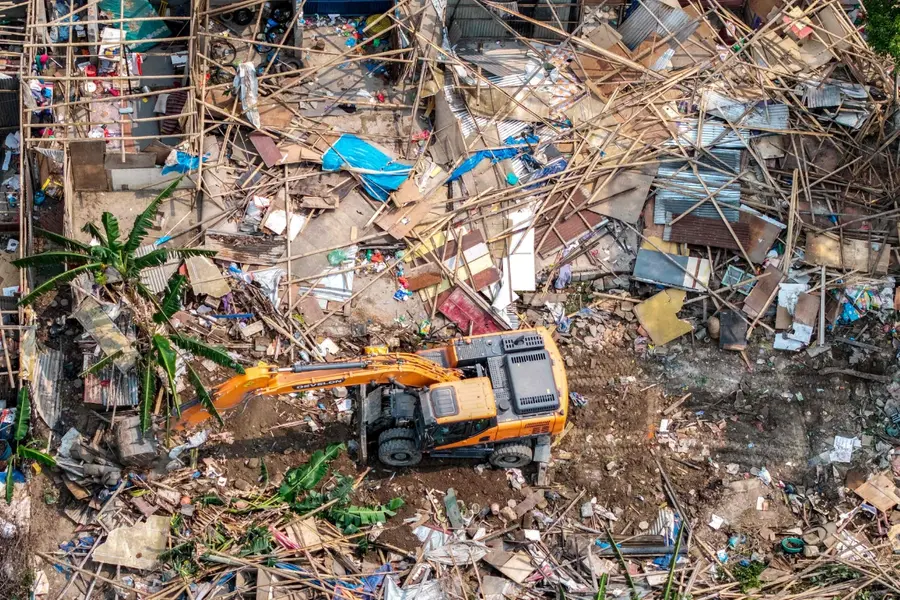
Kathmandu: The government of Nepal has demolished hundreds of illegal structures built along the banks of the Bagmati River in Kathmandu, affecting multiple informal settlements in the capital.
The drive was carried out in areas including Thapathali and Gairegaun, where authorities removed makeshift huts and temporary shelters occupied by landless settlers.
Also Read

Large-scale clearance operation
The operation was conducted jointly by the Federal Government, the Balendra Shah-led Kathmandu Metropolitan City, and security forces including the Armed Police Force and Nepal Police.
According to officials, around 146 families were removed from Thapathali and nearly 200 families from Gairegaun, while additional removals are planned in nearby riverbank areas as part of a two-day clearance drive.
Some families were shifted to temporary shelters in locations such as Dasharath Stadium and Kirtipur Municipality.
Relocation and government justification
Authorities stated that the eviction is part of a broader urban development plan aimed at beautifying Kathmandu and restoring the riverbanks of the Bagmati River.
The government has also promised alternative land and rehabilitation measures for affected families, saying advance notices were issued to allow voluntary evacuation.
Officials argue that many of these settlements were located in flood-prone and unregulated zones, making relocation necessary for public safety and long-term urban planning.
Mixed response from residents
While some residents complied with the evacuation, others expressed distress over the sudden loss of housing and uncertainty about relocation.
In previous attempts, similar eviction drives faced resistance and legal hurdles, delaying full clearance of riverbank settlements.
The eviction drive has also drawn criticism from human rights groups. Organisations including Amnesty International have raised concerns about forced displacement, warning that evictions without adequate consultation and guaranteed housing could lead to a humanitarian crisis.
Critics argue that while urban restoration is necessary, displacement must be handled with stronger safeguards and long-term rehabilitation plans.
Broader urban challenge
Kathmandu has long struggled with unplanned settlements along riverbanks, driven by migration, poverty, and lack of affordable housing. Successive governments have attempted clearance drives, but enforcement and rehabilitation have remained inconsistent.
The latest operation marks one of the most extensive efforts in recent years, signalling a renewed push by authorities to enforce urban zoning laws and reshape the capital’s riverfront areas.
Published: 25 Apr 2026, 05:10 pm IST
Related Topics
Disclaimer: Kindly avoid objectionable, derogatory, unlawful and lewd comments, while responding to reports. Such comments are punishable under cyber laws. Please keep away from personal attacks. The opinions expressed here are the personal opinions of readers and not that of Mathrubhumi.