
China has warned Nepal of another potential flood threat after a temporary lake formed following the glacial collapse that triggered devastating floods. The lake has accumulated around 2.5 million cubic metres of water, with authorities using drones and satellites to monitor the risk of a breach.
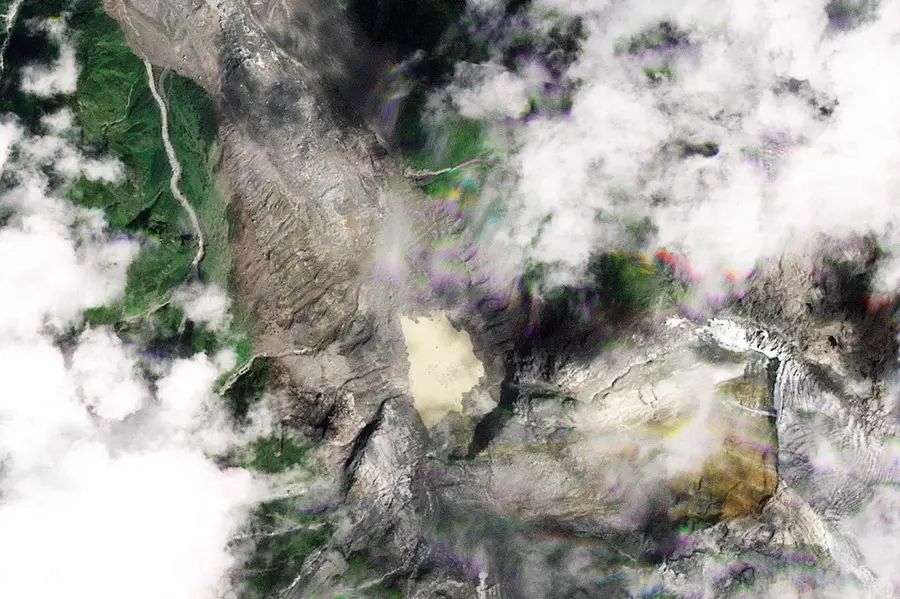
Beijing: China has issued a fresh warning to Nepal that a temporary lake formed after the deadly Himalayan flash floods could breach its banks at any time, although Beijing said a major downstream surge was unlikely.
Chinese authorities have cautioned Nepal that a lake formed in the upper reaches of the Lhende river system could burst at any time.
The warning was communicated to Nepal's Ministry of Foreign Affairs. Chinese authorities said the colour of the lake had been steadily darkening, which they said could indicate an increased risk of a breach.
The lake formed after a glacial collapse triggered a massive flash flood that swept through parts of Nepal and Tibet earlier this week.
Lake contains 2.5 million cubic metres of water
According to China's Ministry of Water Resources, the lake's water level has been gradually rising. By Friday, around 2.5 million cubic metres of water had accumulated.
The temporary lake was created when debris from the glacial collapse formed a natural dam near the confluence of the Chochen river on the Chinese side and the Purepu river on the Nepali side.
Chinese authorities had earlier estimated that another 3 million cubic metres of water could accumulate over the following three days.
China models possible flood impact
China has carried out flood modelling to assess what could happen if the temporary dam partially breaks.
According to Beijing's assessment, the maximum flow into the river system could reach around 500 cubic metres per second. Chinese authorities said the water would remain within the river banks and that a significant increase in downstream river levels was unlikely.
Despite the assessment, communities downstream have been advised to remain cautious.
Drones and satellites monitor the area
Chinese authorities are using drones and satellite imagery to monitor the lake and surrounding area.
The lake began overflowing into the Lhende Khola and Trishuli rivers on Friday. Chinese state broadcaster CCTV reported that by midday, the immediate risk was considered manageable.
However, the possibility of a breach remains a concern as Nepal continues rescue and relief operations following the earlier flash floods.
Death toll rises to 587 in Nepal
The latest disaster has killed at least 587 people in Nepal, while seven deaths have been confirmed in Tibet.
The earlier flash floods caused extensive destruction across Himalayan settlements, damaging roads, bridges and buildings and leaving thousands of people affected.
The emergence of the temporary lake has created an additional hazard for communities downstream as authorities continue to monitor water levels and potential flooding.
The latest warning highlights the continuing danger even after the main flash-flood event has passed. A temporary natural dam created by debris can fail if water pressure increases or the structure becomes unstable, potentially sending another surge downstream.
China's modelling suggests that a possible breach would produce a maximum flow of around 500 cubic metres per second and would remain largely within the river channel. However, authorities in downstream areas are maintaining caution because the lake's water level is still being monitored.
The situation also underscores the wider risks posed by glacial collapses, temporary lakes and unstable Himalayan terrain in the aftermath of extreme flooding.
Published: 29 Aug 2026, 08:29 am IST
ABOUT THE AUTHOR

Related Topics
Disclaimer: Kindly avoid objectionable, derogatory, unlawful and lewd comments, while responding to reports. Such comments are punishable under cyber laws. Please keep away from personal attacks. The opinions expressed here are the personal opinions of readers and not that of Mathrubhumi.