
In a landmark step for LGBTIQ+ rights, Nepal has created the Ministry of Women, Children, Gender and Sexual Minorities and Social Security, explicitly naming gender and sexual minorities in its title for the first time.
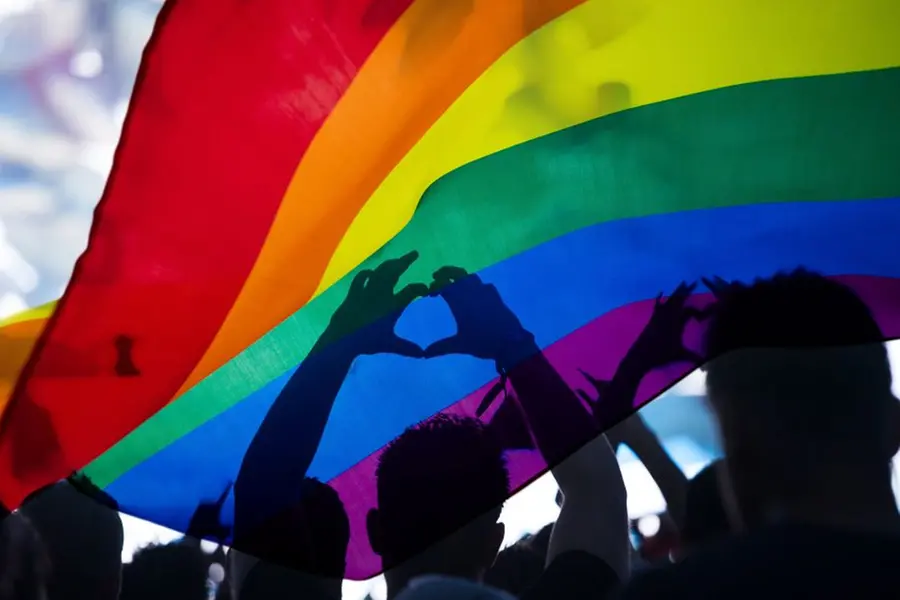
In a landmark step for LGBTIQ+ rights, Nepal has formed a federal ministry that for the first time explicitly recognises gender and sexual minorities in its name and mandate, deepening the country’s reputation as one of South Asia’s most progressive states on queer inclusion.
Under a recent administrative overhaul, the government led by Prime Minister Balendra Shah has notified the Ministry of Women, Children, Gender and Sexual Minorities and Social Security through the Government of Nepal (Allocation of Business) Regulations, 2026, published in the Nepal Gazette.
Also Read: 'India’s new Transgender law is completely divorced from science’
The ministry has been tasked with the protection, upliftment, empowerment and development of gender and sexual minority communities, alongside Dalits, highly marginalised groups and citizens from historically oppressed and backward regions.
The restructuring followed recommendations from a committee headed by Govinda Bahadur Karki, Secretary at the Office of the Prime Minister and Council of Ministers, which also reduced the number of federal ministries from 21 to 18 to streamline governance and cut costs.
'Historic and long‑awaited'
Rights groups hailed the decision as a watershed. The Blue Diamond Society, Nepal's leading LGBTIQ+ organisation, called it "a historic and long‑awaited milestone" that signals official recognition of "the rights, dignity, and inclusion of gender and sexual minorities within the national governance framework."
Also Read: 'Parents who threw us out; why will they give consent?'
The organisation said it was "encouraged to see our issues formally recognised within a government ministry’s name and mandate," describing the move as an important step toward meaningful inclusion.
Blue Diamond Society also credited Bhumika Shrestha, a lawmaker representing sexual minorities, for consistently advocating that the ministry explicitly reference sexual minorities in its title, turning symbolic visibility into a concrete bureaucratic reality.
Commentary from community platforms such as Pahichan stressed that the decision to create a ministry is "not just an administrative change" but "a historic political acknowledgement" that the state now names gender and sexual minorities in its core institutional architecture.
Long arc of legal recognition
The new ministry builds on a series of legal and policy advances that have made Nepal an outlier in the region on sexual and gender minority rights. Article 18 of the Constitution prohibits discrimination on multiple grounds including sex, while Article 42 guarantees sexual and gender minorities the right to participate in state bodies on the basis of inclusion.
Also Read: Born different, made afraid: Intersex lives at the margins of the Trans Bill debate
Following a landmark 2007 Supreme Court ruling, Nepal formally recognised a "third gender" category, and has since issued citizenship certificates and passports reflecting non‑binary gender identities.
In June 2023, the Supreme Court went further, issuing an interim order directing the government to temporarily register same‑sex and non‑traditional marriages pending a final constitutional interpretation, opening a legal pathway for queer couples while the broader question remains under judicial review.
Yet gaps remain between legal frameworks and lived realities. Human Rights Watch recently warned that progress on transgender rights has stalled, noting that authorities have in some cases stopped processing gender‑change applications on identity documents.
Activists argue that the new ministry must translate constitutional promises into day‑to‑day access to housing, jobs, healthcare and security.
Census undercount and policy challenge
Nepal's 2021 national census recorded 2,928 sexual and gender minority individuals, roughly 0.01 per cent of the population. However, rights groups contend the figure severely underestimates the community's size because respondents were offered only a generic "others" category rather than distinct identity options, and many feared stigma or disclosure.
For policymakers, the undercount underscores both the urgency and the difficulty of designing targeted programmes. With its broadened remit covering Dalits, highly marginalised minorities and residents of remote regions, the new ministry will be expected to build credible data systems, consult with grassroots organisations and coordinate with provincial governments to ensure that gender and sexual minorities are not lost in administrative aggregation.
As Nepal's decision is being celebrated globally -- including by international networks such as ILGA on the eve of the International Day Against Homophobia, Biphobia and Transphobia (IDAHOBIT) -- campaigners say the real test will be whether the ministry secures sustainable budgets, pushes cross‑government reforms and responds effectively to discrimination cases.
Published: 16 May 2026, 12:53 pm IST
Related Topics
Disclaimer: Kindly avoid objectionable, derogatory, unlawful and lewd comments, while responding to reports. Such comments are punishable under cyber laws. Please keep away from personal attacks. The opinions expressed here are the personal opinions of readers and not that of Mathrubhumi.
