
A router malfunction during a telecommunications upgrade overwhelmed the FAA's aviation network, triggering a nationwide ground stop and disrupting more than 20,000 flights.
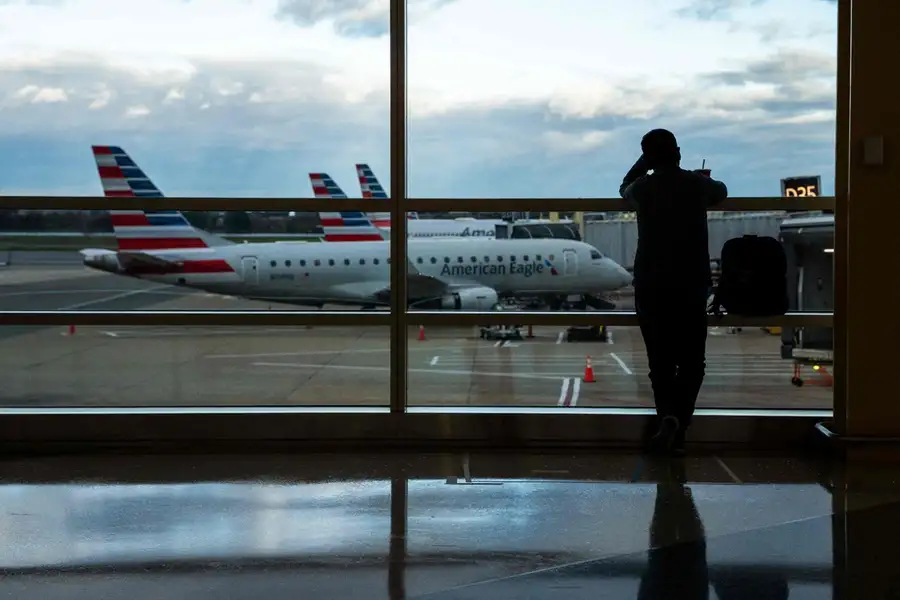
Washington: More than 20,000 flights were disrupted after a router malfunction crippled critical aviation communications across the United States, exposing vulnerabilities in an air traffic control network that relies on decades-old infrastructure.
The failure forced the Federal Aviation Administration (FAA) to impose a nationwide ground stop on November 13, bringing departures to a halt for nearly five hours and leaving thousands of passengers grappling with cancellations, delays and uncertainty.
The disruption was traced to a telecommunications network upgrade being carried out by FAA contractor L3Harris Technologies. The project involved replacing ageing copper communication lines with fibre-optic connections. However, a router involved in the upgrade began flooding other routers across the network with an unusually high volume of data, overwhelming the system and disrupting critical communications.
US Transportation Secretary Sean Duffy said the network was receiving more than 1,000 connection attempts every four to five seconds.
The resulting instability affected communications between air traffic controllers and pilots, as well as radar feeds, raising concerns about the reliability of systems essential to maintaining safe flight operations.
The disruption was significant. As many as 17 of the country's 22 en-route air traffic control centres were affected, prompting the FAA to halt departures nationwide as a precaution.
The ground stop was eventually lifted on Friday evening, November 13, although the disruption continued to reverberate through airline schedules.
More than 14,000 flights were cancelled or delayed on Saturday, November 14, as airlines struggled to restore normal operations.
FAA Administrator Bryan Bedford expected flight operations to largely return to normal by late Sunday, November 15.
While the immediate trigger was linked to the router involved in the network upgrade, questions remain over whether the failure stemmed from defective equipment or an installation and configuration error.
Officials have not established a definitive cause. There is no evidence pointing to a cyberattack, and the newly introduced AI-based air traffic control system has also been ruled out as the source of the disruption.
The episode has brought renewed attention to the condition of America's aviation infrastructure.
Some of the routers being replaced were about 25 years old and were originally scheduled for replacement in 2006, underscoring how long critical components have remained in service.
Duffy has called for an additional $50 billion in funding to modernise the country's air traffic control infrastructure.
The nationwide disruption has added urgency to that demand, highlighting how a failure in a single component of an interconnected communications network can have consequences extending across an entire country's aviation system.
Published: 15 Nov 2026, 11:31 am IST


ABOUT THE AUTHOR

Related Topics
Disclaimer: Kindly avoid objectionable, derogatory, unlawful and lewd comments, while responding to reports. Such comments are punishable under cyber laws. Please keep away from personal attacks. The opinions expressed here are the personal opinions of readers and not that of Mathrubhumi.