
First major UK legal action claims asbestos in products sold from 1965 to 2023.
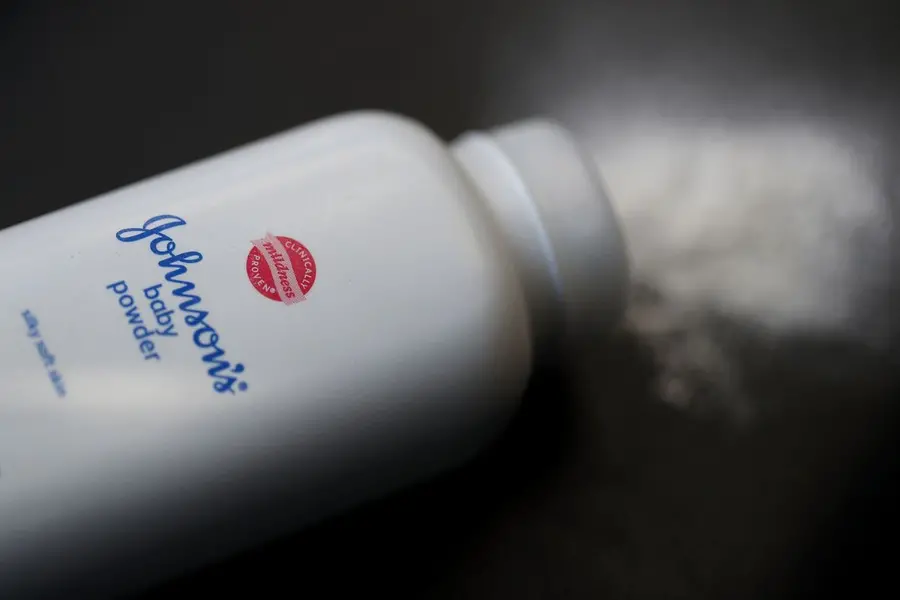
Johnson & Johnson (J&J) is facing its first legal challenge in the United Kingdom over allegations that its talc-based products, including baby powder, caused cancer. The lawsuit, filed this week in the English High Court, involves more than 3,000 claimants who say they developed ovarian cancer, mesothelioma, or other illnesses after using the company’s products between 1965 and 2023.
The case, brought by KP Law, names both J&J and Kenvue UK Limited as defendants. Kenvue is a spin-off of J&J’s former consumer health division, which became a separate entity in 2023.
Asbestos Contamination Alleged
Claimants allege that J&J’s talc products contained harmful fibres, including asbestos – a known carcinogen linked to mesothelioma. KP Law claims this contamination was present in products sold to consumers over several decades.
Companies Insist Products Are Safe
Both J&J and Kenvue have consistently denied any wrongdoing. J&J has long maintained that its talc-based baby powder is safe and free from asbestos. In response to the UK lawsuit, Kenvue reiterated that its product “did not contain asbestos and does not cause cancer.”
J&J ceased sales of its talc-based baby powder in the United States in 2020, and in the UK in 2023. The product has since been replaced by a cornstarch-based alternative.
A £1 Billion Claim
KP Law estimates the total value of the UK claim at around £1 billion ($1.34 billion). While this figure is significant, English courts tend to award more modest damages than their US counterparts. Punitive or exemplary damages – often a large component of US legal awards – are less common and usually smaller in scale in the UK.
In the United States, J&J has faced tens of thousands of similar lawsuits over the past several years. In one recent case, the company was ordered to pay $966 million to the family of a woman who died from mesothelioma. The majority of that amount was punitive damages.
Kenvue Remains Confident in Legal Outcome
Kenvue expressed confidence in the legal process, stating that it expects a judge to ultimately conclude that its talc-based baby powder does not cause cancer.
The UK case marks a significant development for J&J, as legal scrutiny over its talc products continues to expand beyond the US.
Published: 17 Oct 2025, 08:37 am IST
Related Topics
Disclaimer: Kindly avoid objectionable, derogatory, unlawful and lewd comments, while responding to reports. Such comments are punishable under cyber laws. Please keep away from personal attacks. The opinions expressed here are the personal opinions of readers and not that of Mathrubhumi.
