
India's Operation Sindoor was not merely a military victory but a profound validation of its defense transformation and a "technology referendum" against Pakistan’s Chinese-supplied platforms, according to a leading American defense analyst.
John Spencer, a top urban warfare expert and Chair of urban warfare studies at the Modern War Institute, asserted in his extensive analysis titled 'India's Operation Sindoor: A Battlefield Verdict on Chinese Weapons -- And India's Victory', that the rapid, multi-domain military campaign went beyond dismantling cross-border terror networks.
"India showed the world what self-reliance in modern warfare looks like — and proved that 'Atmanirbhar Bharat' works under fire," Spencer wrote. He further elaborated, "Operation Sindoor pitted India's indigenously developed weapons systems against Chinese-supplied platforms fielded by Pakistan. And India didn't just win on the battlefield — it won the technology referendum. What unfolded was not just retaliation, but the strategic debut of a sovereign arsenal built under the twin doctrines of Make in India and Atmanirbhar Bharat."
Spencer stated that "Pakistan's proxy dependency" was no match for "India's sovereign power" during Operation Sindoor, which demolished terror infrastructure deep inside Pakistan following the heinous April 22 Pahalgam terror attack.
"India fought as a sovereign power — wielding precision tools it designed, built, and deployed with unmatched battlefield control. Pakistan fought as a proxy force, dependent on Chinese hardware that was built for export, not for excellence. When challenged, these systems failed — exposing the strategic hollowness behind Islamabad's defence posture," Spencer wrote.
India's defense transformation
Spencer detailed how India's transformation into a modern defense power began in 2014 with Prime Minister Narendra Modi's 'Make in India' initiative. The goal was to reduce dependence on foreign arms imports and cultivate a world-class domestic defense industry.
"The policy incentivized joint ventures, opened defence to foreign direct investment up to 74 per cent, and encouraged both public and private sector manufacturers to build sophisticated military hardware at home. Within a few years, systems like the BrahMos missile, K9 Vajra howitzer, and AK-203 rifle were being produced inside India – many with technology partnerships but increasing domestic control," he stated.
He further lauded PM Modi, highlighting how 'Atmanirbhar Bharat' (self-reliant India) evolved into a national security doctrine following the combined shocks of the Covid-19 pandemic and the Galwan Valley clash with China.
"India imposed phased bans on key defence imports, gave the armed forces emergency procurement powers, and poured investment into indigenous research, design, and production. By 2025, India had increased domestic content in defence procurement from 30 per cent to 65 per cent, with a goal of 90 per cent by the decade's end," Spencer noted.
This new doctrine, the expert reckoned, was put to the test on April 22 after Pakistan-backed militants killed 26 Indian civilians in a terror attack in Jammu and Kashmir's Baisaran Valley.
India's arsenal proves decisive
Spencer elaborated on how India's diverse arsenal proved overwhelming for Pakistan:
BrahMos Supersonic Cruise Missiles: Jointly developed with Russia and now largely manufactured in India, these were used to strike high-value targets like radar stations and hardened bunkers. "Its speed and low radar cross-section make it nearly impossible to intercept," Spencer observed.
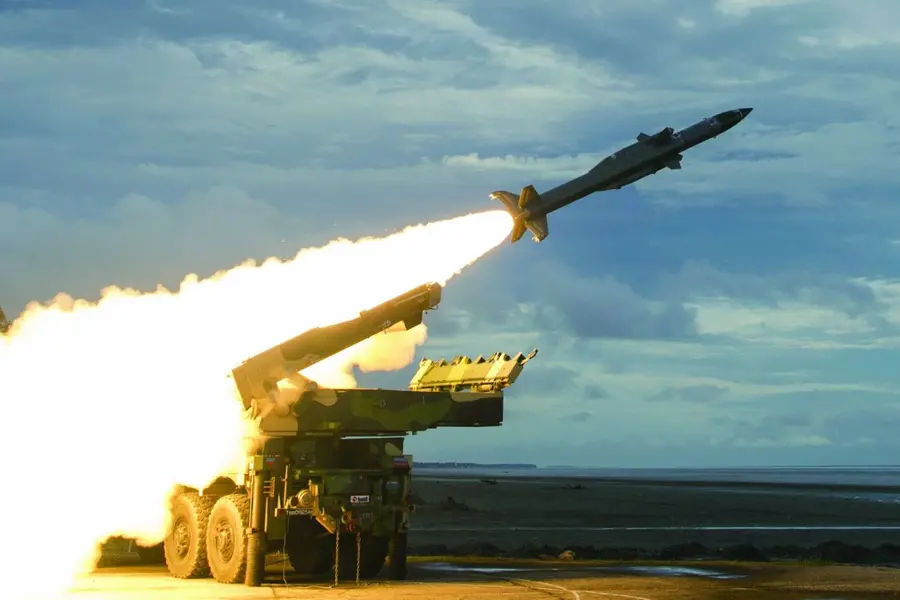
Akash Surface-to-Air Missile: Developed by DRDO and Bharat Dynamics, this system, integrated with the AI-enhanced Akashteer Command & Control System, enabled a coordinated response to multiple airborne threats, including drones, cruise missiles, and aircraft.
Rudram-1 Anti-Radiation Missile: India's first indigenously developed anti-radiation missile, deployed to silence Pakistani ground-based radars and degrade situational awareness along the Line of Control (LoC).
Netra Airborne Early Warning and Control (AEW&C): Built by DRDO on an Embraer platform, it provided real-time tracking of enemy aircraft and missiles, vectoring Indian jets for deep-strike missions. "Its effectiveness was evident when Pakistan's Swedish Saab 2000 AEW&C was destroyed by a long-range missile," said Spencer.
Harop and SkyStriker Drones: These precision-guided 'Kamikaze' munitions, manufactured under license or assembled domestically, were used to destroy mobile radars, convoys, and high-value enemy infrastructure with minimal collateral damage.
Drone Detect, Deter, and Destroy System (D4S): This system successfully neutralized dozens of Chinese-made Pakistani drones, showcasing India’s transition to proactive electronic warfare dominance.
M777 Ultra-Light Howitzer: Imported from the US but integrated into Indian mountain warfare doctrine, these were used with Excalibur precision-guided shells to strike terrorist camps without crossing the LoC. Spencer noted their airliftability and rapid deployment made them ideal for high-altitude operations.
T-72s and Zorawar Light Tank: Upgraded T-72s were deployed along the LoC for overwatch, while the new light tank Zorawar, optimized for high-altitude terrain, is under development, signaling India's continued investment in mobility and firepower in challenging Himalayan terrain.
Advanced Fighter Jets: Rafales led deep precision strikes using SCALP long-range cruise missiles and carried Meteor air-to-air missiles, giving India a decisive edge. Su-30MKI (Russian-designed, India-built) and Mirage 2000 provided firepower and flexibility, operating under the protective umbrella of the Netra AEW&C system. "These jets flew under the protective umbrella of the Netra Airborne Early Warning and Control (AEW&C) system, which acted like an eye in the sky—tracking enemy aircraft and coordinating the battlespace. Meanwhile, Rudram anti-radiation missiles were used in Suppression of Enemy Air Defenses (SEAD) missions, disabling enemy radar and air defence systems to ensure safe air operations," the expert detailed.
Pakistan's strategic failures
Spencer also provided a detailed account of Pakistan's strategic failures and the shortcomings of its Chinese-supplied systems during Operation Sindoor:
JF-17 Thunder: These aircraft, produced in Pakistan but designed and built by China's AVIC, "failed to gain air superiority or contest Indian strikes. Their limited payload, outdated radar, and poor survivability were evident under Indian EW and air defence pressure," Spencer stated.
F-16 Fighting Falcons: Sidelined by US end-user agreements during the operation, leaving Pakistan without a frontline air dominance platform.
HQ-9 and HQ-16 Air Defense Systems: Chinese imitations of Russian S-300 and Buk systems, they "failed under India's jamming and deception operations. These systems were easily bypassed by BrahMos and loitering drones, revealing critical weaknesses."
LY-80 and FM-90 Air Defense Systems: Also Chinese-made, these were unable to detect or stop India's low-flying drones and precision munitions, forcing Pakistan to rely on passive air defense.
CH-4 Drones: Used extensively by Pakistan for ISR and light strike, these "were repeatedly downed or jammed, underperforming in terrain and electronic environments dominated by India's D4S system." Spencer added, "Reports emerged that Turkish drone operators had to be brought in to manage UAVs — revealing both equipment and personnel dependency."
Swedish Saab 2000 AEW&C: Pakistan's key airborne early warning platform "was destroyed — likely by an S-400 system — crippling Pakistan's airspace awareness and blinding command and control functions."
Spencer concluded, "By the end of the campaign, Pakistan had lost key radar stations, its premier AEW&C aircraft, dozens of drones, and its ability to contest Indian airspace."
His analysis also highlighted the market impact, noting that India's defense stocks surged in May, gaining investor trust, while Chinese defense stocks, including AVIC, NORINCO, and CETC, fell sharply after Operation Sindoor, as the battlefield disproved their marketing claims.
Published: 29 May 2025, 03:51 pm IST
Related Topics
Disclaimer: Kindly avoid objectionable, derogatory, unlawful and lewd comments, while responding to reports. Such comments are punishable under cyber laws. Please keep away from personal attacks. The opinions expressed here are the personal opinions of readers and not that of Mathrubhumi.
