
While Iran boasts a larger army and vast territory, Israel possesses superior technology and battle-hardened forces, aided by US support
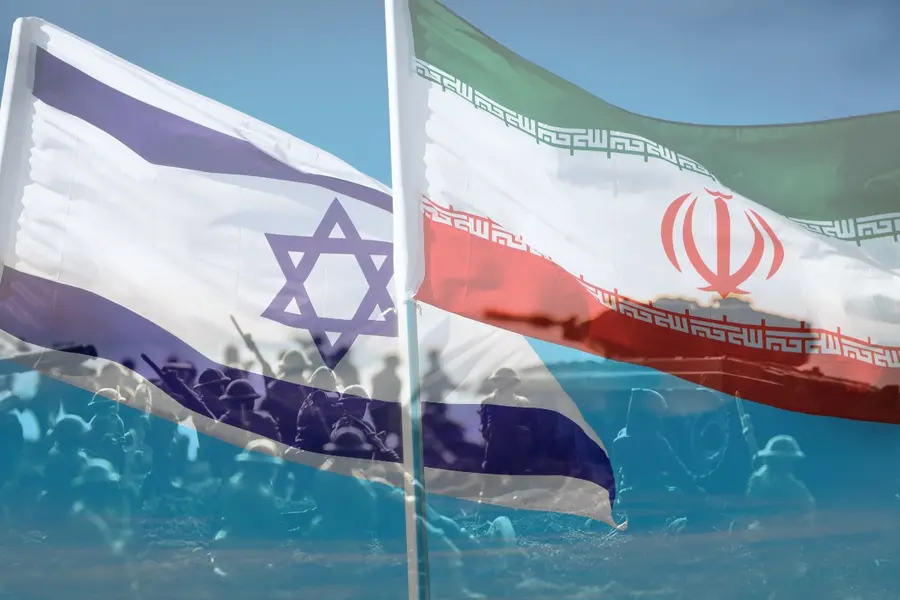
As hostilities between Israel and Iran continue to intensify, the prospect of a full-scale war has grown more real. Tehran’s latest round of reprisals and Israel’s targeted strikes have heightened concerns across the region and beyond.
With the United States now cautiously watching from the sidelines, many are wondering: how do the two countries measure up in military terms?
Here’s a detailed explainer of how the Israeli and Iranian armed forces compare, and what each side brings to the battlefield.
A war of numbers? not quite
On paper, Iran holds a clear demographic advantage. With a population of 88 million and a landmass of 1.6 million sq km, it dwarfs Israel’s 9 million citizens and 22,000 sq km of territory.
However, when it comes to military capability, these numbers don’t tell the full story.
Iran’s dual military structure
Iran’s forces are split between the regular military and the paramilitary Islamic Revolutionary Guard Corps (IRGC).
- The regular armed forces, which focus on border security and conventional operations, account for around 600,000 personnel.
- The IRGC, which includes the elite Quds Force, cyber units, and missile command, adds another 200,000 personnel.
Together, they form a large force, but one that is increasingly strained.
According to recent reports, Israeli and US strikes have significantly weakened Iran’s proxies and conventional capabilities over the past year.
Weapons and technology: Outdated vs advanced
Iran’s military hardware is a patchwork of Soviet-era, pre-1979 American, and modern Russian equipment. The Iranian Air Force has roughly 350 aircraft, but many are outdated and considered inferior to Israeli technology.
Where Iran does excel is in the production of unmanned aerial vehicles (UAVs). The Shahed drones, in particular, have been supplied to Russia for use in the Ukraine war and are considered a key part of Iran’s modern offensive tools.
On Thursday, an Israeli military official said that Iran had used a multi-warhead missile, a new challenge for Israeli defences.
While Iran claims this is the Khorramshahr missile, capable of carrying multiple warheads, experts believe it’s more likely to use submunitions, rather than having true MIRV (Multiple Independently targetable Reentry Vehicle) capabilities.
Leadership losses for Iran
Iran’s top military leadership has suffered major losses in recent Israeli strikes. Among those killed last Friday in Tehran were:
- Gen. Mohammad Bagheri, Chief of Staff of Iran’s Armed Forces
- Gen. Hossein Salami, IRGC Commander-in-Chief
- Gen. Gholamali Rashid, Commander of Khatam al-Anbiya HQ
- Gen. Amir Ali Hajizadeh, IRGC Aerospace Commander
- Several top nuclear scientists
- Multiple high-ranking officials
These deaths have raised questions about the security of Iran’s command structure and may impact the effectiveness of military planning going forward.
Iran’s nuclear capability
Iran has made significant progress in its nuclear programme. It is believed to have enough enriched uranium near weapons-grade to produce several nuclear warheads within months, if it chooses to.
However, it would still need more time to weaponise that uranium, in other words, develop missiles or other delivery methods.
Israel has shown no interest in waiting; it has already struck nuclear material and missile manufacturing sites to delay or stop Iran's nuclear ambitions.
Israel: smaller but stronger?
While Israel has fewer troops around 170,000 active personnel and 400,000 reservists its military is widely regarded as one of the most advanced in the region.
It benefits from cutting-edge US and European technology, alongside a strong domestic defence industry. Israel’s forces are also battle-hardened, with experience from numerous regional conflicts.
Its multi-layered missile defence system, built with extensive US help, can:
- Detect incoming threats
- Launch interceptors only if targets pose danger
- Respond swiftly to large-scale missile attacks
This system helped mitigate damage during a massive missile strike by Iran in October 2024, where US forces assisted in intercepting projectiles.
Israel’s nuclear ambiguity
Israel has never officially confirmed it has nuclear weapons, but it is widely believed to be the only nuclear-armed state in the Middle East. This gives it a major strategic edge, especially as tensions with Iran rise.
What role will the US play?
Though the United States has distanced itself from Israel’s latest actions, it may not be able to stay out of the conflict for long.
Iran has threatened retaliation not just against Israel, but also US military bases in the region. The US currently has:
- An aircraft carrier with 60 fighter jets in the Arabian Sea
- Dozens of warplanes stationed across regional bases
- Thousands of troops in nearby countries
In response to the threats, the US has begun withdrawing some diplomats from Baghdad and is offering voluntary evacuation for families of troops stationed in the Middle East.
US Secretary of State Marco Rubio said Israel took “unilateral action against Iran” and warned Tehran not to target US forces.
While Iran retains the ability to fire hundreds of ballistic missiles at Israel, how long it can sustain a counteroffensive is unclear. Israeli forces have already dealt major blows to Iran’s proxy groups Hamas and Hezbollah, and bombed air defences.
Iran’s threats to "drive the US out of the Middle East" through destruction of military infrastructure remain bold, but Israel’s military edge and American support will be hard to match.
Published: 20 Jun 2025, 03:56 pm IST
Disclaimer: Kindly avoid objectionable, derogatory, unlawful and lewd comments, while responding to reports. Such comments are punishable under cyber laws. Please keep away from personal attacks. The opinions expressed here are the personal opinions of readers and not that of Mathrubhumi.
