
Satellite imagery analysis suggests Israeli forces have expanded and fortified military positions across Gaza despite a ceasefire agreement that envisioned a phased troop withdrawal.
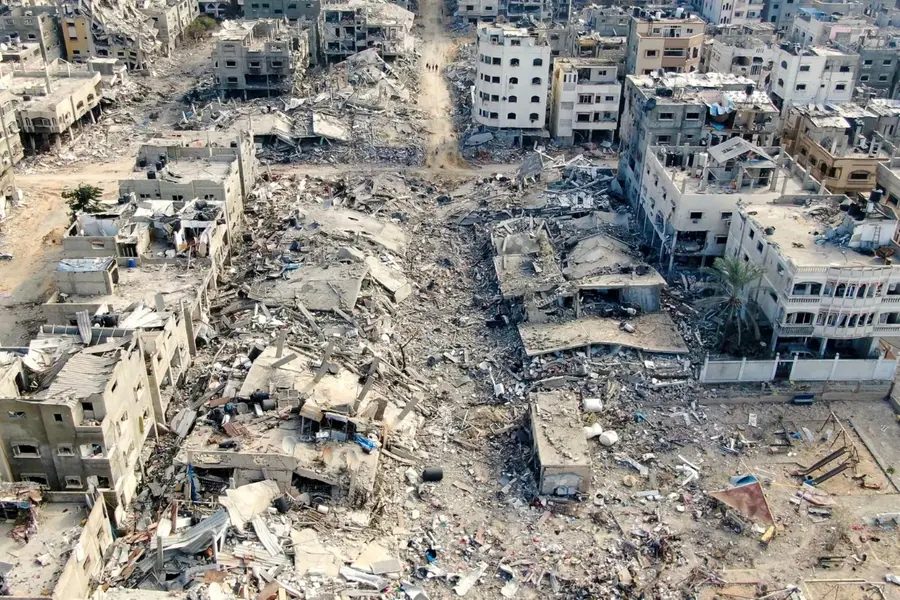
Gaza: An analysis of satellite imagery up to May 2026 has revealed what investigators describe as a growing network of Israeli military positions inside Gaza, despite ceasefire arrangements that envisioned a gradual withdrawal of forces from the enclave.
The findings have intensified scrutiny of developments on the ground as diplomatic efforts continue to focus on ending the conflict and securing a lasting peace.
What the satellite images show
According to the investigation, at least 40 distinct Israeli military outposts have been identified across Gaza.
The analysis suggests that eight of these installations were built after the October 2025 ceasefire came into effect, while one additional site was reportedly still under construction as recently as May 2026.
The military positions are spread across northern, central and southern Gaza, indicating what analysts describe as a broader effort to establish long-term operational infrastructure rather than temporary battlefield positions.
Investigators argue that the pattern points towards sustained military entrenchment in key strategic areas.
New military positions emerge after the truce
One of the most notable findings involves the construction of new facilities in multiple regions of Gaza.
Satellite imagery reportedly identified:
- Two newly established sites in northern Gaza
- Two positions in central Gaza
- One military installation east of the Netzarim Corridor
- Three additional sites in the Khan Younis area
The investigation claims these locations were either developed or significantly expanded after the ceasefire agreement took effect. In several cases, areas that appeared undeveloped in late 2025 were transformed into fortified military compounds by May 2026.
Focus on the Netzarim Corridor
Particular attention has been drawn to the Netzarim Corridor, a strategic route that effectively separates northern Gaza from the southern part of the territory.
Satellite analysis identified multiple military positions around the corridor, reinforcing Israel's control over movement through the area. Analysts say the concentration of military infrastructure around the route suggests that it remains a key strategic objective.
The corridor has played an important role throughout the conflict because of its ability to control access between different parts of Gaza.
Expansion of existing bases
The investigation also points to significant upgrades at several previously established military sites. In eastern Gaza City, one military installation reportedly expanded by around 70 per cent between October 2025 and May 2026.
Images indicate the addition of vehicle staging areas, internal road networks, fortifications and other infrastructure associated with long-term military deployment.
In central Gaza, satellite imagery also detected the construction of defensive trenches and protective earthworks around existing positions.
Such developments are often viewed by military analysts as signs of preparations for extended occupation or prolonged deployment.
Political statements add to concerns
The satellite findings come amid statements from Israeli Prime Minister Benjamin Netanyahu regarding Israeli control over parts of Gaza.
Recent remarks by Netanyahu indicated that Israeli forces currently control a substantial portion of the territory and suggested a gradual expansion of that control.
These statements have been closely examined alongside developments visible in satellite imagery, leading to renewed debate about Israel's long-term intentions in Gaza. The developments have prompted questions about the implementation of the ceasefire framework brokered in late 2025.
The agreement included provisions aimed at reducing hostilities, facilitating humanitarian aid deliveries, addressing security concerns and outlining a phased withdrawal process.
Critics argue that the continued expansion of military infrastructure appears inconsistent with those objectives. Israeli officials, meanwhile, have maintained that military operations are necessary to address security threats and prevent future attacks.
The differing interpretations underscore the challenges facing efforts to implement and sustain the ceasefire.
Humanitarian concerns remain
Beyond the military and political implications, humanitarian concerns continue to dominate discussions about Gaza. The conflict, which began in October 2023, has resulted in widespread destruction across the territory and significant civilian casualties.
Aid organisations have repeatedly warned that restrictions on movement, infrastructure damage and continuing instability have complicated efforts to deliver assistance and support displaced populations.
Analysts note that the placement of military installations around population centres could further affect civilian movement and access to services. The satellite imagery investigation has added a new dimension to the debate over Gaza's future.
While ceasefire agreements are typically designed to reduce military presence and create conditions for political negotiations, the reported expansion of military infrastructure suggests a more complicated reality on the ground.
As international mediators continue efforts to secure a lasting resolution, developments visible from space are increasingly becoming part of the evidence used to assess whether commitments made during negotiations are being implemented.
For now, the satellite images have fuelled renewed questions about the gap between ceasefire commitments and realities on the ground in Gaza.
Published: 03 Jun 2026, 05:59 pm IST
Related Topics
Disclaimer: Kindly avoid objectionable, derogatory, unlawful and lewd comments, while responding to reports. Such comments are punishable under cyber laws. Please keep away from personal attacks. The opinions expressed here are the personal opinions of readers and not that of Mathrubhumi.
