
Israel elects its 120-seat parliament, known as the Knesset, through a single nationwide constituency based on proportional representation.
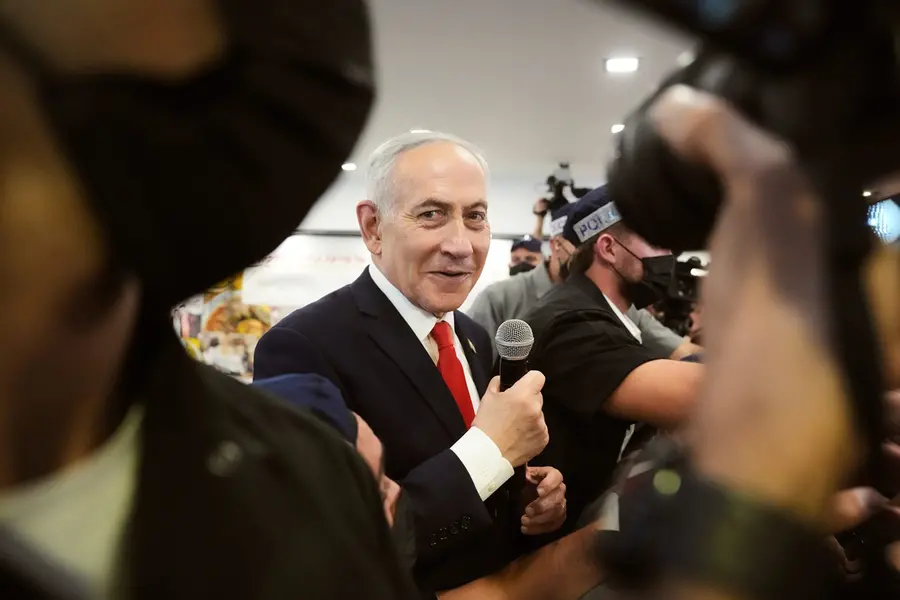
On Tuesday, October 27, more than 7.3 million registered Israeli voters will decide whether Benjamin Netanyahu remains in office. This general election is the first nationwide ballot since the Hamas-led attacks of October 7, 2023, which triggered three years of grinding warfare across Gaza, Lebanon, and Iran. The contest looks less like a standard election and more like an intense national referendum on Netanyahu’s long-standing rule.
Israel elects its 120-seat parliament, known as the Knesset, through a single nationwide constituency based on proportional representation. Because no single party has ever won an outright majority of 61 seats, politics here revolves around deal-making and coalition building. Any party securing at least 3.25 percent of the national vote enters parliament. With pre-election surveys pointing to a dead heat, a poll by public broadcaster KAN projected 52 seats for the main opposition bloc and 50 for Netanyahu’s right-wing bloc, leaving the remaining seats in the hands of unaligned and Arab parties.
Also Read

A national referendum after three years of conflict
Public anger over security lapses has made this campaign exceptionally bitter. On Saturday evening, thousands marched across Tel Aviv from Rabin Square towards Hostages Square, demanding accountability. The protest was organised by the October Council, an association representing families of victims and hostages captured during the 2023 assault. They are demanding an independent state commission of inquiry into the institutional failures that allowed the assault to occur.
Netanyahu’s administration has refused to sanction an independent judicial panel, offering instead a political committee staffed equally by ruling coalition members and opposition lawmakers. Opposition figures rejected that arrangement outright. "Whoever has been leading us for the past four years has done such a terrible job," said Hadas Feuershtein, 68, attending the rally.
The stakes are drawing tens of thousands of Israelis back home. Because Israeli law generally prohibits mail-in or absentee ballots for citizens residing abroad, people must cast their votes in person. A non-profit organisation called the AID Coalition estimates that as many as 67,000 emigrants are flying into Tel Aviv from North America, Europe, and Australasia under a "Fly&Vote" initiative to cast their ballots.
General who lost family emerges as primary challenger
The man standing directly in Netanyahu’s path is 66-year-old Gadi Eisenkot. A retired army chief of staff and the son of Moroccan immigrants, Eisenkot would be Israel's first prime minister of Middle Eastern or North African descent if elected. He resigned from Netanyahu's emergency war cabinet in 2024 and established a new centre-right party named Yashar, the Hebrew word for "Straight", in 2025.
Eisenkot holds immense public sympathy following personal tragedies during the Gaza campaign, in which his son Gal and two of his nephews were killed in combat. While he lacks Netanyahu’s decades of political cunning, he draws support by promising straightforward governance and an official state investigation into the war's conduct.
Despite pitching himself as a moderate alternative, Eisenkot takes an uncompromising security stance. He has promised to dismantle Hamas rule in Gaza within 18 months and opposes the creation of an independent Palestinian state. He supports Jewish settlements in the occupied West Bank, though he pledges to prosecute extremist settlers who assault Palestinian villagers.
Former allies and television stars crowd the centre
Behind Eisenkot in third place stands 54-year-old former prime minister Naftali Bennett, heading the centre-right Beyahad party. A former technology entrepreneur born to American immigrants, Bennett made his name as a leader in the nationalist settler movement before rebranding as a secular centrist. In 2021, he stunned observers by cobbling together an eight-party government that briefly unseated Netanyahu, though that fragile administration survived only a year.
Bennett’s appeal lies with traditional right-wing voters who have grown disillusioned with Netanyahu’s conduct but refuse to back left-leaning parties. On Saturday, police detained a suspect who assaulted Bennett’s security team during a Tel Aviv campaign event. Curiously, Bennett has refused to rule out including Netanyahu in a future unity coalition.
Working in tandem with Bennett is Yair Lapid, a 62-year-old former television news anchor who leads the centrist Yesh Atid party. Lapid briefly served as premier in 2022 and has held the finance and foreign affairs portfolios. Eloquent and ubiquitous on social media, he commands strong loyalty among secular urbanites. However, analysts note he struggles to expand his footprint into conservative working-class heartlands.
Secular nationalists and leftists fight for relevance
The political spectrum splinters further on both extremes. Avigdor Lieberman, 68, leads the nationalist Yisrael Beiteinu party. Born in Soviet Moldova, Lieberman originally built his influence among Russian-speaking immigrants. He actually helped engineer Netanyahu’s first election triumph three decades ago in 1996.
Lieberman has run three crucial ministries: foreign affairs, finance, and defence. Today, he is one of the prime minister’s fiercest detractors, describing Netanyahu’s national security record as a comprehensive failure.
Representing the remnants of Israel's traditional left wing is Yair Golan, head of The Democrats, a party incorporating the historic Labour movement. Golan is an outspoken former general who earned widespread admiration on 7 October 2023 when he took his personal vehicle to southern Israel to rescue survivors. Golan stands alone among major candidates in actively endorsing a two-state solution with the Palestinians. He also champions liberal social reforms, including legalising same-sex marriage and allowing public transport on the Jewish Sabbath.
Arab minority leader holds the potential balance of power
With Jewish voters sharply polarised, Arab citizens, who comprise roughly 20 percent of Israel's population, could decide the outcome. Mansour Abbas, a former dentist who leads the United Arab List, or Raam, has emerged as a potential kingmaker. In 2021, Abbas made history by making Raam the first Arab party to formally join an Israeli governing coalition.
Abbas is campaigning vigorously to mobilise Arab communities to block a hard-right comeback. Seeking to broaden his coalition's appeal, he took the unprecedented step of recruiting Yoav Segalovitz, a Jewish former senior police official, onto his party list. Netanyahu routinely warns conservative voters that his opponents will rely on Abbas, who has ideological roots in political Islam, to cling to power.
Street protests and border raids sharpen political tempers
The election takes place against a backdrop of fresh bloodshed. On Friday, Palestinian gunmen shot dead two Israeli soldiers and injured three others at a military checkpoint near Hebron in the occupied West Bank. In response, Israeli troops cordoned off Hebron, displacing between 2,200 and 2,600 Palestinian residents and evacuating nearly 500 flats in the Deir Bahha neighbourhood.
The military banned Palestinian labourers from entering Israeli settlements and announced a total closure of all land crossings with the West Bank through election day. Visiting the attack site, Netanyahu pledged an operation on a scale unseen since 1967. Displaced residents accused the prime minister of exploiting military force to shore up his security credentials before Tuesday's ballot.
Economic anxieties are also mounting. Following sanctions from Britain and other nations against settlement-related businesses, Netanyahu floated the concept of creating an alternate digital economy to insulate Israel from global isolation. Opposition figures mocked the idea, with Eisenkot dubbing the proposed currency "bbCoin" and Lapid warning that such policies would lead to bread queues and financial collapse.
War with Iran casts a heavy shadow over the ballot
Beyond domestic borders, confrontation with Iran dominates political rhetoric. On Sunday, Netanyahu cautioned that Tehran and its regional proxies might attempt military strikes to sabotage Tuesday's vote. "Don't test us. You will suffer disproportionate blows," Netanyahu warned in a televised address.
The premier posted an artificial-intelligence image showing a nuclear mushroom cloud over Tel Aviv, asserting that confronting Iran is an existential priority that dwarfs all domestic issues. Netanyahu has touted his military campaign launched against Iran in February alongside US President Donald Trump, telling voters he alone possesses the resolve to finish the fight.
Across the border in Tehran, ordinary citizens are stockpiling food and medicine amid severe inflation, currency devaluation, and fears that renewed bombing could follow the election cycle. As polling booths open on Tuesday, Israelis will not simply be selecting a prime minister; they will be deciding how their country navigates an expanding regional crisis.
Published: 25 Oct 2026, 11:14 pm IST
Related Topics
Disclaimer: Kindly avoid objectionable, derogatory, unlawful and lewd comments, while responding to reports. Such comments are punishable under cyber laws. Please keep away from personal attacks. The opinions expressed here are the personal opinions of readers and not that of Mathrubhumi.