
Netanyahu has frequently highlighted his relationship with Indian Prime Minister Narendra Modi to show voters that Israel is not isolated internationally.
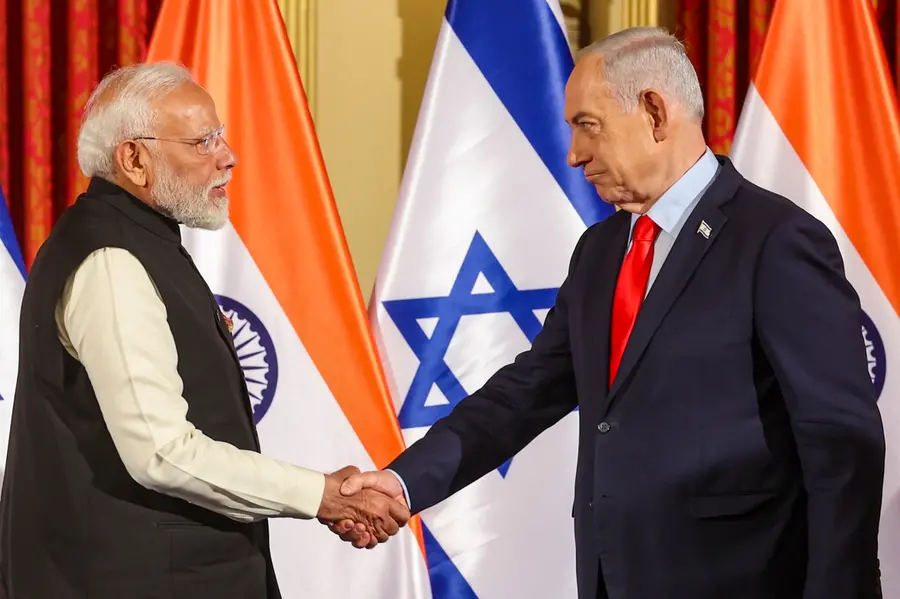
Israeli Prime Minister Benjamin Netanyahu has called for building stronger diplomatic and strategic ties with India to safeguard his country's long-term security. Presenting his new "security doctrine" on Sunday, nine days before Israel's parliamentary election on 27 October, Netanyahu warned that Israel cannot rely solely on support from Washington.
"In two years, a President, man or woman, could come to power who is very hostile to Israel," Netanyahu warned.
To counter that risk, Netanyahu stressed the need to expand Israel's international partnerships beyond traditional Western allies. "India is not a small country, and there are many others," he emphasised, also pointing to political shifts in Latin America, including Brazil.
Netanyahu has frequently highlighted his relationship with Indian Prime Minister Narendra Modi to show voters that Israel is not isolated internationally. Earlier this year in May, Netanyahu highlighted a "unique relationship" with the "huge power" India, claiming there is "crazy love" for Israel among the Indian public.
Preparing for a shift in American politics
While urging Israel to prepare for possible future hostility from Washington, Netanyahu stressed making full use of the remaining time under US President Donald Trump. Hours after Netanyahu presented his doctrine, Trump offered a strong public endorsement of the veteran Israeli leader's re-election campaign.
Writing on Truth Social, Trump praised Netanyahu as a "Great Warrior Prime Minister" and a "Partner for Peace" regarding their shared stance against Iran. Trump described the 76-year-old Israeli leader as "Strong, Brave, and Brilliant" for standing firm against intense domestic and international opposition.
Trump also warned Israeli voters that electing anyone else could force the United States to deal with Iran alone. "Please let this Letter serve to represent my Complete and Total Endorsement of Bibi Netanyahu in his upcoming Race for Re-Election," Trump posted.
Netanyahu quickly thanked Trump in a video message, declaring that together they had "crushed Iran" and would work to "eliminate the Iranian threat over the next two years, or even sooner".
Iran warns of unfinished business
Trump's endorsement and Netanyahu's comments brought a fierce response from Tehran on Monday. Iranian Foreign Minister Abbas Araghchi mocked Trump's assertion that the US and its allies would "soon finish the job" if Tehran did not alter its course.
"Last time you wanted to 'finish the job', Iran emerged even stronger. Want to try your luck again? Be our guest. But be careful; we have unfinished jobs too," Araghchi posted on X.
Araghchi accused Netanyahu of pushing Washington towards a fresh conflict to protect his own political survival. "Netanyahu is driving America into another war to stay out of jail, whatever the consequences for Israel—let alone POTUS," the Iranian minister wrote, referencing corruption charges facing Netanyahu in Israel.
Tensions between the nations previously escalated in late February when US and Israeli forces attacked Iran, leading to an April ceasefire amid rising global oil prices and American public concern.
High stakes in the Israeli election
Domestically, Netanyahu's security doctrine drew sharp criticism from political opponents in Israel. Main election rival Gadi Eisenkot, leader of the centre-right Yashar party and a former military chief, dismissed the presentation as an empty campaign trick.
"Two hollow pages, full of slogans that have nothing whatsoever to do with a security doctrine, reveal more than anything the strategic vacuum Netanyahu has left the State of Israel in," Eisenkot declared.
Eisenkot accused Netanyahu of trying to frighten voters and divert attention from his failure to prevent the 7 October 2023 attack. Addressing Trump's endorsement, Eisenkot stated that while he admires the US President, "Israel is a democratic country, only Israelis can choose their leaders".
Around seven million Israelis are eligible to vote in the 27 October parliamentary election. Current polls show a tight contest, with neither Netanyahu's coalition nor Eisenkot's opposition group holding the 61 seats needed for a majority in the 120-seat parliament.
Published: 19 Oct 2026, 09:34 am IST
Related Topics
Disclaimer: Kindly avoid objectionable, derogatory, unlawful and lewd comments, while responding to reports. Such comments are punishable under cyber laws. Please keep away from personal attacks. The opinions expressed here are the personal opinions of readers and not that of Mathrubhumi.
