
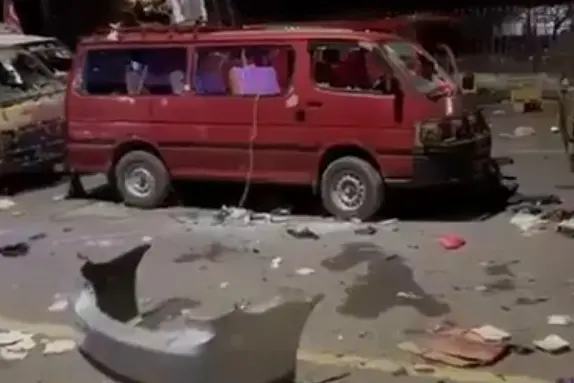
Islamabad, Pakistan -- Bloodshed was witnessed on the streets of Islamabad on Tuesday night during violent confrontation between security forces and supporters of Imran Khan's Pakistan Tehreek-e-Insaf (PTI), which shockingly equated the carnage to the brutal massacre carried out in East Pakistan (now Bangladesh) in 1971.
Taking to social media platform X hours after armed forces launched a violent crackdown on protesters who had gathered in the city to demand the release of imprisoned former Prime Minister Imran Khan, PTI stated, "A massacre has unfolded in Pakistan at the hands of security forces under the brutal, fascist military regime led by the Shehbaz-Zardari-Asim alliance. The nation is drowning in blood. Today, armed security forces launched a violent assault on peaceful PTI protesters in Islamabad, firing live rounds with the intent to kill as many people as possible. Pakistan is experiencing its darkest hour since the massacre in East Pakistan in 1971. The rulers have learned nothing from history and are prepared to destroy the country to cling to their illegitimate power."
According to PTI, the protesters were met with live gunfire from security personnel. Imran Khan's PTI leaders accused the ruling coalition of Shehbaz Sharif, Asif Ali Zardari, and General Asim Munir of deploying the military to suppress peaceful demonstrations and "cling to their illegitimate power."
Earlier on Tuesday evening, PTI supporters battled law enforcement agencies and succeeded in reaching D-Chowk for a sit-in till their leader told otherwise as part of their protest march to Islamabad that started on Sunday.
Khan's wife, Bushra Bibi, who was leading the march to Islamabad from Peshawar along with Khyber Pakhtunkhwa Chief Minister Ali Amin Gandapur, announced that the protestors would not go away until Imran Khan, who had given the final call for protest, was released from jail even as security personnel continued their efforts to move them from the area.
Video footage showed Khan's supporters facing tear gas and climbing on the shipping containers placed on the roads leading to D-Chowk, which is located close to several important government buildings: the Presidency, the PM Office, the Parliament, and the Supreme Court.
Around midnight, police and Rangers launched an operation to clear the Blue Area business area, forcing the protestors to move away along with Bibi and Gandapur.
Police sources said that about 450 protestors were arrested in the crackdown and more arrests are expected after the end of the protest.
Special teams have been formed to arrest PTI leaders, the sources added.
PTI's mention of the 1971 East Pakistan evoked memories of the genocide carried out by Pakistan's armed forces against Bengalis -- something that the country has yet to be held accountable for after all these years.
Revisiting the 1971 East Pakistan massacre
In August 1947, British rule in India ended, leading to the creation of two independent sovereign nations: India and Pakistan. Pakistan was formed as a divided entity, comprising West Pakistan (modern-day Pakistan) and East Pakistan (now Bangladesh). However, the relationship between the two regions quickly became strained due to systemic inequities and discrimination.
The ruling elite in West Pakistan dominated the country’s resources and governance, neglecting the development of East Pakistan. Anti-Bengali sentiments were widespread among West Pakistani officials, who viewed Bengalis as inferior and accused them of adopting "un-Islamic" practices.
In the 1970 elections, the Awami League, led by Sheikh Mujibur Rahman, won a decisive majority in Pakistan’s Parliament, advocating autonomy for East Pakistan. However, negotiations to form a government failed between Pakistan’s President General Agha Muhammad Yahya Khan, Pakistan People’s Party leader Zulfiqar Ali Bhutto, and Sheikh Mujibur Rahman.
On February 22, 1971, Yahya Khan reportedly told his military commanders: "Kill 3 million of them, and the rest will eat out of our hands."
On the night of March 25, 1971, the Pakistani military launched Operation Searchlight, targeting civilians in East Pakistan. The operation included widespread massacres, arrests, and atrocities carried out in collaboration with radical Islamist groups.
The genocide targeted ethnic Bengalis, Hindus, and supporters of the Awami League. The Pakistani military also persecuted Bengali military and police personnel, intellectuals, students, and professionals. Both the majority Bengali Muslim population and minority non-Muslim communities suffered immense losses.
The Government of Bangladesh estimates that 3 million people were killed. Over 200,000 women, mostly Hindus, were raped in systemic campaigns of sexual violence. Due to societal stigma, the true number of victims may never be fully known. Nearly 30,000 women committed suicide after being brutally gang-raped, and an estimated 170,000 illegal abortions were carried out. Approximately 10 million refugees, predominantly Hindus, fled to India, while millions more were internally displaced, affecting up to 50% of Bangladesh’s population.
Despite the scale of these atrocities, Pakistan has never been held accountable for its war crimes during the 1971 Bangladesh Liberation War.
Published: 27 Nov 2024, 09:38 am IST
Disclaimer: Kindly avoid objectionable, derogatory, unlawful and lewd comments, while responding to reports. Such comments are punishable under cyber laws. Please keep away from personal attacks. The opinions expressed here are the personal opinions of readers and not that of Mathrubhumi.
