
Three killed in twin firing incidents in Manipur’s Ukhrul district as tensions escalate between rival tribal groups.
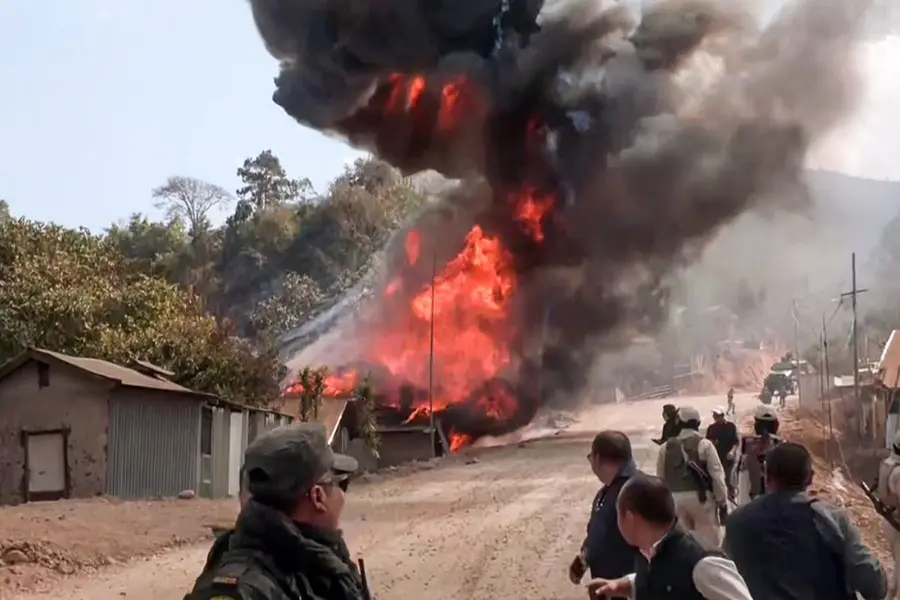
Fresh bloodshed in Manipur has once again exposed the fragile security situation in the state’s hill districts, as three people were killed in twin firing incidents in Ukhrul district on Friday morning.
The first incident unfolded at Mullam village, where intense gunfire erupted at dawn between armed groups belonging to rival tribal communities. What began as an exchange of bullets quickly spiralled into devastation.
Also Read

By late morning, security forces recovered two bodies, both riddled with bullets and clad in camouflage, pointing to the involvement of organised militant elements.
The victims were identified as L Sitlhou and P Haolai. Officials said several houses on the outskirts of the village were torched during the attack, leaving behind charred remains and deepening fear among residents already living on edge.
The violence drew sharp condemnation from the Kuki Organisation for Human Rights Trust, which alleged that two “village volunteers” had been killed and homes deliberately set ablaze.
The group has demanded an FIR and a time-bound probe, signalling rising anger within the community.
Even as Mullam reeled from the early morning assault, a second, equally chilling attack was reported. A 29-year-old man, H Jamang, was ambushed and shot dead near Sinakeithei village.
His body was later recovered, adding to the mounting death toll in the region.
The Tangkhul Naga Long expressed “profound sadness” over the killing, but also pointed fingers, alleging that armed Kuki cadres were behind the ambush.
According to the organisation, local Naga village guards were on patrol when they were suddenly attacked.
The latest killings come amid simmering tensions in Ukhrul and neighbouring Kamjong districts, where mistrust and sporadic violence have continued to flare.
Just days ago, two Tangkhul Naga civilians, including a retired Army personnel, were killed in a separate ambush, further fuelling accusations and counter-claims between communities.
With fresh deaths, burnt homes, and competing narratives, the region once again stands on a knife’s edge, raising urgent questions over security, accountability, and whether the cycle of violence can be contained before it spirals further.
Published: 25 Apr 2026, 09:22 am IST
Disclaimer: Kindly avoid objectionable, derogatory, unlawful and lewd comments, while responding to reports. Such comments are punishable under cyber laws. Please keep away from personal attacks. The opinions expressed here are the personal opinions of readers and not that of Mathrubhumi.