
By 2030, Kabul's aquifers may be dry, displacing millions. Contamination is widespread, impacting the poor most severely
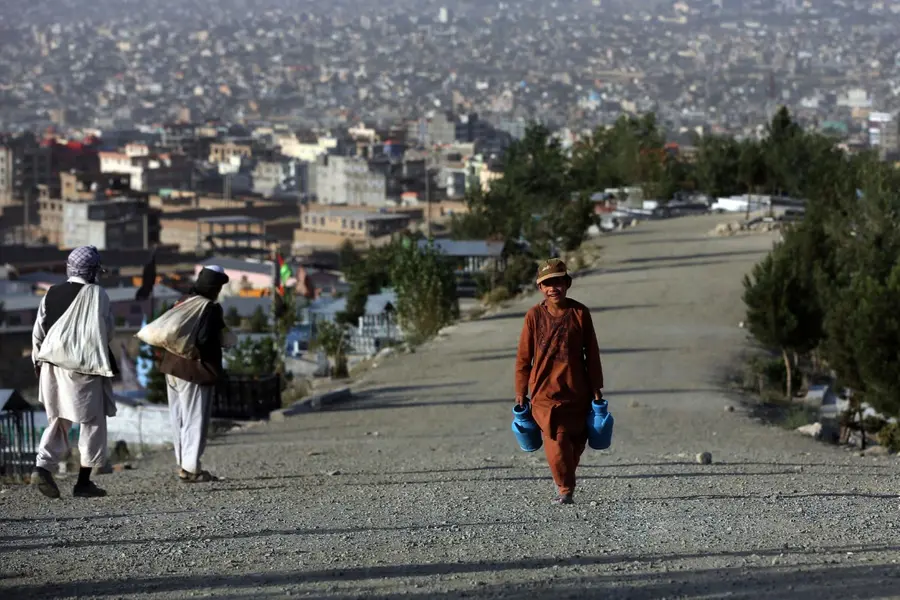
Kabul, home to over six million people, is facing a growing water crisis. A new report by nonprofit Mercy Corps has warned that the Afghan capital might be the first modern city to completely run out of water within the next five years.
What is causing Kabul’s water shortage?
According to reports, the city’s groundwater levels have been falling rapidly due to overuse and the impacts of climate change. According to the Mercy Corps report published in April, Kabul’s aquifers have dropped by 25 to 30 metres over the past 10 years.
The amount of water being extracted is 44 million cubic metres more than what naturally recharges each year.
This over-extraction puts Kabul at risk of drying up by 2030, which could displace around three million residents. UNICEF has also noted that nearly half of Kabul's bore wells, the city's main source of drinking water, have already run dry.
Is the water safe to drink?
The report highlighted that up to 80 percent of the city’s groundwater is unsafe. Contaminants include sewage, arsenic, and high levels of salt.
Who is to blame for the crisis?
Experts say that the problem is the result of multiple factors: climate change, poor governance, and a growing population. Kabul’s population has grown from less than one million in 2001 to more than six million today.
Water resource management expert Assem Mayar explained, “The prediction is based on the growing gap between groundwater recharge and annual water extraction. These trends have been consistently observed over recent years, making the forecast credible.”
He warned, “It reflects a worst-case scenario that could materialise by 2030 if no effective interventions are made.”
Najibullah Sadid, a senior researcher with the Afghanistan Water and Environment Professionals Network, pointed out that while no one can predict exactly when the last well will dry up, the situation is worsening. As groundwater levels continue to fall, the capacity of deep aquifers also diminishes, he likened it to a bowl of water gradually emptying.
How bad is the situation now?
There are around 310,000 drilled wells in Afghanistan and an estimated 120,000 unregulated bore wells in Kabul alone. A UN report in 2023 found that about 49 percent of bore wells in the city are dry and others are working at only 60 percent efficiency.
Mayar noted, “Wealthier residents can afford to drill deeper boreholes, further limiting access for the poorest. The crisis affects the poorest first.”
Abdulhadi Achakzai, who leads the Environmental Protection Trainings and Development Organization (EPTDO), described how poor families are suffering.
Who is using Kabul’s water?
Sadid pointed to heavy usage by over 500 beverage and mineral water companies in the city. He claimed that Alokozay, a major soft drink producer, alone extracts about one billion litres of water a year.
In addition, greenhouses covering more than 400 hectares in Kabul use around 4 billion litres of water annually, according to Sadid.
Is climate change making things worse?
Yes. The Mercy Corps report noted that snow and glacier melt from the Hindu Kush mountains, which feed rivers like Kabul, Paghman and Logar, are shrinking.
Between October 2023 and January 2024, Afghanistan received only 45 to 60 percent of the average rainfall seen in previous years.
Mayar said, “Climate-related events such as repeated droughts, early snowmelts, and reduced snowfall have clearly diminished groundwater recharge opportunities.”
Sadid added that higher temperatures have led to more evaporation and increased water use in farming.
Why is Kabul the most affected?
Though water scarcity affects other provinces too, Kabul faces the worst of it due to its large and growing population. Sadid said the crisis has worsened because of years of war, weak governance, and international sanctions.
Funds meant for development were often diverted to military and humanitarian needs, especially after the Taliban regained control in 2021. Sanctions have also prevented critical development projects from moving forward.
Mayar observed that the crisis has already exceeded what the current de facto authorities can handle. He explained that in well-managed cities, such challenges are addressed through strong water governance and proper infrastructure, both of which Kabul lacks.
What happened to past water projects?
Several planned water projects have been abandoned. One project, funded by the German bank KfW and European agencies, aimed to provide 44 billion litres of water annually to Kabul from Logar. According to Sadid, this project was two-thirds complete when it was halted in 2021.
Similarly, a dam project on the Kabul River signed by India and the previous Afghan government has also been left uncertain.
What needs to be done now?
Mayar stressed that artificial groundwater recharge and the creation of basic water infrastructure are urgent needs.
“Once these foundations are in place, a citywide water supply network can gradually be developed,” he said.
Achakzai emphasised the need to bring in new pipelines from nearby rivers like those in Panjshir, but also stressed the importance of recharging underground aquifers. He suggested this could be done by building check dams and water reservoirs.
He said the government should update and replace ageing pipelines to reduce water waste.
“Modernising infrastructure will improve efficiency and reduce water loss,” he added.
However, Achakzai warned that international isolation is a major obstacle.
“Sanctions restrict Afghanistan’s access to essential resources, technology, and funding needed for water infrastructure development and maintenance,” he said.
Published: 07 Jul 2025, 11:40 am IST
Related Topics
Disclaimer: Kindly avoid objectionable, derogatory, unlawful and lewd comments, while responding to reports. Such comments are punishable under cyber laws. Please keep away from personal attacks. The opinions expressed here are the personal opinions of readers and not that of Mathrubhumi.
