
India has spent more than three billion dollars in Afghanistan, building roads, dams, hospitals and even the Afghan parliament building in Kabul.
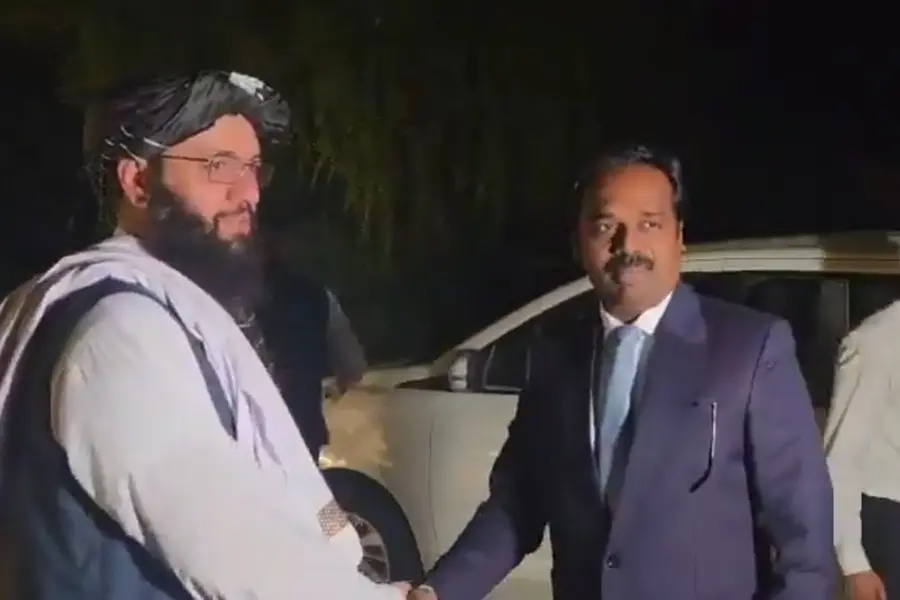
On 17 August 2026, something unusual happened in New Delhi. Officials of the Indian government walked into the Afghan Embassy and attended a reception that marked the fifth anniversary of the Taliban's takeover of Afghanistan.
Joint Secretary Anand Prakash and Director Sneha Dubey from the Ministry of External Affairs represented India that evening. It was the first time New Delhi had joined an event which openly celebrated the Taliban victory of 2021. A small step on paper, but in the world of diplomacy such steps are never accidental.
India still does not officially recognise the Taliban as the legitimate government of Afghanistan. Yet the decision to send two senior officers shows a clear change in thinking. For many years India treated the Taliban as something distant and dangerous, a force to be watched from far away. The message today is simple and practical. The Taliban control Kabul, they are not leaving soon, and India must deal with that reality if it wishes to protect its own interests in the region.
Money is one strong reason. India has spent more than three billion dollars in Afghanistan, building roads, dams, hospitals and even the Afghan parliament building in Kabul. The Salma Dam, known warmly as the Friendship Dam, stands as the biggest symbol of that relationship. If India walks away completely, these projects may fall into neglect or slowly come under the influence of other countries. Staying in touch is a way of protecting the effort, the goodwill and the public money already spent there.
Security is the second reason, and perhaps the heavier one. Afghanistan shares a long and troubled border with Pakistan. India worries that groups hostile to it could once again find safe shelter on Afghan soil, as happened in the past. By keeping an open channel with the Taliban, Indian diplomats can raise such concerns directly instead of shouting from a distance. They can ask for cooperation against terrorism and press for an assurance that Afghan land will not be used against India.
This engagement did not appear overnight. In late 2025, India upgraded its small technical mission in Kabul back to a full embassy. In January 2026, the Taliban sent a Chargé d'Affaires to head their embassy in New Delhi. Trade between the two countries has stayed steady at around one billion dollars even while the wider region faces trouble, and goods keep moving through existing routes. India also continues to send medicines, food and other humanitarian help. The reception was simply the next public step.
At the same time, human rights groups and the United Nations keep pointing to the harsh rules the Taliban have placed on women and girls. Education has been restricted, and many freedoms have quietly disappeared. India is fully aware of this. Its choice is not to ignore those problems but to accept that isolation has not solved them in five years. Careful engagement gives India a seat at the table, where concerns can still be raised while strategic interests are protected.
The timing becomes clearer when one looks at Pakistan. Relations between the Taliban and Islamabad have turned bitter. Border clashes have increased, and trust has collapsed. Pakistan once treated Afghanistan as its own strategic backyard. That comfort is gone today. India's visible presence at the Taliban embassy in Delhi naturally adds to Pakistan's discomfort, because it shows the world that Kabul now has other friends and other options beyond Islamabad.
Only ten days before this reception, on 7 August 2026, Saudi Arabia, Turkey and Pakistan signed a defence agreement in Mecca. The three countries promised that an attack on one would be treated as an attack on all. This brings Pakistani forces closer to Saudi money and Turkish defence technology, and for India it raises fresh questions about the balance of power on its western side. Against this background, attending the Kabul event looks like a calm and calculated counter-move.
For years, Indian policy rested on the hope that a different kind of government would return to Kabul. That hope has faded. Accepting this fact does not mean approving of Taliban rule. It means understanding that nations must sometimes deal with difficult partners, because the alternative is losing influence completely. Critics will say India is offering the Taliban the respectability they badly want. Supporters will reply that staying away only hands the entire field to others.
In the end, the story is straightforward. India has large investments in Afghanistan, serious security worries, and a neighbourhood that is changing fast. Sitting outside the room is no longer seen as a safe choice. By walking into the Afghan Embassy on that August evening, India showed that it is ready to deal with the situation as it exists today rather than wait for a future that may never arrive. The handshake may be reluctant, but it is deliberate and calculated.
The author is an award-winning science communicator and a defence, aerospace & geopolitical analyst.
Published: 18 Aug 2026, 01:02 pm IST
Related Topics
Disclaimer: Kindly avoid objectionable, derogatory, unlawful and lewd comments, while responding to reports. Such comments are punishable under cyber laws. Please keep away from personal attacks. The opinions expressed here are the personal opinions of readers and not that of Mathrubhumi.
