
According to the Washington-based group, at least 585 people have died in Iran since the strikes began, including 239 civilians
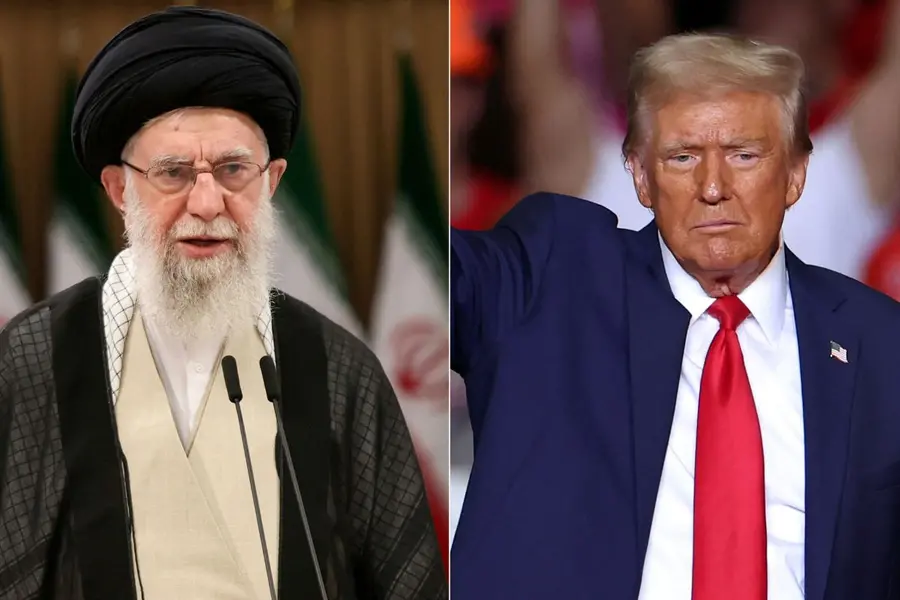
Iran’s Supreme Leader, Ayatollah Ali Khamenei, has rejected calls from the United States to surrender in the face of intensified Israeli airstrikes, warning that any American military involvement would result in “irreparable damage to them.” His remarks came as senior European diplomats prepared to hold nuclear talks with Iran on Friday in Geneva.
Khamenei's comments, delivered in a low-resolution video posted online on Wednesday, mark only his second public appearance since Israel began its air campaign against Iran six days ago. The video showed only beige curtains, an Iranian flag, and a portrait of the late Grand Ayatollah Ruhollah Khomeini, offering no clue to Khamenei’s current location.
“Wise individuals who know Iran, its people and its history never speak to this nation with the language of threats, because the Iranian nation is not one to surrender,” Khamenei declared. “Americans should know that any military involvement by the U.S. will undoubtedly result in irreparable damage to them.”
The statement followed U.S. President Donald Trump’s social media demand that Iran “surrender without conditions.” Trump added that while the U.S. knows Khamenei’s whereabouts, there were “no plans to kill him, at least not for now.”
Though initially distancing himself from Israel’s surprise assault on Iran’s nuclear infrastructure, Trump has recently signalled a shift. “I want something much bigger than a ceasefire,” he said, as the U.S. bolstered its military presence in the region with additional warplanes and warships.
Despite the escalating tensions, American officials have indicated that the U.S. will not be involved in the upcoming European-led nuclear negotiations with Iran—although that stance could change, according to a U.S. official speaking anonymously.
A European official confirmed that Friday’s talks in Geneva would involve diplomats from Germany, France, and the UK, as well as the EU’s top diplomat. The official, who requested anonymity due to the sensitive nature of the discussions, said no American delegation is currently expected.
Putin’s part
Meanwhile, the UN Security Council is scheduled to convene its second emergency session on the Iran-Israel conflict on Friday, following a request by Russia, China, and Pakistan. Russian President Vladimir Putin offered to mediate the crisis, proposing a settlement that would permit Iran to continue a peaceful nuclear programme while addressing Israeli security concerns.
“In my view, a solution could be found,” Putin said during a press conference with journalists.
On Wednesday, Israeli Prime Minister Benjamin Netanyahu delivered a video address to the Israeli public, expressing gratitude for Trump’s backing.
“We speak constantly, including last night,” Netanyahu said. “We had a very warm conversation.” He described Trump as “a great friend of Israel,” applauding U.S. support in defending Israeli airspace.
Iran’s Foreign Ministry spokesman Esmail Baghaei earlier warned that U.S. military intervention could ignite an “all-out war.” Another senior Iranian official reiterated the country’s commitment to continue uranium enrichment for peaceful purposes, rejecting Trump's demands to dismantle its nuclear programme.
Late Wednesday, Iranian state television reported it had been subjected to a cyberattack allegedly orchestrated by Israel. Viewers said normal broadcasts were briefly replaced with an anti-government video urging public protest. After the interruption, state TV ran a banner stating: “If you see an irrelevant message on the screen, it’s due to a cyber attack by the Zionist regime.”
Israeli military spokesman Brig. Gen. Effie Defrin said Israel had launched three waves of airstrikes in the previous 24 hours, hitting over 60 targets in Tehran and western Iran with dozens of warplanes.
Defence Minister Israel Katz confirmed that Israel targeted the headquarters of Iran’s internal security forces, though he did not specify the agency or exact location. Iran’s police later acknowledged that central command buildings in Tehran had been struck and that some officers had been wounded.
The UN’s nuclear watchdog also confirmed that two Iranian centrifuge-production sites had been bombed—one in Tehran and another nearby.
Conflict so far
Israel’s airstrikes have killed high-ranking generals and nuclear scientists. According to the Washington-based group Human Rights Activists, at least 585 people have died in Iran since the strikes began, including 239 civilians. Over 1,300 people have been wounded.
Iran’s retaliation has involved around 400 missiles and hundreds of drones, which have killed at least 24 people in Israel and injured hundreds more. Some projectiles struck residential buildings in central Israel.
Israeli officials said their defence systems intercepted 10 missiles overnight and several others Wednesday evening, although air-raid sirens forced residents to seek shelter repeatedly. Iran’s missile launches have dwindled in recent days, possibly due to Israeli strikes on launch facilities.
The U.S. Embassy in Israel began evacuating some diplomats and their families on Wednesday, according to American officials. A number of them departed aboard a government aircraft, shortly before U.S. Ambassador Mike Huckabee announced plans to assist private American citizens with evacuation.
With signs that the missile threat is receding, Israel has begun easing domestic restrictions, permitting gatherings of up to 30 people and allowing workplaces to reopen provided they have access to a nearby shelter.
Human Rights Activists said it had confirmed 239 civilian deaths and 126 fatalities among security personnel in Iran. The group, which gained prominence for reporting casualties during the 2022 protests over Mahsa Amini’s death, crosschecks local reports with its own network of sources.
Iran has not regularly updated its official casualty figures. Its last statement on Monday cited 224 dead and 1,277 wounded.
Internet services across Iran have been severely disrupted. The monitoring organisation NetBlocks reported a “near-total national internet blackout” on Wednesday. The Iranian Ministry of Communications said it was limiting access to prevent Israel from “misusing the country’s communication network for military purposes.”
Shops across Tehran, including the Grand Bazaar, remained closed. Long queues were reported at petrol stations and major roads out of the city were jammed as residents fled. Witnesses described over 10 large explosions shaking central Tehran around 8 p.m., with white smoke rising from the blasts.
Published: 19 Jun 2025, 07:47 am IST
Related Topics
Disclaimer: Kindly avoid objectionable, derogatory, unlawful and lewd comments, while responding to reports. Such comments are punishable under cyber laws. Please keep away from personal attacks. The opinions expressed here are the personal opinions of readers and not that of Mathrubhumi.
