
Former diplomat KP Fabian has said the ongoing Iran-related conflict shows no clear signs of ending, highlighting the roles of the US and Israel amid mixed signals and rising global concerns.
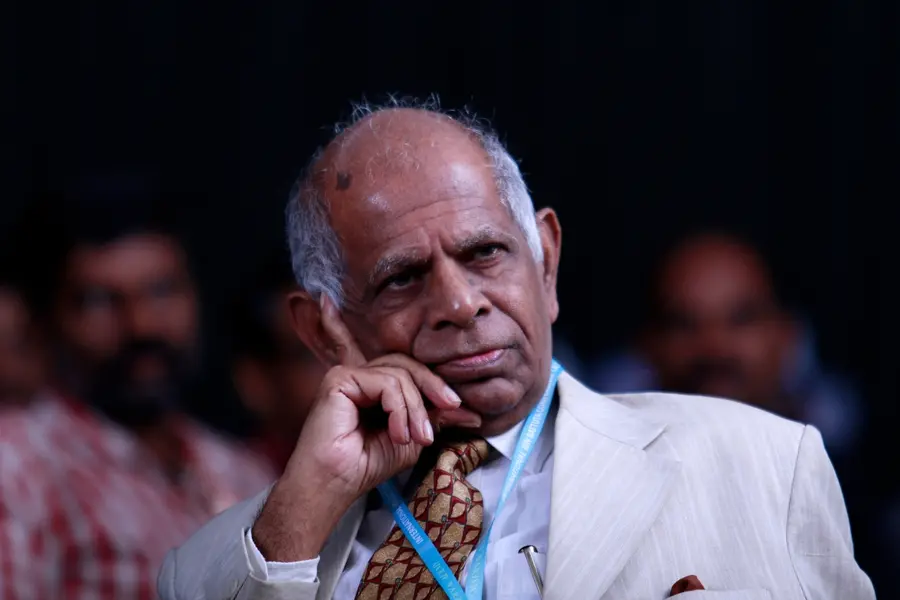
New Delhi: Former diplomat KP Fabian has stated that the ongoing conflict involving Iran in the Middle East does not show any clear indication of reaching an end, pointing to the involvement of major global players and shifting political signals.
Speaking to ANI, Fabian described the situation as a prolonged cycle of “destruction,” suggesting that the actions and decisions of key leaders, particularly the United States and Israel, are central to how the conflict evolves.
Also Read

He noted that while Iran has been responding to attacks, any meaningful pause or ceasefire would require agreement from both the US and Israel. According to him, the situation reflects a broader geopolitical struggle rather than a simple bilateral conflict.
Fabian also pointed to what he described as mixed messaging from the United States, suggesting that statements from US leadership have alternated between claims of achieving objectives and ongoing strategic uncertainty. He linked these developments to wider economic and political effects, including rising fuel prices and market fluctuations.
He further observed that domestic developments in the United States, including public demonstrations, indicate growing political pressure linked to the conflict and its economic consequences.
On the possibility of ending the war, Fabian said mediation could be one route, but he expressed scepticism about direct negotiations between Iran and the US, noting that Iran traditionally engages through intermediaries rather than direct talks.
He suggested that a ceasefire scenario would likely require coordinated steps involving multiple parties, and any resolution would depend on political decisions taken at the highest levels. He also indicated that leadership choices in the US could shape the future direction of the conflict, including whether efforts are made to de-escalate or redirect focus elsewhere.
Fabian concluded that, at present, there is no clear pathway toward a settlement between the main parties involved, and the conflict remains unresolved with continued uncertainty about its duration and outcome.
The ongoing Iran-related conflict in the Middle East continues to raise concerns among international observers, with no definitive timeline for resolution. Former diplomat KP Fabian has described the situation as one marked by prolonged instability and unclear strategic direction.
Fabian emphasised that the conflict involves multiple actors, with the United States and Israel playing significant roles alongside Iran. He stated that any ceasefire or meaningful pause in hostilities would require coordinated decisions from these key stakeholders.
According to Fabian, Iran has been responding to attacks, which has contributed to the continuation of hostilities. He suggested that escalation and counter-escalation dynamics have made it difficult to establish conditions conducive to peace talks.
He also highlighted what he described as inconsistent messaging from US leadership regarding the progress and objectives of the conflict. These mixed signals, he said, contribute to uncertainty about the intended end goals and long-term strategy.
Fabian pointed to broader economic implications, including fluctuations in global oil and gas prices. He linked these trends to disruptions in the region, noting that instability in key maritime routes and energy supply chains can have global repercussions.
In addition, he referenced public demonstrations in the United States, indicating that domestic political sentiment may be influenced by both the economic impact and foreign policy decisions related to the conflict.
On diplomatic options, Fabian said mediation remains a theoretical pathway to de-escalation. However, he noted that Iran has historically preferred indirect negotiations through third-party intermediaries rather than direct engagement with the US.
He further suggested that a formal settlement between the conflicting parties appears unlikely in the near term, given differing positions and demands. In his view, any resolution would require compromises that are not currently evident.
Fabian concluded that leadership decisions will be critical in shaping the trajectory of the conflict, but at present, there is no clear indication of when or how the situation might be brought to an end.
(With ANI inputs)
Published: 29 Mar 2026, 12:16 pm IST
Disclaimer: Kindly avoid objectionable, derogatory, unlawful and lewd comments, while responding to reports. Such comments are punishable under cyber laws. Please keep away from personal attacks. The opinions expressed here are the personal opinions of readers and not that of Mathrubhumi.