
Iran launches missile strikes on Gulf energy facilities after its intelligence chief is killed, escalating a regional conflict and disrupting vital oil and gas networks.
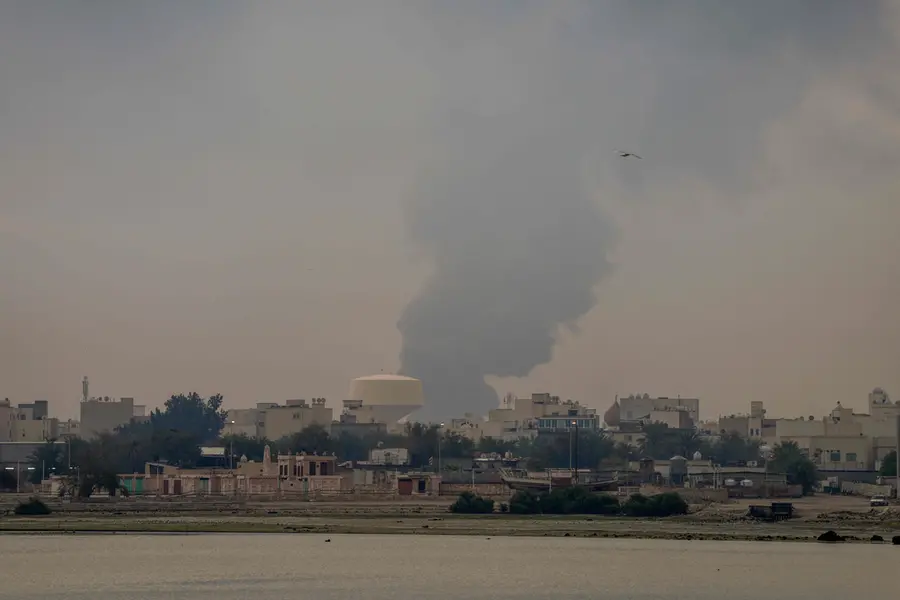
Iran launched coordinated strikes on oil and gas infrastructure across the Gulf on Wednesday, retaliating after the assassination of its intelligence chief. The escalation followed the killing of Esmail Khatib and, days earlier, senior security figure Ali Larijani, deaths that Iran’s new supreme leader Mojtaba Khamenei has vowed to avenge.
Tehran signalled it would widen its campaign if attacks on its own energy facilities continued, issuing a warning after projectiles struck the massive South Pars gas field.
Retaliatory strikes and threats of wider escalation
The Islamic Revolutionary Guard Corps declared that “the response to which is being implemented” after what it said was an attack on the South Pars Gas Field, the world’s largest gas reserve. Iranian state television blamed “projectiles fired by the American-Zionist enemy”.
The Guards warned that if such attacks were “repeated again”, then strikes on regional energy infrastructure “will not stop until it is completely destroyed”.
The Israel military declined to comment on Tehran’s accusations, while United States officials said Washington had knowledge of the incident but did not take part.
IRGC issues evacuation alerts
The Islamic Revolutionary Guard Corps circulated urgent notices instructing personnel to evacuate multiple oil installations across Saudi Arabia, the UAE and Qatar, citing heightened security risks following recent strikes.
Amid the alerts, IRGC Navy commander Alireza Tangsiri cautioned that American-linked facilities in the Gulf could be targeted next. Posting on Twitter, he warned civilians and staff to distance themselves from sites connected to the US, declaring: “Our list of targets is updated. Oil facilities associated with America are now on par with American bases and will come under fire with full force.”
His threat followed the Israeli strike that hit energy infrastructure tied to Iran’s South Pars and Asaluyeh operations on Wednesday.
Qatar and Saudi Arabia report damage, interceptions
The blast reverberated across Gulf energy hubs. QatarEnergy reported an Iranian missile hit its main gas complex, sparking a fire that caused “extensive damage”. In response, Qatar expelled two Iranian diplomats.
In Saudi Arabia, authorities said they intercepted drones targeting facilities in the eastern region, while missile debris fell near a refinery outside Riyadh.
Later on Wednesday, a missile struck Ras Laffan Industrial City, home to the world’s largest LNG export facility. Authorities said four missiles were intercepted before one hit the site, causing significant damage.
In the Abu Dhabi, the Habshan gas facilities were shut down after falling debris from an intercepted strike landed on site.
The attacks fuelled another surge in global oil prices, already inflated by severe disruption to shipping through the Strait of Hormuz.
Wave of assassinations deepens Iranian leadership crisis
The latest upheaval follows a string of killings that have claimed several of Iran’s most senior officials, beginning with the death of long-time supreme leader Ali Khamenei. Intelligence chief Khatib’s killing was denounced by President Masoud Pezeshkian, who labelled it a “cowardly assassination”.
Defence minister Israel Katz said Israeli forces could continue eliminating high-value targets without further authorisation.
Larijani’s funeral drew large crowds in Tehran. In a written message, Khamenei warned: “Every drop of spilled blood comes at a price, and the criminal murderers of these martyrs will soon have to pay it.”
The late official is expected to be buried at a major shrine in Qom.
US says regime weakened but functioning
Appearing before Congress, US intelligence director Tulsi Gabbard said Iran’s government remained “intact but largely degraded” after nearly three weeks of conflict. She also contradicted claims made by president Donald Trump, acknowledging that Tehran had not restarted nuclear enrichment.
Conflict spills across region
Israel’s campaign has stretched far beyond Iran, previously killing Hassan Nasrallah in 2024 and senior Hamas figures since the 7 October 2023 Gaza conflict.
Iran responded overnight with missile barrages that struck areas near Tel Aviv, killing two people, while more blasts were reported across Iran, including the capital.
Lebanon sees fresh strikes as civilians flee
In Beirut, multiple Israeli airstrikes hit central districts on Wednesday, drawing Hezbollah deeper into the war following Khamenei’s death.
Tens of thousands fled southwards along the coast toward the ancient city of Sidon. Among them, Nidal Ahmad Chokr, from Jibchit, described fatalities in his village, including bakers “making bread” and municipal workers “using bulldozers”.
France said its foreign minister Jean-Noel Barrot would travel to Lebanon on Thursday to demonstrate “support and solidarity”.
(With inputs from AFP)
Published: 19 Mar 2026, 06:28 am IST
Related Topics
Disclaimer: Kindly avoid objectionable, derogatory, unlawful and lewd comments, while responding to reports. Such comments are punishable under cyber laws. Please keep away from personal attacks. The opinions expressed here are the personal opinions of readers and not that of Mathrubhumi.
