
Zolfaghari warned that any US strike on Iranian energy infrastructure would trigger retaliatory attacks on US and allied energy and tech facilities.
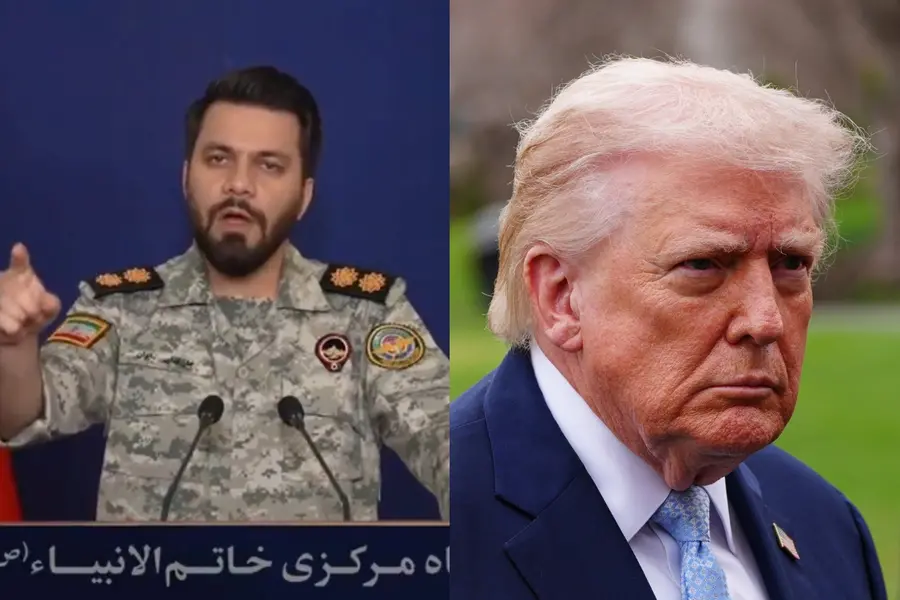
Tehran: A high-ranking Iranian military official used a televised address Sunday to mock U.S. President Donald Trump, repurposing the president’s signature reality-TV catchphrase to dismiss recent White House threats against the Islamic Republic’s infrastructure.
Speaking in English, Second Brig. Gen. Ebrahim Zolfaghari, a spokesperson for the Khatam al-Anbiya Central Headquarters, addressed the American administration directly in a video that has since been widely shared on social media. The taunt followed a 48-hour ultimatum from Washington regarding the blockade of the Strait of Hormuz.
“Hey, Trump, you’re fired. You are familiar with this sentence,” Zolfaghari said. The general concluded his remarks by mimicking the president’s frequent social media sign-off: “Thank you for your attention to this matter.”
Escalating Rhetoric
The jibe was a pointed response to a Truth Social post in which President Trump threatened to "obliterate" Iranian power plants—starting with the nation's largest facilities—if the strategic waterway was not reopened to international shipping. Zolfaghari’s choice of words was a clear reference to the president’s former role as the host of The Apprentice, a persona Iranian officials have increasingly targeted in their public messaging.
The 48-hour deadline set by the White House has pushed global energy markets into a state of high alert. The Strait of Hormuz, a conduit for roughly one-fifth of the world's oil, remains a central flashpoint as the international community awaits the next move in the standoff between Washington and Tehran.
Threats of Regional Retaliation
Zolfaghari further warned that any strike on Iran's fuel and energy sector would trigger immediate retaliation against a wider set of targets linked to the United States and its regional allies.
“If Iran's fuel and energy infrastructure is attacked by the enemy, all energy infrastructure, information technology systems, and desalination facilities belonging to the United States and the regime in the region will be targeted,” he stated, emphasising that the "equations of war are rapidly changing."
Published: 23 Mar 2026, 10:14 am IST
Disclaimer: Kindly avoid objectionable, derogatory, unlawful and lewd comments, while responding to reports. Such comments are punishable under cyber laws. Please keep away from personal attacks. The opinions expressed here are the personal opinions of readers and not that of Mathrubhumi.
