
President Trump has threatened Iranian power plants, while Tehran warns it will retaliate by destroying Gulf desalination and energy facilities.
Tehran: The Middle East conflict entered a perilous fourth week as the United States and Iran issued competing threats against essential infrastructure, placing civilian energy and water supplies at the centre of the escalating war.
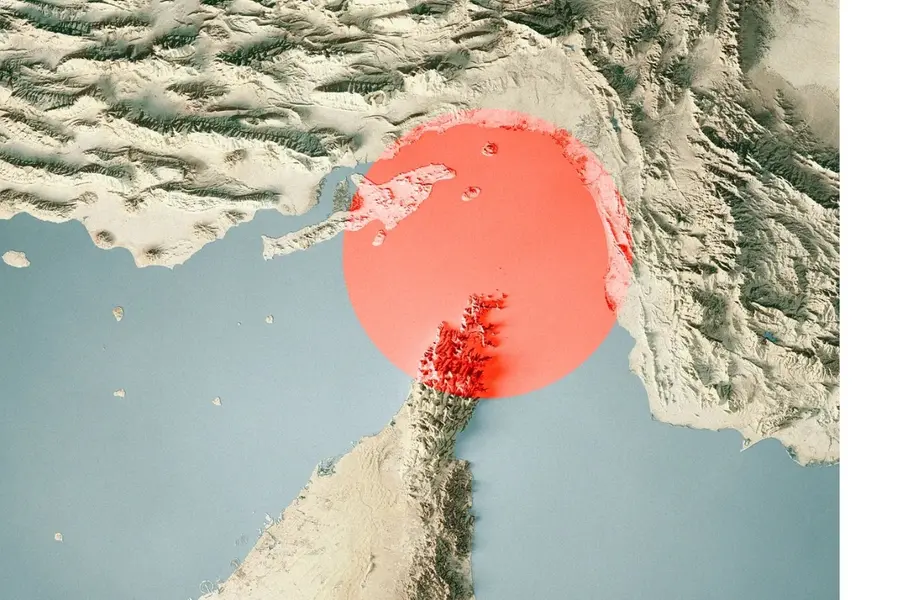
Tehran warned that the Strait of Hormuz, the world’s most critical artery for oil exports, would be "completely closed" immediately if Washington acts on President Donald Trump’s ultimatum to strike Iranian power stations. Late Saturday, Trump established a 48-hour deadline for Iran to reopen the strategic waterway, which has been effectively blocked to most tanker traffic.
The war, initiated by U.S. and Israeli strikes on Feb. 28, has claimed more than 2,000 lives, destabilised the global economy, and sent petroleum prices to record highs. Despite stated goals to weaken Tehran's nuclear program and incite a domestic uprising against the theocracy, there are currently no indications of a popular revolt or a cessation of hostilities.
Threats to Critical Infrastructure
The rhetoric reached a fever pitch as President Trump threatened to destroy Iran’s "various POWER PLANTS, STARTING WITH THE BIGGEST ONE FIRST!" The U.S. maintains that these facilities are controlled by the Revolutionary Guard to sustain the war effort.
Iranian Parliament Speaker Mohammad Bagher Qalibaf countered that if such strikes occur, desalination and energy plants across the Gulf, vital for the region’s drinking water, would be deemed legitimate targets and "irreversibly destroyed." Qalibaf further asserted that "entities that finance the US military budget are legitimate targets."
In a formal letter to the United Nations Security Council, Iran’s ambassador characterised the targeting of power plants as "inherently indiscriminate and clearly disproportionate" and a definitive war crime.
Nuclear Facilities and Civil Casualties
Israeli Prime Minister Benjamin Netanyahu visited southern communities on Monday near a classified nuclear research site that was targeted by Iranian missiles over the weekend. While scores were wounded in the towns of Arad and Dimona, Netanyahu remarked that it was a “miracle” that no fatalities occurred.
Israel’s primary hospital in the south reported treating at least 175 casualties. Tehran claimed the strikes were "retaliation" for a Saturday attack on its Natanz nuclear enrichment facility. While Israel denied involvement in the Natanz strike, the International Atomic Energy Agency (IAEA) noted that the majority of Iran’s enriched uranium remains secured beneath the ruins of a facility in Isfahan.
Intensification in Lebanon
The northern front saw a sharp uptick in violence as Hezbollah claimed an airstrike that killed 61-year-old Israeli farmer Ofer “Poshko” Moskovitz in Misgav Am. Moskovitz had recently described living on the border as "Russian roulette." The Israeli military is investigating whether his death was caused by a Hezbollah rocket or accidental fire from Israeli troops.
In response, Israel expanded its targeting to include bridges over the Litani River. Defence Minister Israel Katz stated the destruction of the Qasmiyeh bridge, and others, was necessary to prevent Hezbollah from moving weaponry, though Lebanese President Joseph Aoun described the move as "a prelude to a ground invasion."
Lebanese officials report that Israeli strikes have killed more than 1,000 people and displaced over 1 million residents. Iran's health ministry reported its national death toll has exceeded 1,500, while 15 people have been killed within Israel by Iranian strikes.
With inputs from AP
Published: 23 Mar 2026, 07:38 am IST
Related Topics
Disclaimer: Kindly avoid objectionable, derogatory, unlawful and lewd comments, while responding to reports. Such comments are punishable under cyber laws. Please keep away from personal attacks. The opinions expressed here are the personal opinions of readers and not that of Mathrubhumi.
