
Iran claimed missile and drone strikes on the US Fifth Fleet headquarters in Bahrain, but CENTCOM said the attacks failed and were intercepted.
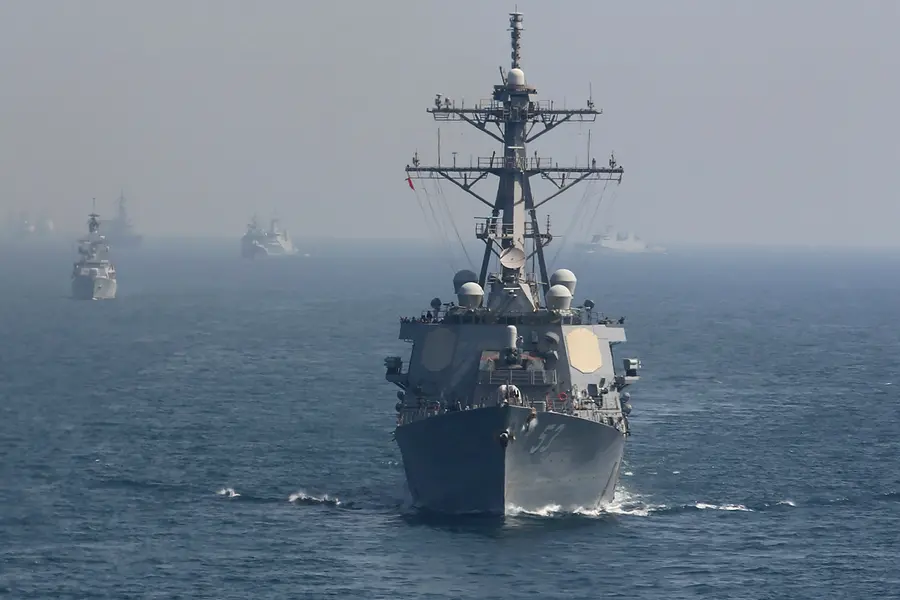
Iran's Islamic Revolutionary Guard Corps (IRGC) said it launched missile and drone strikes against the headquarters of the US Navy's Fifth Fleet in Bahrain and other American military positions in the Gulf on Tuesday, marking a sharp escalation in tensions between Tehran and Washington.
The United States military, however, said the attacks failed to reach their targets and were either intercepted or malfunctioned before impact. US Central Command (CENTCOM) also announced retaliatory strikes against an Iranian military facility on Qeshm Island in the Strait of Hormuz.
The latest exchange comes amid mounting friction over maritime security in the Gulf, stalled diplomatic efforts and growing regional instability linked to the broader conflict involving Iran, the United States, Israel and Iran-backed groups across the Middle East.
Iran claims strikes on US military assets
In a statement, the IRGC Aerospace Force said it had targeted the US Fifth Fleet headquarters and other American military sites in response to what it described as a series of US attacks against Iranian interests.
According to the IRGC, the confrontation began after a US strike allegedly hit an Iranian-bound oil tanker near the Strait of Hormuz, damaging its engine room. The Guard Corps said its naval forces subsequently attacked a vessel it claimed was linked to US and Israeli interests.
Iran further alleged that American forces later struck a telecommunications tower south of Qeshm Island. In response, the IRGC said it launched attacks against a regional airbase, a helicopter squadron and the headquarters of the US Fifth Fleet.
“We had previously warned that in case of aggression, the response would be different and more severe, and we acted accordingly," the Guard said in its statement.
The IRGC also warned that any attempt to undermine security in the Strait of Hormuz would come at a significant cost for US forces operating in the region.
CENTCOM rejects Iranian claims
The US military disputed Iran's account of the events and denied that any American facilities were successfully hit.
In a post on X, CENTCOM said: “Claim: Iran’s Islamic Revolutionary Guard Corps claims they struck U.S. 5th Fleet headquarters in Bahrain and a U.S. air base in the region with missiles and drones today. False.
Truth: All Iranian attacks on American forces failed. U.S. forces remain vigilant and ready to defend against unwarranted Iranian aggression.“
According to the US military, Iran launched missiles towards both Bahrain and Kuwait. Officials said the two missiles fired at Kuwait broke apart before reaching their destination, while missiles aimed at Bahrain were intercepted by US and Bahraini forces.
CENTCOM also said American forces shot down multiple Iranian drones targeting US personnel in Kuwait.
In response to the attacks, the United States carried out strikes against what it described as an Iranian military ground control station on Qeshm Island.
Ceasefire contacts reportedly disrupted
The military confrontation unfolded amid uncertainty surrounding diplomatic efforts aimed at extending a ceasefire linked to the ongoing conflict involving Iran and Israel.
Iranian news agencies Fars and Tasnim reported that Tehran had stopped communicating with mediators regarding a ceasefire extension. According to the reports, Iranian officials insisted that fighting in Lebanon must also be addressed before negotiations could proceed.
A regional official involved in mediation efforts told The Associated Press that Iranian representatives had not communicated with mediators on Tuesday after previously linking future negotiations to the enforcement of a ceasefire in Lebanon.
US President Donald Trump rejected reports suggesting discussions had broken down.
“The conversations between us have been going on continuously, including four days ago, three days ago, two days ago, one day ago and today,” Trump said in a social media post. "Where they lead, one never knows, but as I told Iran, ‘It’s time, one way or another, for you to make a Deal."
US Secretary of State Marco Rubio also struck a cautiously optimistic tone during congressional testimony, saying negotiations remained active although there was no guarantee that an acceptable agreement would ultimately be reached.
Strait of Hormuz remains a flashpoint
The Strait of Hormuz has become a central point of contention as Iran seeks leverage in negotiations while the United States continues efforts to restrict Tehran's influence over the strategic waterway.
The narrow maritime corridor is one of the world's most important energy routes, handling a substantial share of global oil and natural gas shipments during peacetime.
Iran has repeatedly linked wider regional conflicts to negotiations with Washington, insisting that any future truce arrangements must also address fighting involving Hezbollah in Lebanon. The US and Israel have maintained that the Lebanon conflict remains separate from discussions concerning Iran.
Economic crisis deepens pressure on Tehran
The latest military escalation comes as Iran faces severe economic challenges at home.
Data released by Iran's Central Bank showed annual inflation reached 77.2 per cent in May, rising sharply from April and marking levels unseen since the Second World War, according to Iranian economic analysts.
Prices for everyday necessities, including medicine, transport, communications and tobacco products, increased by more than 113 per cent compared with a year earlier.
The Bamdad Institute of Economic Studies described the inflation figures as unprecedented in the modern era, while economists warned that continued economic deterioration could fuel fresh public unrest.
Iran's economy has been strained by damage to infrastructure and businesses during the conflict as well as restrictions on its oil exports, a crucial source of state revenue.
The national currency has also suffered a dramatic collapse. The Iranian rial, which traded at roughly 32,000 to the US dollar in 2015, has fallen to more than 1.7 million to the dollar.
“We will definitely have higher prices," Iranian President Masoud Pezeshkian warned in May. "We are fighting, and we must accept this hardship.”
Tehran-based economist Saeed Leilaz cautioned that inflation could climb even higher.
"Iran’s society cannot tolerate above 25%” annual inflation, he said.
Analysts say the combination of military pressure, economic hardship and stalled diplomatic progress could further destabilise the country in the months ahead.
(With AP inputs)
Published: 03 Jun 2026, 08:02 am IST
Related Topics
Disclaimer: Kindly avoid objectionable, derogatory, unlawful and lewd comments, while responding to reports. Such comments are punishable under cyber laws. Please keep away from personal attacks. The opinions expressed here are the personal opinions of readers and not that of Mathrubhumi.
