
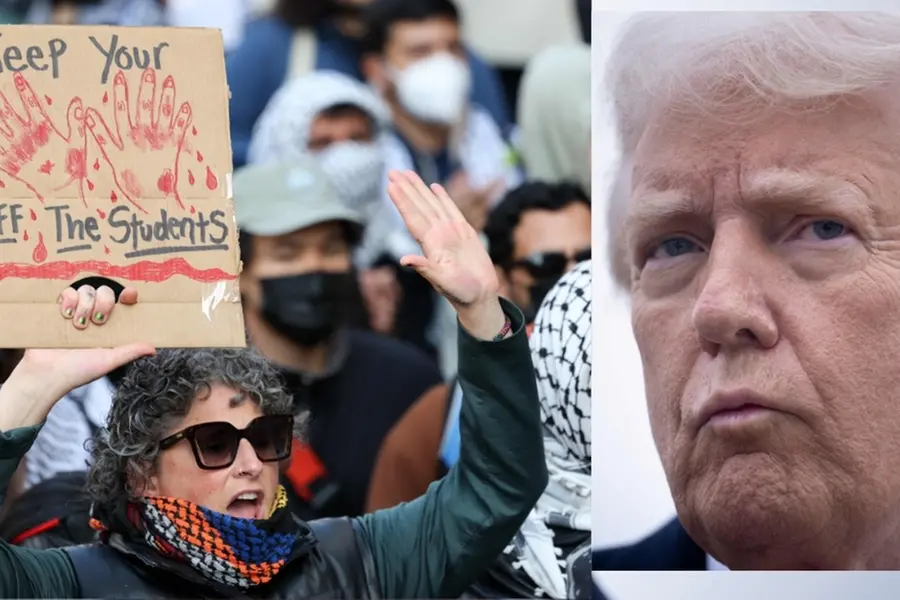
Washington DC: An Indian national and a PhD student in Urban Planning at Columbia University, has self-deported from the United States after authorities revoked her visa, citing concerns over her alleged support for extremism.
In an official statement released on Friday, US Secretary of Homeland Security Kristi Noem confirmed that Ranjani Srinivasan had exited the country using the CBP Home App, a digital platform for immigration and customs procedures.
"Today, Secretary of Homeland Security Kristi Noem announced that one of the Columbia students who had her student visa revoked for advocating for violence and terrorism self-deported using the CBP Home App," read the release from the US Department of Homeland Security.
The case of Ranjani Srinivasan, an Indian doctoral student at Columbia University, has raised concerns about visa policies, academic freedom, and the broader implications of national security in the United States.
Ranjani's departure from the US came after her visa was revoked on allegations of advocating violence and terrorism, a claim that has sparked debate among legal experts, civil rights advocates, and academic circles.
The US Department of Homeland Security (DHS) announced that Srinivasan had “self-deported” using the CBP Home App, a process that allows individuals to leave the country voluntarily without formal deportation proceedings. While DHS Secretary Kristi Noem framed this as a routine enforcement of immigration laws, critics argue that such actions could have a chilling effect on international students and scholars who engage in politically sensitive discourse.
Legal analysts note that visa revocations under terrorism-related grounds often lack transparency, as they fall under the Immigration and Nationality Act (INA) provisions that allow authorities to take action based on classified intelligence. In Srinivasan’s case, no formal charges were filed, and details about the alleged advocacy of violence remain undisclosed. “The lack of due process in cases like this raises significant concerns,” said immigration attorney Mark Levin. “Individuals affected by these revocations often have little opportunity to contest the decision before they are forced to leave.”
This incident also comes amid broader scrutiny of student activism in the US, particularly concerning international students participating in protests or political discourse. Some observers suggest that these incidents reflect an increasingly stringent approach toward individuals whose views, affiliations, or research topics may be perceived as controversial.
Columbia University has yet to issue a formal statement on the matter, but faculty members and student groups have expressed concerns over the implications for academic freedom. “Scholars should not be penalised for engaging in discussions, even if they are difficult or politically sensitive,” said a Columbia faculty member who requested anonymity.
Beyond the immediate case, Srinivasan’s departure underscores the evolving landscape of immigration enforcement in the US, particularly regarding student visas. It remains unclear whether this signals a broader trend, but it has certainly reignited conversations about the balance between national security and academic liberties.
(With AFP inputs)
Published: 15 Mar 2025, 07:54 am IST
Related Topics
Disclaimer: Kindly avoid objectionable, derogatory, unlawful and lewd comments, while responding to reports. Such comments are punishable under cyber laws. Please keep away from personal attacks. The opinions expressed here are the personal opinions of readers and not that of Mathrubhumi.
