
Indian diplomat Pooja Kumari Jha won praise after objecting to an incorrect map of India at a Dhaka seminar, reiterating that Jammu and Kashmir is an integral and inalienable part of India.
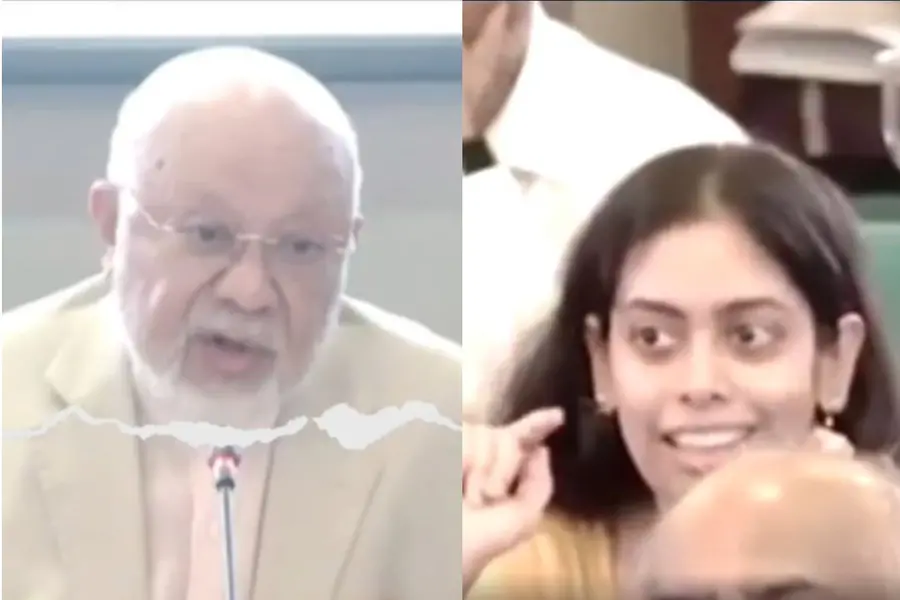
An Indian diplomat posted in Dhaka has drawn widespread praise online after she publicly objected to the display of an incorrect map of India during a seminar in Bangladesh, firmly reiterating that Jammu and Kashmir is an integral and inalienable part of the country.
The incident occurred on Friday at a seminar titled “Rebuilding Trust, Renewing Regional Integration: Pathways for Revitalising SAARC,” organised by the Bangladesh Institute of International and Strategic Studies (BIISS) in Dhaka.
During his presentation, former Bangladesh High Commissioner to India Ahmed Tariq Karim displayed a map that showed Jammu and Kashmir as part of Pakistan, prompting an immediate intervention from the Indian side.
Second Secretary Pooja Kumari Jha, a political and information officer at the Indian High Commission in Dhaka, raised a formal objection from the floor.
"Sir, this is an incorrect map. Jammu and Kashmir is an integral part of India," she said, according to video clips of the exchange circulating on social media.
Karim responded that the map was being used “for representational purposes only” and “doesn’t project actual boundaries.” Jha acknowledged the clarification but reiterated New Delhi’s position, saying, “I understand, sir, but Jammu and Kashmir is an integral part of India, and it is misrepresented here. So I wanted to point it out.”
After she identified herself as an officer from the Indian High Commission, Karim replied, “Point noted,” and continued his presentation.
Indian officials later said the objection was raised to restate India’s consistent position that Jammu and Kashmir is an integral and inalienable part of the country and to contest any incorrect depiction of India’s territorial boundaries at an international forum.
Viral clip and online praise
Short videos of the exchange, shared by Indian and Bangladeshi users as well as news platforms, quickly went viral, with many commentators applauding Jha for her prompt intervention and calm but firm tone.
Several posts described the moment as an example of “quiet, professional diplomacy” and stressed the importance of correcting cartographic errors in public discussions on regional affairs.
The episode also came against the backdrop of recurring sensitivities over the depiction of Jammu and Kashmir on maps by foreign entities, with New Delhi routinely contesting any representation that shows Indian territory as part of another country or as a disputed area.
SAARC and regional cooperation focus
Friday's seminar at BIISS was attended by Bangladesh’s State Minister for Foreign Affairs Shama Obaed Islam as chief guest. In her address, she emphasised the need to rebuild trust and deepen cooperation in South Asia to revitalise the South Asian Association for Regional Cooperation (SAARC), which has remained largely inactive in recent years.
"The organisation needs stronger implementation capacity, greater financial strength, more effective specialised mechanisms and a practical culture of follow‑up," Shama Obaed said, outlining a series of confidence‑building measures that Dhaka is considering in consultation with SAARC member states.
She mentioned possible initiatives such as engaging SAARC envoys based in Dhaka, consulting the SAARC Secretariat in Kathmandu on convening a meeting of senior officials, and exploring the option of a special session of the Council of Ministers. Reviving SAARC, she argued, would require bridging the gap between the region’s potential and its performance through pragmatic, step‑by‑step diplomacy.
While the seminar’s formal agenda centred on regional integration and trust‑building, it was the brief but pointed exchange over the map that captured public attention.
Published: 11 Jul 2026, 01:07 pm IST
Related Topics
Disclaimer: Kindly avoid objectionable, derogatory, unlawful and lewd comments, while responding to reports. Such comments are punishable under cyber laws. Please keep away from personal attacks. The opinions expressed here are the personal opinions of readers and not that of Mathrubhumi.
