
Mounting US and EU pressure on India to halt Russian oil imports is testing New Delhi’s long-held narrative of strategic independence
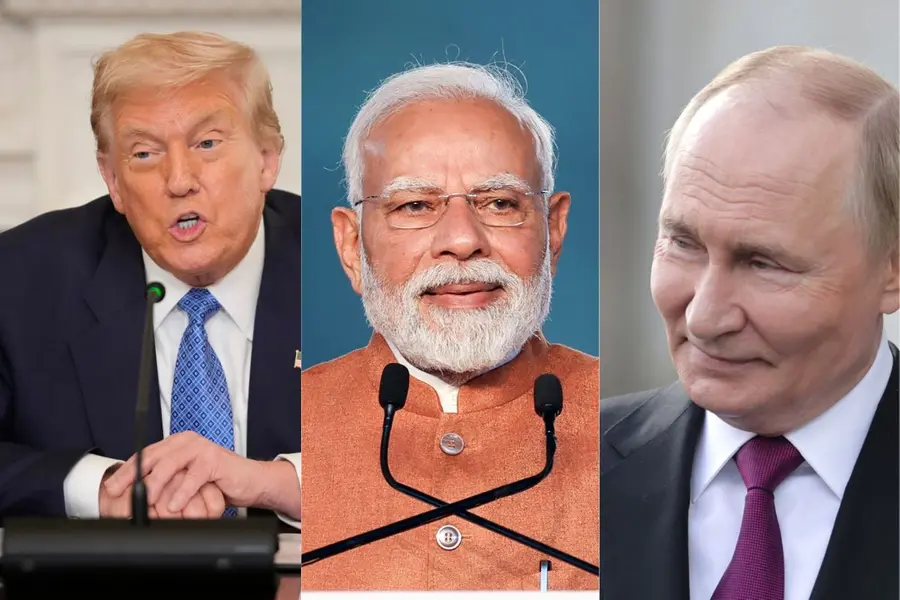
New Delhi: US President Donald Trump’s repeated claim that India will “almost completely stop buying oil from Russia” by the end of this year has brought the issue to the centre of India’s foreign policy debate. The move, if realised, could severely undermine India’s strategic autonomy — a principle that has guided its global diplomacy for decades.
Even as Washington and Brussels tighten sanctions on Moscow, the European Union — once the largest importer of Russian pipeline gas and LNG — has urged India to scale down its purchases. The EU has even sanctioned an Indian company allegedly connected to Russian oil trade.
Also Read

How much Russian oil does India buy?
Between April and September, India imported approximately 1.75 million barrels per day (mbpd) of Russian crude — nearly 36% of its total oil imports. Together, India and China currently buy about 4 mbpd of Russian oil. Chinese firms import around 1.4 mbpd by sea, with another 900,000 barrels daily transported through pipelines by PetroChina.
Discounted Russian crude has allowed Indian refiners to expand exports of processed petroleum to countries including Brazil, Turkey and the UAE. Much of this refined product, ironically, ends up in Western markets despite sanctions on Moscow.
A double standard in Washington’s approach
Trump’s criticism of India for “funding Russia’s war” contrasts sharply with his silence on China, whose energy purchases from Moscow remain substantial. The inconsistency extends to Europe — where Germany has sought exemptions for three refineries owned by Rosneft’s subsidiaries, and Hungary has already received a one-year waiver.
Despite these examples, the US continues to single out India, raising concerns that Washington’s energy diplomacy could undermine developing nations’ sovereign choices.
New Delhi’s cautious diplomacy
India has not confirmed Trump’s claims nor openly rejected US sanctions. Instead, officials maintain that Indian oil companies make decisions purely on market conditions, reflecting a pragmatic stance amid ongoing trade negotiations with the US.
To secure a long-awaited trade deal, India may increase purchases of American energy — particularly LNG and shale oil — but linking this to a reduction in Russian imports risks portraying New Delhi as bowing to pressure.
Analysts argue that any concession to Washington could damage India’s reputation among Global South nations that view it as a voice for independent, multipolar decision-making.
Potential fallout on India’s energy and foreign policy
Russia remains one of India’s most reliable energy partners. The discounted crude from Moscow has not only reduced India’s import bills but also boosted refining profits for domestic firms. These profits have, in turn, helped stabilise fuel prices at home and kept inflation in check.
If India cuts ties with Russian suppliers, it risks higher import costs, supply disruptions, and a loss of diplomatic leverage with Moscow. It could also affect several long-term connectivity projects — including the International North-South Transport Corridor (INSTC) and Arctic energy cooperation — which have been in discussion for years.
Environmental and industrial impact
The surge in refining activity driven by cheap Russian crude has environmental implications as well. Higher refining output contributes to increased carbon emissions, a factor that could attract scrutiny if current import trends continue.
The bigger geopolitical picture
Despite Western pressure, both India and China are expected to continue importing Russian oil. Temporary fluctuations in purchases are likely before markets stabilise. Should Indian refiners scale down operations, China could increase its share — much as it did when India halted Iranian oil imports under US sanctions in 2019.
Ultimately, the politicisation of oil trade has turned what began as a commercial initiative into a test of India’s strategic independence. With energy security, global perception, and diplomatic equilibrium at stake, New Delhi’s next move will carry implications far beyond oil.
Published: 09 Nov 2025, 09:43 pm IST
Disclaimer: Kindly avoid objectionable, derogatory, unlawful and lewd comments, while responding to reports. Such comments are punishable under cyber laws. Please keep away from personal attacks. The opinions expressed here are the personal opinions of readers and not that of Mathrubhumi.