
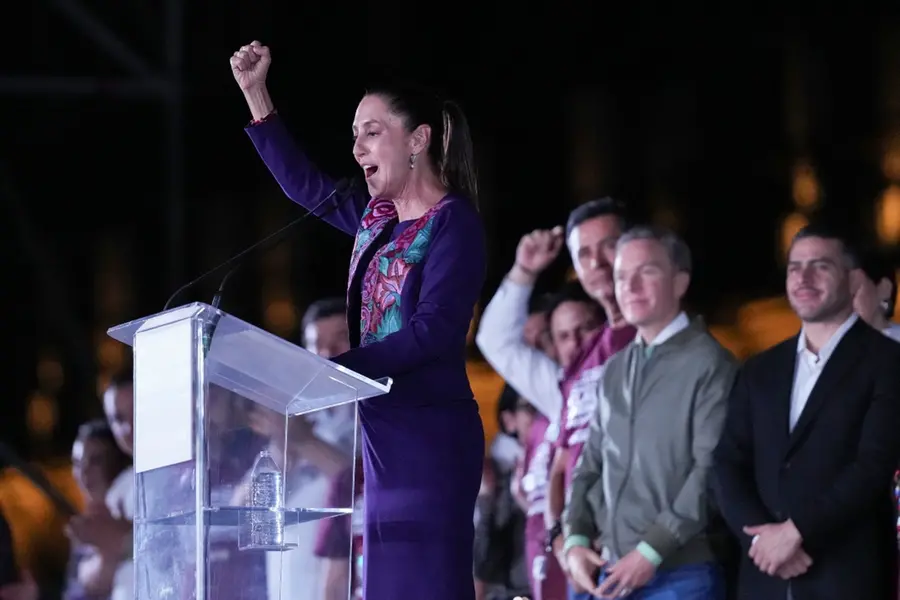
Mexico City: Claudia Sheinbaum will be sworn in on Tuesday as Mexico’s first female president in the country’s over 200-year history. The 62-year-old, who previously served as the mayor of Mexico City, campaigned on a promise to continue the key initiatives of her mentor, former President Andrés Manuel López Obrador.
Since her election, Sheinbaum has consistently supported López Obrador on various issues. However, she has a different style; she focuses on data and analysis rather than his personal approach. Now, many are eager to see how she will carve out her own identity in office.
Also Read

Sheinbaum has a strong background in science, holding a Ph.D. in energy engineering. She has often stated, “I believe in science,” reflecting her belief in data-driven decision-making. Her leadership as mayor during the COVID-19 pandemic showcased her scientific approach, contrasting with López Obrador's national policies.
Her family has a history of activism; her parents were prominent figures in the 1968 student movement, which ended tragically in a government massacre in Mexico City. Additionally, Sheinbaum is the first president of Jewish heritage in a predominantly Catholic nation.
Sheinbaum won the presidency convincingly in June with nearly 60% of the vote, significantly outpacing her nearest rival, Xóchitl Gálvez. As López Obrador’s chosen successor, she benefited from his enduring popularity during his six years in office. Meanwhile, the opposition struggled to gain support.
Throughout her campaign, Sheinbaum backed several of López Obrador's initiatives, including a controversial overhaul of Mexico’s judiciary and plans to place the National Guard under military command, which she defended by claiming it would respect human rights. Sheinbaum said “the reforms to the judicial system will not affect our commercial relations, nor private Mexican investments, nor foreign ones. Rather the opposite, there will be a greater and better rule of law and democracy for everyone.”
Just days before her inauguration, Sheinbaum stood alongside López Obrador in a diplomatic dispute with Spain, explaining her decision not to invite King Felipe VI to her ceremony, as he had not apologised for Spain’s historical conquest of Mexico.
Her victory marks 70 years since women gained the right to vote in Mexico. Although the race mainly featured two female candidates, the country’s machismo culture still pressured both to justify their presidential aspirations.
Despite a 50-50 gender split in Congress since 2018 due to gender quotas, Sheinbaum faces significant challenges, including high levels of violence against women and systemic inequalities in rural Indigenous areas. Many women work in domestic jobs, facing low wages and poor working conditions.
In 2023, Mexico's Supreme Court ruled that national laws banning abortion were unconstitutional. While this ruling removes abortion from the federal penal code, further legal work at the state level is still needed.
Feminists caution that electing a woman as president doesn’t ensure a government that prioritises gender issues. Both Sheinbaum and López Obrador have faced criticism for their perceived lack of empathy towards women protesting against gender violence.
Agency
Published: 01 Oct 2024, 10:49 am IST
Related Topics
Disclaimer: Kindly avoid objectionable, derogatory, unlawful and lewd comments, while responding to reports. Such comments are punishable under cyber laws. Please keep away from personal attacks. The opinions expressed here are the personal opinions of readers and not that of Mathrubhumi.