
Paris: A preliminary study has revealed that climate change played a significant role in intensifying Cyclone Chido as it moved toward the Indian Ocean archipelago of Mayotte. The research, conducted by scientists at Imperial College London, assessed the link between global warming and tropical storms, finding that storms like Chido are now 40 percent more likely in the warmer climate of 2024 compared to pre-industrial times.
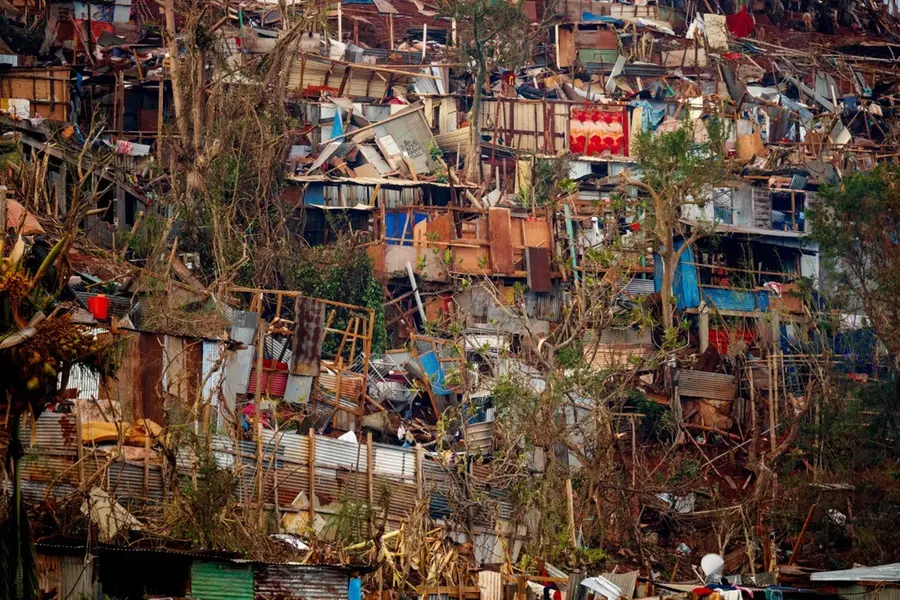
Cyclone Chido was the most destructive storm to hit Mayotte in 90 years when it made landfall on Saturday, causing widespread devastation. The cyclone flattened tin-roof shacks in Mayotte, one of France's poorest overseas territories. Chido, classified as a category four storm—the second highest on the five-point scale—crossed the small archipelago, where around one-third of the population lives in makeshift housing. The full extent of the disaster remains unclear, but officials fear the death toll could rise significantly.
The role of climate change in cyclone intensity
Scientists at Imperial College London examined how climate change may have contributed to the increased intensity of storms like Chido. Due to a lack of real-world data, they used an advanced computer model that simulates millions of tropical cyclones to infer the impact of global warming.
The results indicated that wind speeds near where Chido made landfall had increased by 3 miles per second compared to the climate before industrialisation. The study concluded that climate change “uplifted the intensity of a tropical cyclone like 'Chido' from a Category 3 to Category 4.”
Warmer oceans and air fueling stronger storms
While France's weather service has refrained from directly linking Chido’s intensity to global warming, it acknowledges that warmer oceans, driven by human-caused climate change, are making storms more violent.
Mayotte bore the brunt of Chido’s full force, with Meteo-France attributing much of the cyclone’s strength to its trajectory over the island. With the climate now nearly 1.3 degrees Celsius warmer than in pre-industrial times, scientists warn that this extra heat in the atmosphere and oceans is contributing to more frequent and extreme weather events.
Warmer air holds more water vapour, and warmer oceans lead to greater evaporation, both of which fuel the intensity of tropical storms.
(Agency inputs)
Published: 18 Dec 2024, 08:13 pm IST
Related Topics
Disclaimer: Kindly avoid objectionable, derogatory, unlawful and lewd comments, while responding to reports. Such comments are punishable under cyber laws. Please keep away from personal attacks. The opinions expressed here are the personal opinions of readers and not that of Mathrubhumi.
