
China’s advanced space-based radar may now be able to detect US stealth fighters like the F-22 Raptor, challenging American air superiority.
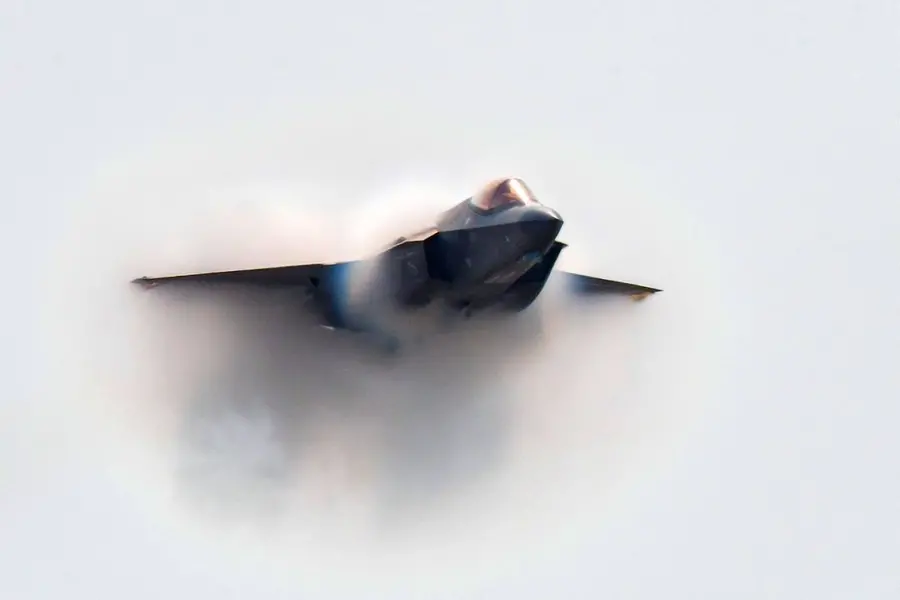
Chinese scientists say their new space-based radar technology can detect and track America's most advanced stealth fighters, including the F-22 Raptor and B-21 Raider, around the clock in all weather conditions. The breakthrough could challenge decades of US air superiority built on stealth technology.
A study published this month in the Journal of Radars demonstrates that China's Ludi Tance No 1 (LT-1) dual-satellite radar system can suppress background clutter that has traditionally masked stealth aircraft from space-based detection.
The developments come amid broader US-China military competition, with both nations investing heavily in next-generation aerospace technologies and space-based assets for intelligence and defense applications.
No More Stealth Advantage?
The research team, led by Chen Junli, chief satellite designer at the Shanghai Academy of Spaceflight Technology, simulated detecting a stealth target with a radar cross-section of 10 square meters -- realistic for modern stealth aircraft when viewed from above.
The bistatic radar configuration uses one satellite to transmit radar pulses while another receives the echoes, significantly reducing interference compared to traditional radar systems. According to the researchers, optimal detection occurs at bistatic angles between 30 and 130 degrees, where radar clutter remains lowest even over rough seas.
"When the target is a small moving object, its RCS is inherently small, and given the long detection range of space-borne radar systems, the returned echo signal becomes extremely weak, severely degrading target detection performance," Chen and his colleagues wrote. Their solution leverages the bistatic architecture's ability to enhance radar cross-sections at large azimuth angles.
Growing Anti-Stealth Arsenal
China has expanded its radar satellite network since launching the LT-1 system in 2022, part of a broader effort to counter US stealth capabilities. The country previously demonstrated optical satellite tracking of an F-22 fighter jet using its Jilin-1 commercial constellation, though optical systems cannot operate at night or through adverse weather.
Beijing has also showcased ground-based anti-stealth systems, including the JY-27V radar unveiled at defense exhibitions in 2025. The truck-mounted system uses very high frequency technology and active electronically scanned arrays to detect stealth aircraft at extended ranges.
Additional Chinese developments include quantum radar technology, with reports of mass production beginning for ultra-sensitive photon detectors capable of tracking stealth aircraft. Scientists have also claimed success using SpaceX's Starlink satellite signals in forward scatter radar experiments to detect drone-sized targets with stealth characteristics
Strategic Implications for Air Power
If operational, these capabilities could fundamentally alter military calculations in potential flashpoints like the Taiwan Strait and South China Sea, where US stealth aircraft provide critical advantages. The F-22 and F-35 have formed the backbone of American air superiority strategies, with their stealth features designed to penetrate heavily defended airspace undetected.
US Space Force officials have acknowledged China's advancing space surveillance capabilities, with Chief Master Sergeant Ronald Lerch noting that systems like the Ludi Tance satellites could enable "a qualitative leap in tracking and targeting capabilities".
However, the practical effectiveness of these Chinese claims against actual US stealth aircraft remains unverified in real-world conditions
Published: 18 Oct 2025, 10:46 am IST
Disclaimer: Kindly avoid objectionable, derogatory, unlawful and lewd comments, while responding to reports. Such comments are punishable under cyber laws. Please keep away from personal attacks. The opinions expressed here are the personal opinions of readers and not that of Mathrubhumi.
