
The US remains the sole nation to have achieved successful orbital-class booster recovery.
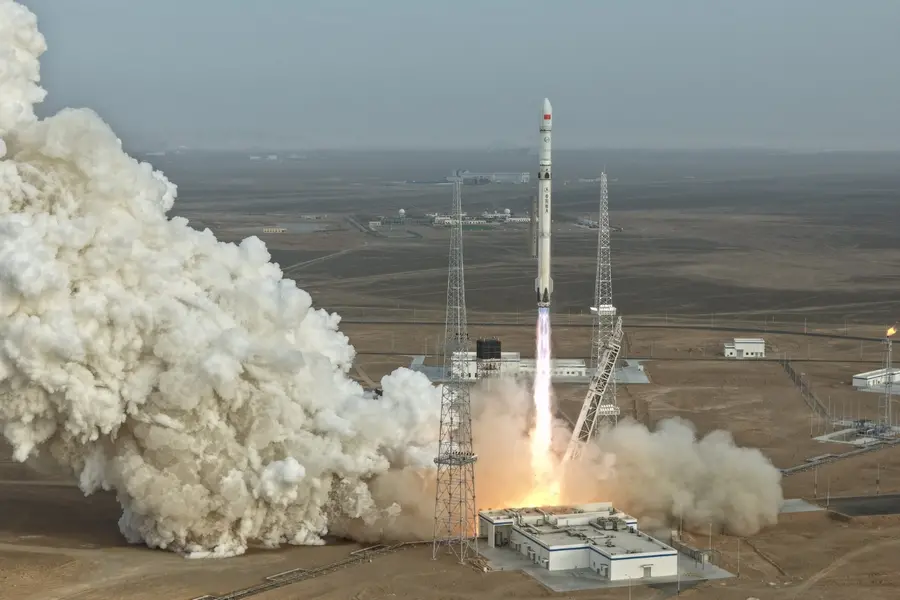
China's inaugural state-owned reusable rocket successfully launched on Monday but failed to recover its first-stage booster, marking the country's second unsuccessful attempt this month to achieve a milestone that remains the exclusive domain of the United States.
The Long March 12A, developed by the Shanghai Academy of Spaceflight Technology under the China Aerospace Science and Technology Corporation, lifted off from the Jiuquan Satellite Launch Centre in northwestern China. While the rocket's second stage entered its planned orbit and successfully deployed its payload, state news agency Xinhua reported that "the initial phase was not successfully retrieved".
The setback follows a similar failure earlier this month when private Chinese firm LandSpace's Zhuque-3 rocket reached orbit on December 3 but exploded during its landing attempt. After making a successful reentry, the Zhuque-3's first-stage booster appeared to lose an engine during its landing burn and crashed at the edge of the recovery pad in a spectacular fireball.
Race for Reusability
The United States remains the only country to successfully return an orbital-class booster. SpaceX pioneered the technology with its Falcon 9 rocket in December 2015, almost a decade ago. More recently, Blue Origin achieved the feat in November 2025 when its New Glenn rocket successfully landed its first-stage booster on a drone ship during only its second flight attempt.
China's commercial and state-owned space developers have been racing to master reusable rocket technology, which enables more frequent and lower-cost launches. The Long March 12A is a two-stage vehicle powered by liquid oxygen and methane, standing 69 meters tall with a 3.8-meter diameter. The rocket is designed to carry 12,000 kilograms to low Earth orbit.
For its maiden flight, the Long March 12A's first stage attempted a vertical landing on a designated pad located approximately 250 kilometres downrange from the launch site. The technology is critical to China's ambitions to build massive internet satellite constellations, including the Guowang network, which plans to deploy nearly 13,000 satellites by the 2030s.
Despite the recovery failures, both Chinese missions successfully delivered their payloads to orbit, demonstrating progress in the complex choreography required for booster landings. The precise causes of both failures remain under investigation.
Published: 23 Dec 2025, 12:55 pm IST
Related Topics
Disclaimer: Kindly avoid objectionable, derogatory, unlawful and lewd comments, while responding to reports. Such comments are punishable under cyber laws. Please keep away from personal attacks. The opinions expressed here are the personal opinions of readers and not that of Mathrubhumi.
